
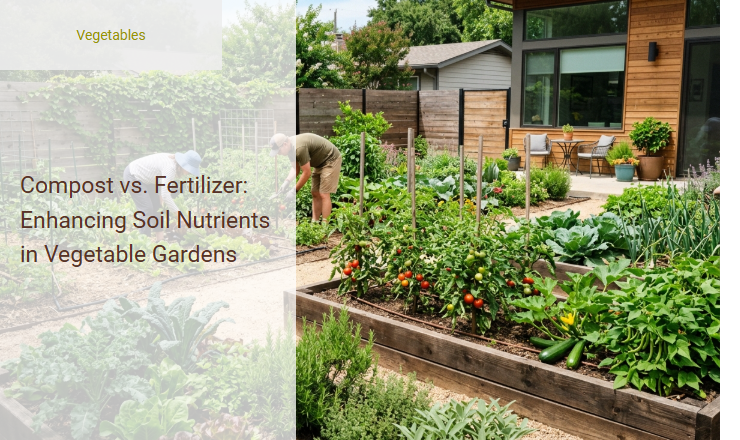
Many home gardeners pour endless hours into their vegetable patches, only to be met with stunted growth, yellowing leaves, and disappointing yields. It is incredibly frustrating when passion and hard work do not translate into a thriving backyard harvest. Before reaching for a quick fix, however, we must recognize that soil is a complex, living ecosystem; sustainable plant health depends entirely on how we nourish this foundational structure.
Mastering the distinction between soil amendments grants you the ability to cultivate vibrant, high-yielding crops. Yet, maximizing your garden's potential stipulates that you align your nutrient strategy with your soil's specific baseline conditions. For instance, while compost improves long-term soil structure, heavy-feeding vegetables like nitrogen-hungry tomatoes or demanding squash often require the immediate, targeted delivery of a formulated fertilizer.
In this analysis, we will compare the unique mechanisms of compost and fertilizer, evaluate their distinct roles in plant nutrition, and outline how to combine both for optimal garden performance.
Introduction: The Foundation of Vibrant Vegetable Gardens
To harvest a bountiful abundance of crisp lettuce, juicy tomatoes, and vibrant peppers, a gardener must look beneath the surface. Soil nutrition is the silent engine of any successful vegetable patch, dictating not only the yield but also the flavor and resilience of the crops. For decades, horticulturists and backyard growers alike have debated the most effective way to fuel this underground ecosystem. This brings us to the classic garden confrontation: compost versus fertilizer. While both aim to nourish plants, they take fundamentally different pathways to achieve a productive harvest.
Demystifying Compost: The Black Gold of Gardening
Compost is a nutrient-rich, dark, crumbly soil amendment created through the natural decomposition of organic materials. Through the hard work of beneficial microbes, fungi, and earthworms, everyday waste like kitchen scraps, fallen leaves, and straw are broken down into a stable, humus-rich substance that rejuvenates the earth.
- Slow-release nutrition that feeds plants gently over a long period.
- High concentrations of beneficial microorganisms that boost soil biology.
- Excellent moisture-holding capacity that buffers plants against drought.
Demystifying Fertilizer: Targeted Plant Nutrition
Fertilizer is a concentrated substance applied to soil or plant tissues to supply specific nutrients essential for growth. Unlike compost, which improves the whole soil system, fertilizer acts as a direct dietary supplement. Synthetic fertilizers are chemically manufactured from inorganic materials to deliver precise, fast-acting nutrients, whereas organic fertilizers are derived from natural sources like bone meal, fish emulsion, or rock phosphate, breaking down more slowly in the soil.
- Nitrogen (N) - Promotes lush, green leafy growth.
- Phosphorus (P) - Stimulates strong root development and abundant flowering or fruiting.
- Potassium (K) - Enhances overall plant vigor, disease resistance, and water regulation.
How Compost Heals and Builds Soil Structure
Compost acts as a healing balm for worn-out earth, working over time to dramatically improve physical soil properties. When integrated into sandy soils, it binds loose particles together to dramatically increase water retention, preventing precious moisture from draining away too quickly. In heavy clay soils, it breaks up dense clumps, creating essential air pockets that allow roots to breathe and expand. This structural transformation is driven by the establishment of a robust soil food web, where active microbial activity converts organic matter into stable humus, fostering a self-sustaining ecosystem that thrives for years.
How Fertilizer Delivers Immediate Nutrient Boosts
While compost plays the long game, fertilizer is the sprinter. When applied, particularly in liquid or water-soluble forms, fertilizer dissolves quickly to deliver highly concentrated, readily available nutrients directly to the root zone. This rapid uptake mechanism is vital when your crops show signs of severe stress. When a plant experiences acute nutrient deficiencies-such as yellowing leaves from a lack of nitrogen or stunted growth from a lack of phosphorus-waiting for compost to break down is not an option. In these critical moments, targeted fertilizer provides a rapid rescue remedy to restore plant health and prevent total crop failure.
Direct Comparison: Compost vs. Fertilizer at a Glance
| Criteria | Compost | Fertilizer |
|---|---|---|
| Nutrient Release Rate | Slow and steady (over months or years) | Rapid and immediate (especially synthetics) |
| Soil Structure Impact | Improves aeration, drainage, and water retention | No structural benefits; can degrade structure over time |
| Ecological Sustainability | Very high; recycles waste and supports biodiversity | Variable; synthetic production has a high carbon footprint |
| Application Frequency | Once or twice a season | Regular intervals throughout the growing season |
Environmental Footprints: Soil Biodiversity vs. Chemical Runoff
Choosing how to feed your garden has ecological consequences that stretch far beyond your backyard fence. Compost feeds the soil microbiome, encouraging earthworms, beneficial fungi, and microscopic life to flourish in a balanced, sustainable cycle. Conversely, relying heavily on synthetic chemical fertilizers can sterilize the soil over time by killing off these essential organisms. Furthermore, plants can only absorb a fraction of concentrated synthetic applications, leaving the excess to wash away with rain or irrigation.
Warning: Excessive application of synthetic fertilizers leads to nutrient runoff, which pollutes local waterways, triggers harmful algal blooms, and disrupts fragile aquatic ecosystems.
Strategic Timing: When to Apply Compost to Your Garden
To get the most out of compost, timing is everything. The ideal periods for application are early spring-just before planting-and late autumn, after the harvest is complete. Amending your beds in autumn allows the OM to integrate with the soil over the winter months, preparing a nutrient-rich foundation for the next season. When preparing new garden beds, tilling or layering compost into the top few inches of soil ensures that the foundational nutrients, including a gentle dose of essential N-P-K, are thoroughly integrated and ready for young roots to explore.
Targeted Application: When Fertilizer is the Right Choice
There are times when the slow-release nature of compost cannot keep up with the demands of hungry, fast-growing vegetable crops. Container gardens, heavy-feeding crops like corn and tomatoes, and plants grown in nutrient-depleted soils often require a concentrated, targeted application of fertilizer to sustain high yields. Knowing how to identify and address nutrient issues quickly can save a failing crop.
Click to reveal quick-action troubleshooting tips for nutrient deficiencies
Nitrogen (N) Deficiency: If older leaves are turning pale yellow while growth slows down, apply a high-nitrogen organic fertilizer like fish emulsion for a quick green-up.
Phosphorus (P) Deficiency: Purplish tints on leaves and weak root systems indicate a need for bone meal or rock phosphate to kickstart root and bloom development.
Potassium (K) Deficiency: Scorched or curling leaf edges and poor fruit yield can be quickly corrected with an application of kelp meal or potash.
The Ultimate Strategy: Blending Compost and Fertilizer for Maximum Yield
The most successful growers do not choose between compost and fertilizer; they harness the unique powers of both. By using compost as your primary soil conditioner, you build a thriving, sponge-like soil structure rich in microbial life. Then, you can use targeted organic or synthetic fertilizers to give heavy-feeding vegetables a direct boost during critical growth spurts, such as flowering and fruiting. The synergy of these two methods produces a resilient garden system that yields bountiful harvests. By feeding the soil with compost and feeding the plant with fertilizer, you create an unbeatable foundation for long-term agricultural success.
| Nutrient Property | Compost | Fertilizer |
|---|---|---|
| Nutrient Profile | Broad-spectrum, low-concentration macronutrients (N-P-K), micronutrients, and organic matter. | High-concentration, chemically defined ratios of specific primary macronutrients (N-P-K). |
| Release Mechanism | Slow-release; requires soil microbial activity to break down organic matter for plant uptake. | Rapid-release (mostly water-soluble); nutrients are immediately bioavailable to plant roots. |
| Soil Structure Impact | Improves soil structure, cation exchange capacity (CEC), aeration, and water retention. | No structural benefits; long-term use can degrade soil texture and cause salt buildup. |
| Microbial Activity | Introduces and feeds beneficial soil microbes, fungi, and earthworms. | Does not feed soil biology; high salt index can suppress or dehydrate soil microbes. |
| Environmental Risk | Minimal risk of leaching, runoff, or plant chemical burns. | High risk of groundwater leaching, toxic runoff, and crop root burn if overapplied. |
Leave a comment