
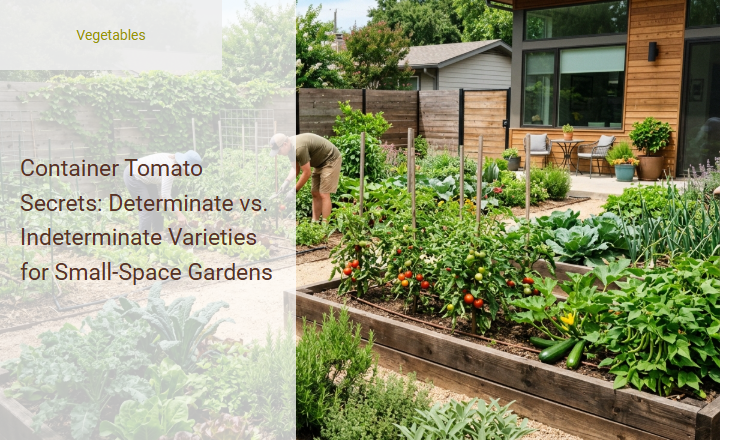
Trying to grow tomatoes on a cramped balcony or patio often ends in disappointment-either with unruly, overgrown vines overtaking your seating area or meager yields that hardly seem worth the effort. Success in small-space gardening, however, does not depend on luck, but on understanding the fundamental growth habits of your plants. Mastering this distinction unlocks the ability to harvest baskets of sun-ripened fruit from a single square foot of space.
Still, maximizing this potential requires a realistic assessment of your setup; even highly specialized container varieties demand proper pot sizes and consistent sunlight to thrive. For instance, choosing a bush-like determinate such as 'Patio Princess' yields a concentrated, manageable harvest, whereas a compact indeterminate like 'Lizzano' offers continuous production throughout the season when paired with a small trellis.
In this guide, we will analyze the key differences between determinate and indeterminate cultivars, evaluate their unique structural support needs, and help you select the perfect tomato variety for your specific micro-garden.
Read also: Determinate vs Indeterminate for Tomato Yields
Introduction to Container Tomato Gardening
There is nothing quite like the flavor of a warm, sun-ripened tomato plucked straight from your own vine. Fortunately, you do not need a sprawling backyard to experience this culinary joy. Growing tomatoes in a limited space-whether it is a sunny balcony, a small patio, or a rooftop-is incredibly rewarding and entirely feasible with the right setup. The secret to success lies in understanding your varietal choice and matching the tomato plant's growth habits with your available footprint.
Understanding the Two Main Tomato Types
To cultivate healthy container tomatoes, you must understand the distinction between the two primary tomato classifications. Determinate types grow to a pre-determined size, setting their fruit all at once, which makes them perfect for predictable spaces. In contrast, indeterminate types continue to grow, flower, and produce fruit until the first frost. This difference means determinate plants exhibit a compact, bushy growth pattern, while indeterminate varieties possess a climbing, vine-like habit that requires continuous support and management.
Determinate Tomatoes: The Compact Producers
Determinate tomatoes are genetically programmed to stop growing once they reach a certain height, typically between three to four feet. They produce flowers and set fruit in a concentrated burst over a period of two to three weeks. Because of this predictable height and concentrated harvest window, these bush varieties are historically the easiest option for small containers and crowded balconies. They require minimal physical training and won't overwhelm a confined area.
- Roma VF (classic paste tomato)
- Patio F1 (ultra-compact, heavy yielding)
- Tiny Tim (excellent dwarf cherry variety)
- Celebrity (highly disease-resistant semi-determinate)
Indeterminate Tomatoes: The Vining Giants
Unlike their bushy counterparts, indeterminate tomatoes never stop growing until killed by frost. They continuously produce new foliage, blossoms, and fruit along their expanding vines, providing a steady supply of fresh tomatoes throughout the entire summer. While they can reach heights of eight feet or more, urban gardeners can successfully manage them in small spaces using vertical trellis systems or by selecting specialized dwarf indeterminate hybrids that pack huge production into a much smaller physical footprint.
- Dwarf Champion (sturdy, upright, heirloom flavor)
- Rosella Purple (productive dwarf yielding dark, rich fruit)
- Super Sweet 100 (vigorous cherry, manageable with heavy pruning)
- Tasmanian Chocolate (dwarf variety with large, beefsteak-style fruit)
Choosing the Right Container Size for Each Type
Tomatoes are deep-rooting plants that require ample space to anchor themselves and absorb vital nutrients and water. Restricting their root systems in too-small pots leads to stunted growth, rapid dehydration, and low yields. Providing the correct volume ensures that soil moisture remains stable and nutrients are abundant during the peak fruiting season.
| Tomato Growth Type | Minimum Volume (Gallons) | Minimum Diameter (Inches) | Ideal Pot Depth (Inches) |
|---|---|---|---|
| Determinate / Bush | 5 - 7 gallons | 12 inches | 12 inches |
| Indeterminate / Vining | 10 - 15 gallons | 16 - 18 inches | 16 - 18 inches |
Support Structures: Cages vs. Trellises
Heavy-Duty Wire Cages
Wire cages are ideal for determinate varieties that grow outward as much as they grow upward. Install the cage directly into the container immediately after transplanting to avoid damaging the growing root system. As the bush fills out, gently tuck the stray branches back inside the wire rings to keep the heavy fruit off the soil.
Trellises and Single Stakes
Indeterminate tomatoes require tall, sturdy support structures like bamboo poles, wooden stakes, or custom vertical trellises. Insert a strong five-to-eight-foot stake deep into the container before planting, securing it to the pot itself if possible. As the central vine grows, use soft plant ties or garden twine to bind the main stem to the stake every eight to twelve inches.
Soil and Nutrient Requirements for Pot-Grown Tomatoes
Never use garden soil in containers; it composes a dense medium that limits drainage and starves roots of oxygen. Instead, opt for a high-quality, peat- or coco-coir-based potting mix amended with perlite for aeration, compost for organic matter, and garden lime to supply essential calcium. Because nutrients quickly leach out of pots during watering, a diligent fertilization plan is mandatory.
- At transplanting: Mix a slow-release organic fertilizer balanced in Nitrogen, Phosphorus, and Potassium (NPK) into the top few inches of the potting mix.
- Early vegetative stage: Apply a diluted, water-soluble organic fish emulsion fertilizer every two weeks to support leafy canopy growth.
- Blossom and fruit set: Switch to a low-nitrogen, high-phosphorus and high-potassium liquid fertilizer (such as tomato food) once the first flowers appear.
- Mid-to-late summer: Apply a calcium foliar spray or liquid bone meal feed once a month to support cell-wall development and prevent blossom end rot.
Watering Secrets for Container Success
Inconsistent watering is the primary cause of tomato plant stress, split fruit, and blossom end rot-a calcium deficiency caused by uneven moisture transport. Container soils dry out rapidly under hot summer sun, often requiring daily checks. Water your plants deeply at the base of the stem until water runs out the drainage holes, ensuring the roots remain evenly damp but never soggy. Applying a two-inch layer of organic mulch, such as straw or shredded bark, over the soil surface helps lock in moisture and regulate root temperature.
Pruning Rules: To Pinch or Not to Pinch
Determinate Pruning Rules
Determinate varieties require almost no pruning. Because they produce all their fruit on a fixed number of branches, removing any shoots will directly reduce your total harvest. Only remove leaves that touch the damp soil to prevent soil-borne diseases from climbing up the plant.
Indeterminate Pruning Rules
Indeterminate plants require strict, regular maintenance to prevent them from becoming an unmanageable jungle in small spaces. Gardeners must identify and pinch out the "suckers"-the tiny new shoots that sprout in the crotch (axil) where a leaf branch meets the main stem. Removing these suckers directs the plant's energy toward ripening existing fruit rather than producing excessive, unproductive greenery.
To apply the pinching technique, grasp the base of a small sucker (under three inches long) between your thumb and forefinger. Bend it sharply to the side until it cleanly snaps off. For larger suckers, use clean, sterilized pruning shears to make a flush cut, taking care not to nick the main vine.
Maximizing Your Small-Space Tomato Harvest
Navigating the choices of container gardening comes down to matching your physical space with your culinary goals. By understanding the distinct growth patterns of determinate and indeterminate types, selecting appropriately sized containers, and setting up reliable support and watering regimens, you set the stage for a spectacular growing season. Do not feel limited to just one variety; mixing compact bush types for an early abundant crop with climbing dwarf varieties can significantly extend your production timeline.
With a little planning, patience, and consistent care, your balcony or patio can easily transform into a productive micro-farm. Cultivating your own fresh food is immensely satisfying, and the reward of a continuous harvest of sweet, juicy, sun-warmed tomatoes will make every ounce of effort worthwhile.
Summary
Successful small-space tomato gardening relies heavily on selecting the appropriate growth habit: determinate or indeterminate. This article reveals the key secrets to container tomato success by comparing these two main types. Determinate, or "bush" varieties, naturally stop growing at a certain height and produce their crop all at once, making them perfect for compact pots and low-maintenance balcony setups. Indeterminate varieties, on the other hand, behave like vining plants, continuously growing and fruiting until the first frost. While indeterminate tomatoes offer a steady, prolonged harvest, they demand larger containers, sturdy cages or trellises, and diligent pruning. By matching the right tomato variety to your specific space limitations, pot sizes, and support structures, you can enjoy a highly productive and manageable patio harvest.
Leave a comment