
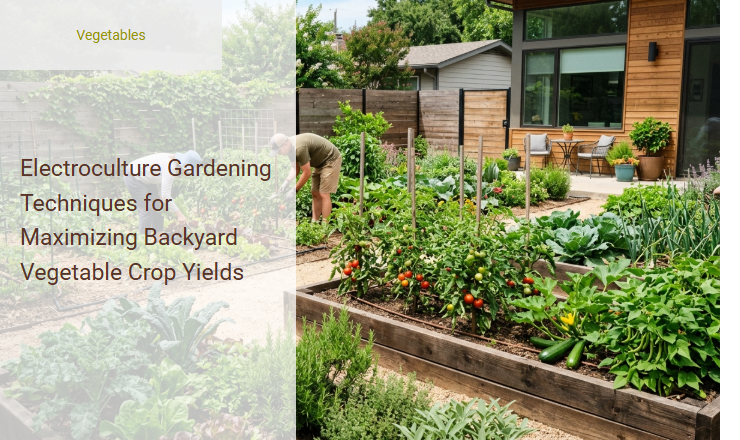
Many backyard gardeners pour endless hours, expensive fertilizers, and meticulous care into their vegetable patches, only to face stagnant crop yields and depleted soil season after season. While traditional organic methods focus heavily on soil chemistry, they often overlook the natural electromagnetic forces inherent in our atmosphere.
Electroculture offers a revolutionary pathway to bypass these limitations, harnessing atmospheric electricity to naturally boost plant vitality and maximize your harvest. However, this is not a mystical shortcut; it is a structured agricultural discipline that requires a basic understanding of geomagnetic energy and precise hardware setup to be effective.
By utilizing simple tools like copper wire spirals and atmospheric antennas, gardeners can stimulate root systems to produce visibly larger tomatoes and more robust potato yields. In this comprehensive guide, we will analyze the science behind electroculture, identify the best materials for your backyard, and provide step-by-step techniques to successfully energize your vegetable crops.
Read also: Sowing vs Buying for Cheap Starts
Introduction to Electroculture Gardening
In an era where synthetic fertilizers and chemical pesticides dominate agricultural practices, a quiet revolution is emerging from the roots of history. Electroculture gardening is an innovative, organic cultivation method that harnesses the Earth's natural electric currents and atmospheric energy to stimulate plant growth. By utilizing simple, non-invasive setups, this technique taps into the subtle ambient forces surrounding us, offering a sustainable alternative to chemical-heavy farming.
The practice is far from a modern novelty. Its historical roots run deep, trace back to the 18th century, when pioneering scientists like Abbé Nollet and later Justin Christofleau discovered that applying mild electrical currents to soil dramatically accelerated plant development. By installing specialized copper antennas, these early innovators successfully gathered free etheric energy directly from the atmosphere. Today, backyard gardeners are reviving these time-tested methods to cultivate robust, resilient crops naturally, leaving behind the need for costly external inputs.
The Science of Soil Electricity and Magnetic Fields
To understand the science of electroculture, one must view the garden as a living electrical circuit. The Earth naturally carries a negative charge, while the ionosphere and the surrounding atmosphere carry a positive charge. This constant voltage gradient forms a continuous flow of atmospheric electricity. By introducing conductive elements into the garden, we can bridge this gap and create a highly localized field of energy that interacts directly with our crops.
Furthermore, geomagnetic currents, also known as telluric currents, flow constantly through the Earth's crust. When plants are exposed to these subtle, natural electrical flows, their cellular membranes experience mild stimulation. This process increases permeability at the cellular level, allowing plant roots to absorb vital minerals and water far more efficiently than they would under standard conditions. Enhanced ion mobility within the soil ensures that key nutrients, such as nitrogen, phosphorus, and potassium, are actively drawn toward the root system, boosting vigor without changing the actual chemical composition of the soil.
Key Benefits of Electroculture for Backyard Veggies
Implementing electroculture in your vegetable patch can deliver a range of astonishing benefits, dramatically changing how your garden thrives throughout the seasons. Home growers often observe immediate improvements in plant health and resilience.
- Increased Harvest Yields: Crops receive a continuous flow of natural energy, leading to larger, more abundant vegetables on every plant.
- Accelerated Seed Germination: Seeds sown in an active electroculture field emerge faster, establishing strong root structures early on.
- Natural Pest Resistance: The elevated energy state of the plants makes them less susceptible to insect infestations and fungal diseases.
- Enhanced Flavor and Nutrient Density: Because plants absorb minerals more effectively, the harvested produce boasts a richer taste profile and higher concentrations of vitamins.
Designing and Installing Copper Coil Antennas
Creating your own energy-capturing devices is a straightforward process that requires only basic materials. The most common designs utilize 99.9% pure copper wire to construct atmospheric receivers, such as Lakhovsky rings and spiral antennas.
- Lakhovsky Rings: This classic design involves creating an open-loop ring using heavy-gauge copper wire. Measure a length of wire and shape it into a circle around the base of your vegetable plant. Secure the ends using a non-conductive material, ensuring they overlap slightly without touching, leaving a gap of approximately
1 to 2 centimeters. Support the ring just above the soil surface using small wooden pegs. - Spiral Antennas: Take a length of copper wire and wrap it tightly around a wooden dowel to create a spring-like spiral. Slide the coil off the dowel. When placing it in the garden, ensure the spiral points in a clockwise direction as it goes upward, which aligns with natural energy vortexes in the Northern Hemisphere. Insert the lower tail of the wire directly into the soil close to the root zone, while leaving the top of the coil pointing toward the sky to capture ambient charge.
Harnessing Energy with Pyramids and Sacred Geometry
Beyond copper coils, sacred geometry plays an active role in focusing natural energy fields. Pyramidal structures, when constructed using specific dimensions modeled after the Great Pyramid of Giza, possess a unique ability to concentrate electromagnetic forces. The shape acts as a passive lens, collecting cosmic waves and redirecting them downward into the soil.
To implement this in your backyard garden, build a simple open-frame pyramid using copper pipes or wooden stakes wrapped in conductive wire. Placement is critical for success: one face of the pyramid must align precisely with true North to harmonize with the Earth's magnetic grid. Place these geometric frames directly over struggling crops or seed beds to create an energized microclimate that accelerates cellular repair and vegetative growth.
Implementing Earth Battery and Grounding Systems
An earth battery system is another highly effective electroculture technique that generates a gentle, continuous low-voltage current directly within your garden bed. This is achieved by taking advantage of the natural galvanic reactions that occur between dissimilar metals when buried in moist, mineral-rich soil.
- Acquire the Galvanic Pair: You will need a plate or rod of pure copper (acting as the positive electrode) and a plate or rod of zinc or galvanized steel (acting as the negative electrode).
- Position the Electrodes: Bury the copper plate at one end of your garden bed and the zinc plate at the opposite end, placing them directly into the root zone depth.
- Connect the Circuit: Run an insulated copper wire above the ground to connect the two buried plates. The moist soil completes the circuit, initiating a slow, steady electrical current that flows through the earth, gently stimulating the root systems of all plants situated between the two plates.
Step-by-Step DIY Atmospheric Antenna Installation
To maximize the harvest of free atmospheric energy, you can construct a tall atmospheric antenna. This system acts as a lightning rod for subtle energy, pulling electrical charges from the higher air layers down to your garden soil.
- Select a Support Pole: Obtain a tall, non-conductive wooden pole or bamboo stake measuring between 6 to 10 feet in height.
- Wrap the Copper Wire: Secure a thick gauge copper wire at the top of the pole. Wrap the wire down the length of the pole in a clockwise spiral, keeping the spacing between loops relatively even.
- Create the Spiral Cap: At the very top of the pole, shape the remaining wire into a decorative spiral, a double helix, or a multi-pointed fork to increase the surface area exposed to the atmosphere.
- Install and Ground: Dig a hole in the center of your garden bed and plant the pole firmly. Take the bottom end of the copper wire and bury it deep into the soil, routing it near your plants to distribute the gathered energy.
Combining Magnetized Water with Electroculture
Water is a highly conductive medium that responds dynamically to magnetic fields. By combining magnetized water with your electroculture antennas, you can create a powerful synergistic effect that amplifies plant hydration and nutrient transport.
To magnetize your irrigation water, simply attach strong neodymium magnets directly to your watering can spout or garden hose. As water passes through this concentrated magnetic field, its molecular clusters are broken down into smaller, more ordered structures. This structured water is more easily absorbed by plant cell walls, ensuring that the energized nutrients mobilized by your electroculture antennas are rapidly delivered straight to the heart of the plant.
Troubleshooting Common Electroculture Mistakes
While electroculture is highly rewarding, beginners occasionally run into setbacks due to incorrect setups. Understanding these potential pitfalls ensures your garden continues to thrive without interruption.
- Improper Grounding: If your antenna wires do not make direct, solid contact with moist soil, the gathered atmospheric charge cannot disperse, rendering the system ineffective.
- Using the Wrong Metals: Avoid using insulated wires, aluminum, or rusting iron wire. High-quality copper is essential for proper conductivity.
- Over-Magnetizing the Soil: Do not place extremely powerful industrial magnets directly in the soil for extended periods, as this can disrupt the natural geomagnetic flow and stress delicate root structures.
- Incorrect Spiral Orientation: Ensure your spirals are wound clockwise in the Northern Hemisphere to work in harmony with natural rotational energies.
The Future of Sustainable, High-Yield Gardening
Adopting electroculture techniques represents a profound shift toward self-sufficiency and ecological harmony. By working with the planet's existing electromagnetic grid rather than fighting against nature with chemical additives, home gardeners can produce abundant harvests while actively regenerating the surrounding ecosystem.
This approach protects beneficial soil microbes, preserves groundwater quality, and fosters long-term soil health. Embracing these energetic cultivation methods allows us to cultivate resilient, nutrient-dense food systems that will sustain our families and our communities for generations to come.
Summary
Electroculture gardening is an innovative, eco-friendly approach that harnesses atmospheric electricity and Earth's natural electromagnetic fields to significantly boost backyard vegetable yields. By utilizing simple, low-cost tools such as copper wire antennas, Lakhovsky coils, and strategically placed magnets, gardeners can stimulate plant vitality and improve soil biology.
These techniques facilitate better nutrient absorption and accelerate photosynthesis, resulting in faster growth rates, stronger root systems, and increased resistance to pests and diseases. Additionally, electroculture offers a highly sustainable alternative to conventional farming by eliminating the need for chemical fertilizers and synthetic pesticides. Ultimately, this rediscovered practice empowers home gardeners to achieve greater self-sufficiency, maximize their harvest efficiency, and produce larger, more nutrient-dense crops within limited backyard spaces.
Leave a comment