
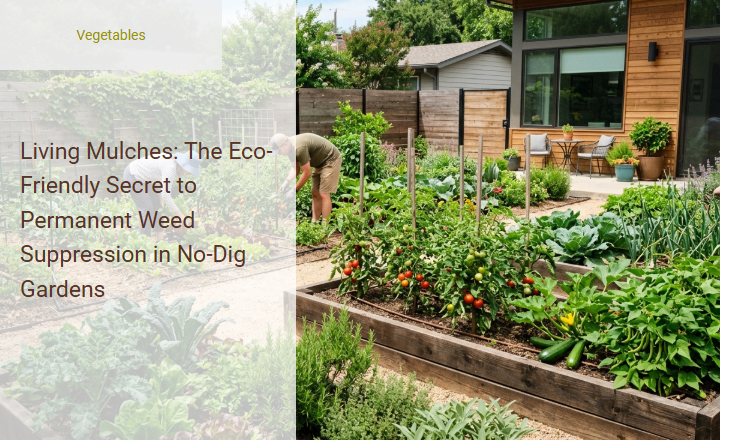
For many no-dig gardeners, the relentless battle against opportunistic weeds remains an exhausting, labor-intensive chore that drains the joy from cultivation. While traditional organic covers like straw or wood chips offer temporary relief, they require constant replenishment and do little to actively regenerate the soil biology. Living mulches bridge this gap by turning empty space into a functional ecosystem, granting gardeners permanent, self-sustaining weed suppression while actively enhancing soil fertility.
However, this ecological approach is not an overnight miracle; success stipulates careful planning and precise species selection to ensure these green covers do not compete with your primary crops for resources. Utilizing specific low-growing plants, such as white clover (Trifolium repens) or creeping thyme (Thymus serpyllum), serves as proof that nature can manage weed pressure internally. Ahead, we will examine how to select, establish, and manage these living systems to achieve a truly low-maintenance, high-yield garden.
Read also: Mulch vs Cover Crops for Weed Suppression
Introduction to Living Mulches
Imagine a garden where weeding becomes a relic of the past, replaced by a self-sustaining, vibrant ecosystem. This is the promise of living mulches-low-growing plants intentionally grown beneath main crops to blanket the soil surface. Unlike dead organic materials like woodchips or straw, these living covers remain actively growing, forming a continuous green carpet that works in perfect harmony with your main crops.
For the practitioner of no-dig gardening, living mulches represent the ultimate eco-friendly secret to permanent weed suppression. Instead of fighting nature with labor-intensive tilling or chemical interventions, this method utilizes natural plant competition to keep unwanted seeds from germinating. By filling every ecological niche with beneficial vegetation, you secure the soil and establish a self-regulating garden ecosystem that thrives with minimal human intervention.
The Philosophy of No-Dig Gardening
No-dig gardening centers on a simple but profound premise: let nature do the tilling. When we dig, turn, or rototill the soil, we disrupt delicate fungal networks, destroy soil structure, and bring dormant weed seeds to the surface where they quickly germinate. By preserving an undisturbed underground landscape, we allow a complex network of beneficial microbes, earthworms, and mycorrhizal fungi to flourish undisturbed.
This stable environment is exceptionally well-suited for establishing living mulches. Because the soil is never inverted, the root systems of both your primary crops and your living cover can co-exist and form symbiotic relationships. The undisturbed mycorrhizal networks act as underground highways, distributing moisture and nutrients efficiently between different plant species, leading to a highly resilient growing system.
"The soil is the great connector of lives, the source and destination of all. It is the healer and restorer and resurrector, by which disease passes into health, age into youth, death into life." - Wendell Berry
How Living Mulches Suppress Weeds
Weed seeds require light, moisture, and space to establish. Living mulches systematically deny them these essential resources through a series of physical and biological barriers. By occupying the lowest layer of the garden canopy, these plants act as a living shield that keeps invasive weeds from gaining a foothold.
- Photosynthetic Shading: The dense foliage of living mulches blocks sunlight from reaching the soil surface, preventing the germination of light-sensitive weed seeds.
- Resource Monopoly: Living cover crops actively draw moisture and nutrients from the upper soil layers, leaving virtually no resources available for opportunistic weed seedlings.
- Physical Space Occupation: By rapidly colonizing bare soil, the root systems and crowns of living mulches physically crowd out space where weed roots would otherwise establish.
- Allelopathic Interference: Certain living mulch species naturally exude biochemical compounds from their roots that actively inhibit the germination and growth of neighboring weed seeds.
Ecological Benefits Beyond Weed Control
While keeping weeds at bay is highly advantageous, the advantages of living mulches extend far deeper into the ecosystem. By maintaining active roots year-round, these plants prevent soil erosion caused by wind and heavy rain. The continuous shedding of fine root hairs and leaf litter constantly feeds the soil biology, turning your garden bed into a powerhouse of organic matter accumulation.
Furthermore, many leguminous living mulches facilitate nitrogen fixation by forming symbiotic relationships with soil bacteria, converting atmospheric nitrogen into a form easily absorbed by adjacent crops. The dense foliage creates a cool, humid microclimate at the soil surface, drastically reducing transpiration rates and conserving soil moisture. Finally, the flowers of species like clover and thyme attract beneficial insects and pollinators, promoting natural biological pest control throughout your entire garden.
Top Living Mulch Species for No-Dig Systems
Choosing the correct plant species is essential for creating a balanced system. The ideal living mulch should be low-growing, relatively non-aggressive to your primary crops, and easy to manage.
Leguminous Nectars: White Clover (Trifolium repens)
White clover is a classic choice for living mulch systems. It stays relatively low, tolerates foot traffic, and fixes nitrogen directly into the soil. It is highly effective when grown beneath heavy feeders like corn, tomatoes, or brassicas, providing a steady supply of nutrients while acting as a magnet for beneficial pollinators.
Herbal Carpets: Creeping Thyme (Thymus serpyllum)
Creeping thyme is an excellent perennial living mulch, particularly suited for pathways, edges, or permanent plantings. It creates a dense, aromatic mat that easily suppresses weed growth while releasing a fragrant scent when stepped on. Its delicate purple flowers are highly attractive to bees and predatory insects.
Vigorous Cover: Hairy Vetch (Vicia villosa)
For transitional seasons or larger garden beds, hairy vetch offers exceptional organic biomass production. It has a climbing habit but acts as an excellent sprawling ground cover when left unsupported. Vetch is highly valued for its intense nitrogen-fixing capabilities and its ability to rapidly smother winter weeds.
Step-by-Step Guide to Establishing Your Living Mulch
Successfully integrating a living mulch into a no-dig system requires careful timing to ensure your primary crops are not overwhelmed during their initial growth phases.
- Prepare the planting bed by applying a generous layer of compost over your undisturbed soil to provide a nutrient-rich seedbed.
- Sow or transplant your primary crops first, allowing them to establish strong root systems and put on several inches of growth before introducing the living cover.
- Broadcast the living mulch seeds evenly across the soil surface around your established main crops, ensuring proper seed-to-soil contact by gently patting down the compost.
- Keep the soil consistently moist during the germination phase to ensure a rapid, uniform carpet of green cover.
- Thoroughly monitor the growth of the young mulch, ensuring it does not climb or crowd the stems of your main crops during their early developmental stages.
Managing and Controlling Living Mulches
To keep your living mulch functioning as a cooperative partner rather than a competitor, periodic maintenance is necessary. The most common management technique is the "chop-and-drop" method. Before the living mulch grows tall enough to compete with your main crop for light, simply shear or weed-whack the foliage back, leaving the cut green material right on top of the soil. This deposits valuable organic matter directly onto the bed, releasing nutrients back to your plants while adding a layer of dead mulch to the surface.
If you need to transition a bed or plant small, direct-seeded crops like carrots, you can easily terminate or suppress your living mulch. Covering the area temporarily with a dark silage tarp or a thick layer of cardboard for a few weeks will starve the mulch of light, killing or weakening it so you can sow your next crop directly into the decomposing root mass without ever tilling the soil.
Troubleshooting Common Challenges
While living mulches provide an array of benefits, managing a dual-crop system can occasionally present unique challenges. Understanding how to handle these issues ensures your garden remains productive and healthy.
Nutrient and Moisture Competition
In dry climates or during peak summer heat, living mulches may compete with your primary crops for precious water and nutrients. To solve this, ensure your irrigation system (such as drip lines) is laid beneath the living mulch directly targeting the root zones of your main crops. Additionally, apply a light liquid fertilizer or compost tea if you notice any yellowing of leaves on your cash crops.
Harboring Pests and Slugs
The humid microclimate created by a dense living cover can occasionally attract slugs, snails, or other moisture-loving pests. Address this by keeping the mulch trimmed back slightly from the immediate stems of vulnerable seedlings. You can also introduce predatory habitats-such as small rock piles or frog ponds-to encourage natural slug predators like beetles, toads, and garter snakes into your garden.
Overgrowth and Crowding
Some vigorous living mulch species may start climbing or smothering low-growing crops. Simply perform a timely "chop-and-drop" to reduce their height. Choosing the correct pairing is also vital: match fast-growing, tall crops with more vigorous mulches, and reserve low-growing, delicate mulches like creeping thyme for slow-growing perennial crops.
The Long-Term Economic and Time Savings
While establishing a living mulch requires an initial investment in seeds and planting time, the long-term economic and labor savings are substantial. Traditional mulches, such as straw or wood chips, must be purchased, transported, and reapplied every single season. Over time, these costs add up significantly. A living mulch, once established, is self-propagating and perpetually regenerates itself, cutting down both your physical labor and seasonal input expenses.
| Metric | Traditional Mulch (Straw/Woodchips) | Living Mulch Systems |
|---|---|---|
| Initial Cost | Moderate (recurring every season) | Low (one-time seed purchase) |
| Labor Requirements | High (shoveling, hauling, laying every year) | Low (occasional clipping or chop-and-drop) |
| Weed Suppression | Temporary (decays and allows weed breakthrough) | Permanent (continuously grows and adapts) |
| Soil Enrichment | Slow (decays from the top down) | Rapid (active roots feed soil biology 24/7) |
Embracing the Living Soil Revolution
Transitioning your garden to a living mulch system is more than just a labor-saving tactic; it is an active investment in the future of your soil. By keeping the ground covered with living, breathing plants, you mimic the beautiful efficiency of natural ecosystems. Your no-dig garden will reward you with richer soil, fewer pests, enhanced moisture retention, and an end to the endless cycle of weeding.
Take the step to transform your growing space this season. Start by selecting one or two beds to trial a living cover, and witness firsthand how nature steps in to do the heavy lifting for you. To deepen your understanding of soil biology and explore more advanced ecological gardening methods, read our comprehensive guide on regenerative soil building practices.
Summary
In the quest for sustainable agriculture, living mulches emerge as a game-changing technique for no-dig gardens. Unlike traditional organic mulches like straw or woodchips, living mulches are low-growing, beneficial cover crops-such as clover, creeping thyme, or alfalfa-planted directly alongside main crops. This eco-friendly method provides permanent weed suppression by establishing a dense, green canopy that blocks sunlight and outcompetes unwanted weeds.
Beyond weed control, living mulches act as a shield for the soil. They prevent erosion, retain moisture, and regulate soil temperature. Furthermore, their active root systems foster a thriving subterranean ecosystem, fixing nitrogen and enhancing soil structure without disrupting the delicate soil biology through digging. Ultimately, integrating living mulches allows gardeners to transition from labor-intensive weed management to a self-sustaining, biodiverse ecosystem that naturally boosts crop yields and promotes long-term soil fertility.
Leave a comment