
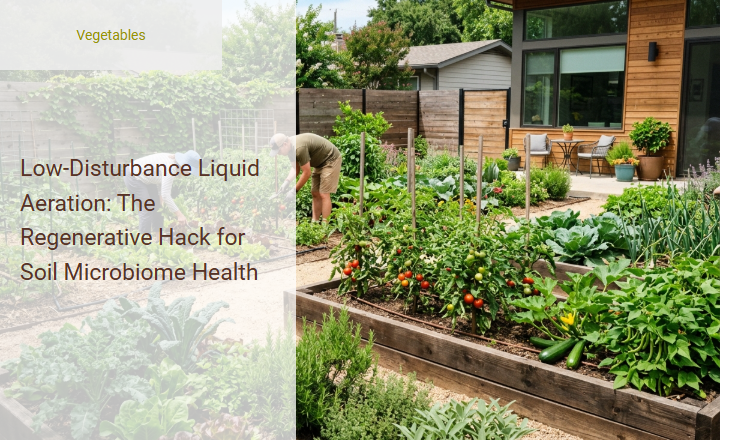
Turf managers and regenerative agriculturalists constantly battle the yield-limiting effects of soil compaction. Yet, traditional mechanical core aeration often destroys the very soil structure, pore space, and delicate microbial networks they work so hard to build. While mechanical fracturing temporarily relieves physical tightness, it simultaneously shears mycorrhizal fungi and invites opportunistic weed growth.
Transitioning to low-disturbance liquid aeration grants land managers the ability to relieve deep compaction while accelerating nutrient cycling. To be clear: this method is not an overnight synthetic cure, but an ongoing biological catalyst that relies on active soil life to permanently restructure the soil profile. For instance, combining botanical surfactants with liquid humates and active compost extracts offers concrete proof that we can open compacted clay without turning a single spade of dirt.
In this guide, we will analyze the biochemical mechanisms of liquid aerators, compare their long-term efficacy against mechanical aeration, and outline a step-by-step protocol for integrating this regenerative hack into your current management program.
Read also: Spading vs Broadforking for Bed Preparation
The Hidden Crisis of Soil Compaction and Mechanical Aeration
Underneath a lush green lawn lies a silent, suffocating crisis. Soil compaction, driven by heavy foot traffic, lawn equipment, and natural settling, squeezes out the vital pore space necessary for soil life. For decades, the standard remedy has been mechanical core aeration-a violent process that tears through the turf to pull up plugs of soil. While this traditional method offers a temporary gas exchange, it inflicts severe trauma on the delicate upper layers of the earth, fracturing the soil structure and leaving the lawn vulnerable to weeds and disease.
The damage caused by these heavy mechanical aerators goes far beyond surface-level disruption. Studies show that mechanical compaction and subsequent aggressive plugging can reduce soil biological activity by up to 50%, leaving the subterranean ecosystem in ruins. Furthermore, the physical shearing action of metal tines destroys the intricate channels built by earthworms and roots, which accounts for a staggering 70% loss in natural macropore stability. A low-disturbance alternative is desperately needed to relieve compaction without declaring war on the very soil we wish to cultivate.
Demystifying Low-Disturbance Liquid Aeration
Liquid aeration represents a paradigm shift in turf management, offering a completely non-invasive method to alleviate soil tightness. Unlike mechanical aerators that physically extract plugs of dirt, liquid aeration utilizes highly specialized liquid solutions applied directly to the turf surface. These solutions penetrate deep into the ground, utilizing advanced chemical structures to loosen tight particles from the inside out, requiring absolutely no heavy machinery, noisy engines, or unsightly dirt cores scattered across the lawn.
At the heart of this technology are surfactants, or wetting agents, combined with rich organic compounds. These ingredients work in tandem to reduce the surface tension of water, allowing it to penetrate deeply into otherwise impermeable soil. By utilizing polyelectrolytes and bio-catalysts, liquid aeration restructures compacted clay on a microscopic level. This process establishes micro-fissures throughout the root zone, creating a highly porous, sponge-like soil matrix that naturally breathes and absorbs nutrients without a single physical puncture.
The Biochemical Mechanism: How Liquid Aerators Work
To understand liquid aeration, one must look at the electrostatic forces holding clay particles together. Compacted clay soils are bound by tight ionic bonds, creating a dense, impenetrable sheet. Liquid aerating agents utilize specific biochemical compounds to disrupt these electromagnetic charges. When applied, ammonium laureth sulfate and other mild anionic surfactants reduce the surface tension of water, allowing moisture to slip into the microscopic spaces between tightly packed clay platelets.
Once water has penetrated these tight zones, organic chelators such as humic acids and cold-pressed kelp extracts go to work. These complex organic molecules carry a negative charge that neutralizes the positive ions keeping clay platelets bound together. As these ionic bonds fracture, the clay particles push apart, creating thousands of microscopic pathways. Over time, these micro-channels are stabilized by the root-stimulating hormones found in phytohormones, transforming a dense block of clay into an open, highly oxygenated subterranean network.
Safeguarding the Wood-Wide Web: Protecting Mycorrhizal Networks
Beneath the surface of a healthy lawn lies a vast, interconnected web of beneficial fungi known as mycorrhizae. Often referred to as the "wood-wide web," these fungal hyphae form symbiotic relationships with plant roots, extending their reach to gather water and essential nutrients. Mechanical core aeration acts like an earthquake to this fragile infrastructure, physically tearing apart the delicate hyphal networks that take months, or even years, to establish. This disruption leaves grass roots isolated and highly dependent on synthetic chemical inputs.
Liquid aeration completely bypasses this destruction. By utilizing gentle chemical and biological pathways to expand pore space, liquid treatments preserve the delicate fungal architecture. Instead of severing the biological bridges, the liquid solution flows through the soil, delivering oxygen directly to the mycorrhizae and encouraging further hyphal elongation. This non-disruptive method ensures that the underground communication and nutrient-sharing network remains fully intact and highly functional.
"Every time a mechanical tine punctures the soil, it shears through miles of microscopic fungal highways. Preserving these mycorrhizal networks via low-disturbance liquid methods is essential for maintaining the biological integrity and natural disease resistance of the turf ecosystem."
Fueling the Underground Ecosystem: Microbiome Acceleration
Soil is not merely dirt; it is a living, breathing ecosystem teeming with billions of microscopic organisms. While mechanical aeration leaves compacted soil exposed to drying winds and UV radiation-which sterilizes the surface microbial life-liquid aerators actively feed and stimulate the soil food web. The carbon-rich ingredients within high-quality liquid formulas act as powerful prebiotics, providing an immediate energy source that triggers a massive population boom among beneficial microbes.
By delivering bio-available carbon, trace minerals, and oxygen deep into the root zone, liquid aeration stimulates several key microbial groups that are essential for long-term soil structure and plant health. These include:
- Nitrogen-Fixing Bacteria: Microbes that convert atmospheric nitrogen into a usable, plant-soluble form, reducing the need for synthetic fertilizers.
- Mycorrhizal Fungi: Organisms that extend root surface area to maximize water absorption and nutrient uptake.
- Phosphate-Solubilizing Bacteria: Specialized microbes that break down bound-up phosphorus in the soil, making it readily available for root development.
- Decomposing Saprophytes: Fungi and bacteria that break down dead organic matter and thatch, converting it into rich humus.
Maximizing Water Retention and Nutrient Bioavailability
When soil is compacted, water cannot penetrate the surface. Instead of sinking down to hydrate plant roots, rainfall and irrigation water run off, carrying away valuable topsoil and fertilizers into local waterways. Liquid aeration solves this hydrological barrier by turning the soil into a highly receptive sponge. As the liquid agent opens up thousands of micro-channels, water is drawn deep into the profile via capillary action. This dramatically increases the water infiltration rate, ensuring that every drop of moisture is utilized efficiently.
Beyond moisture management, these newly formed micro-channels play a vital role in unlocking plant nutrition. Many essential minerals, such as phosphorus, iron, and calcium, are often chemically locked within tight clay soils, inaccessible to plant roots. The biological humates and organic acids in liquid aerators act as natural chelators, binding to these locked minerals and converting them into a highly bioavailable form that plant roots can easily absorb. This process ensures that plants receive a steady, natural stream of nutrition from the existing soil reserve.
Direct Comparison: Liquid Aeration vs. Traditional Core Aeration
Choosing the right aeration strategy depends on understanding the fundamental differences between these two distinct approaches. Below is a detailed comparison highlighting how mechanical core aeration stacks up against advanced liquid aeration formulas across key performance indicators:
| Feature / Metric | Mechanical Core Aeration | Liquid Aeration |
|---|---|---|
| Soil Disturbance | High; physically rips turf, pulls up messy soil plugs, and leaves gaping holes. | None; non-invasive liquid application that preserves soil structure and lawn aesthetics. |
| Longevity of Results | Short-term; holes typically collapse within 4 to 6 weeks, causing re-compaction. | Long-term; progressively builds soil structure and micro-channels over several months. |
| Labor & Equipment | Extremely high; requires heavy machinery rental, physical hauling, and strenuous labor. | Low; simple spray application using a standard hose-end or backpack sprayer. |
| Microbial Impact | Destructive; tears apart mycorrhizal networks and exposes beneficial soil microbes to UV damage. | Accelerative; acts as a prebiotic food source, rapidly multiplying beneficial soil biology. |
| Underground Infrastructure | Risky; can easily puncture shallow irrigation lines, invisible dog fences, and lighting wires. | 100% Safe; zero risk of damaging underground utilities or irrigation systems. |
A Step-by-Step Guide to Applying Liquid Aerating Agents
Applying liquid aeration is a straightforward process that requires minimal equipment. Unlike renting heavy machinery, liquid application can be completed quickly with a standard garden hose-end sprayer or a backpack pressure sprayer. To achieve the best possible results and ensure deep soil penetration, follow this simple step-by-step application guide.
- Assess and Prepare the Area: Clear the lawn or garden bed of any heavy debris, toys, or thick leaf cover. Mow the lawn to a standard height to allow the liquid formula to reach the soil surface directly without being intercepted by excessively tall grass blades.
- Dilute and Mix: If using a concentrated formula, mix the product with water according to the manufacturer's specified ratio in your sprayer tank. For most high-quality concentrates, a standard rate is 4 to 8 ounces of product per 1,000 square feet, diluted in plenty of water.
- Calibrate Your Sprayer: Set your hose-end sprayer to the correct dial setting, or ensure your backpack sprayer is pressurized to deliver a consistent, fine-to-medium mist. Steady pressure is key to ensuring even distribution across the entire treatment area.
- Apply Evenly: Walk at a steady pace, sweeping the wand back and forth in overlapping passes. Ensure you cover the entire target area evenly, paying extra attention to high-traffic zones or areas prone to heavy water pooling.
- Water It In: After application, lightly irrigate the treated area with approximately 1/4 inch of water. This post-application watering helps wash the active surfactants and carbon compounds off the leaf blades and drives them deep into the compacted root zone.
Timing and Environmental Conditions for Optimal Results
To maximize the biochemical and biological efficacy of liquid aeration, timing is everything. Because the formula relies on living soil biology and liquid movement, applying it during the correct seasonal windows yields dramatically superior results. The absolute best times of year to apply liquid aerators are during active growth periods in the spring and autumn, when plants are actively growing and pushing root exudates into the soil.
Temperature plays a vital role in biological activity. Do not apply liquid aerators when the ground is frozen or during periods of extreme summer drought. For optimal microbial colonization, ensure that soil temperatures are consistently above 55°F (13°C). Applying the product during early morning or late afternoon hours is highly recommended, as this prevents the liquid from evaporating too quickly under the hot midday sun.
Weather forecasting can also be used to your advantage. Applying your liquid aerator 24 to 48 hours before a light rainfall is an ideal strategy. The natural, gentle precipitation will naturally carry the active surfactants deep into the subsoil layers without washing them away. Avoid applying the product immediately before a heavy, torrential downpour, as excessive runoff can sweep the active compounds off your lawn before they have a chance to bind to the soil chemistry.
Embracing a Regenerative Future in Soil Management
The transition from invasive mechanical core aeration to low-disturbance liquid alternatives is more than just a matter of convenience; it represents a fundamental step forward in the movement toward regenerative soil stewardship. By stepping away from the destructive practices of the past, we allow the earth to heal its own structural wounds. Eliminating the physical tearing of the soil profile preserves the complex biological networks that keep our lawns and gardens naturally resilient against environmental stress, pests, and drought.
Moving toward a low-disturbance, zero-till approach allows us to cultivate a thriving, self-sustaining underground ecosystem. When we nourish the soil biology with organic carbon and non-invasive aeration agents, the microbes and mycorrhizae respond by naturally maintaining soil structure, recycling nutrients, and building long-term organic matter. This shift in mindset transforms lawn care from a cycle of constant, mechanical intervention into a harmonious partnership with nature.
Choosing to work with the soil rather than against it fosters a vibrant landscape that naturally flourishes, proving that true beauty and ecological vitality always begin deep within the living earth.
Summary
The article "Low-Disturbance Liquid Aeration: The Regenerative Hack for Soil Microbiome Health" highlights a paradigm shift in modern soil and turf management. While traditional mechanical aeration relieves soil compaction, it also physically disrupts the delicate soil food web and tears apart beneficial mycorrhizal fungal networks.
In contrast, low-disturbance liquid aeration offers a regenerative alternative. By applying specialized liquid formulations rich in humic acids, biostimulants, and beneficial microbes, this method biochemically loosens compacted soil. It creates micro-fissures that allow deep water and oxygen penetration without disturbing the surface, damaging roots, or triggering weed germination. This innovative technique preserves the soil microbiome, enhances root depth, and boosts microbial activity, offering a highly efficient, labor-saving path to long-term soil vitality and plant resilience.
Leave a comment