
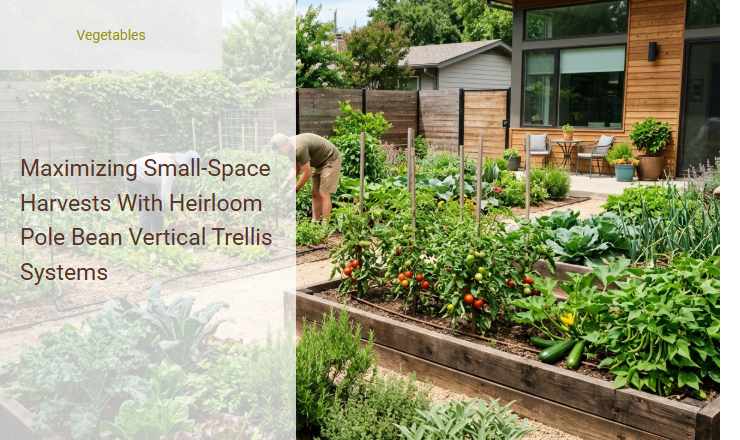
For urban growers and backyard homesteaders, maximizing vegetable yields within a restricted footprint is a constant frustration, often resulting in overcrowded soil and disappointing harvests. While traditional bush beans offer a quick setup, their horizontal sprawl quickly consumes valuable ground real estate. Transitioning to vertical cultivation solves this spatial dilemma, though long-term success requires a deliberate pairing of robust structural engineering and proper crop selection.
By utilizing vertical trellis systems, you can harness the vigorous climbing habits of premium heirloom pole beans-such as the prolific 'Kentucky Wonder' or the resilient 'Cherokee Trail of Tears'-to secure a continuous, heavy harvest from a mere fraction of ground space. This guide will examine how to construct stable trellis supports, manage soil nutrition, and implement training techniques to optimize your vertical micro-farm.
Read also: Pruning vs Trellising for Pole Beans
Introduction to Small-Space Vertical Bean Gardening
For urban gardeners and those with limited outdoor space, maximizing every square inch of your growing area is essential. Heirloom pole beans stand out as the ideal choice for small-space agriculture. Unlike bush beans that spread outward and consume precious ground real estate, pole beans naturally climb upward. This upward trajectory is made possible through the use of vertical trellis systems, which transform narrow patios, balconies, and small yard borders into lush, highly productive vertical farms.
Choosing heirloom varieties over modern hybrids brings outstanding flavor, historical resilience, and genetic diversity to your home garden. These time-tested plants have been passed down through generations of gardeners because of their exceptional culinary qualities and robust growth. By focusing on vertical growth, you can produce a massive harvest of delicious, tender pods from a footprint of just a few square feet, proving that space limitations do not have to limit your garden's output.
Top Heirloom Pole Bean Varieties for High Yields
Selecting the right heirloom pole bean variety is key to maximizing your harvest and enjoying exceptional culinary qualities. The following varieties are excellent choices for vertical gardening in compact areas:
Kentucky Wonder
This classic variety is highly prized for its massive yields and rich, distinctive bean flavor. Its key traits include:
- Vigorous climbing vines that quickly cover any vertical support.
- Long, tender green pods that remain stringless when harvested young.
- An extended production window that lasts until the first fall frost.
Cherokee Trail of Tears
This variety offers outstanding history, beauty, and taste. Its characteristics make it ideal for small spaces:
- Striking dark purple pods that contrast beautifully with bright green foliage.
- Excellent resilience against drought and fluctuating temperatures.
- A rich, nutty flavor perfect for both fresh eating and dried bean storage.
Blue Lake Pole
A standard for home gardeners who value dependable performance and premium quality:
- Crisp, straight pods that mature uniformly for easy batch preservation.
- A sweet, mild taste that appeals to both children and gourmet chefs.
- Highly productive vines that maximize the vertical space of a trellis.
Designing and Selecting the Ideal Trellis System
To support the heavy weight of climbing vines laden with developing bean pods, you must select an appropriate vertical support structure. Different trellis designs work best depending on whether you are gardening on a concrete balcony, a wooden deck, or in a small garden bed. Below is a comparison of the three most popular vertical support systems designed to help you select the best option for your specific space constraints.
| Trellis Type | Best Location | Key Advantages | Space Efficiency |
|---|---|---|---|
| Teepee Trellis | Large Containers, Small Yards | Excellent stability, attractive rustic look, easy to construct with bamboo poles. | Medium - requires a circular base but maximizes overhead air space. |
| A-Frame Trellis | Raised Garden Beds | Dual-sided planting surface, highly sturdy, creates shaded space underneath for cool-season crops. | High - doubles the planting area using a single footprint. |
| Wall-Mounted Netting | Balconies, Patios, Walls | Extremely lightweight, takes up zero floor space, attaches directly to existing structures. | Maximum - utilizes vertical wall surfaces without blocking walkways. |
Soil Preparation and Container Selection
The Perfect Soil Mixture
Because heirloom pole beans are energetic climbers, they require a nutrient-rich and well-draining soil mix to sustain their rapid growth. A premium potting mix should consist of equal parts compost, peat moss, and perlite. This blend ensures that the root zone remains moist but never waterlogged, which is critical for preventing root rot.
Nutrient Requirements
Beans are nitrogen-fixing plants, meaning they work with soil microbes to extract nitrogen from the air. Therefore, you must avoid fertilizers with high nitrogen levels, as they will result in lush green leaves but very few bean pods. Instead, mix a handful of bone meal or organic phosphorus-rich fertilizer into the soil prior to planting to encourage strong root development and abundant flower production.
Choosing the Right Container
If you are growing pole beans in pots, size is everything. Select a container that is at least five to ten gallons in volume and has a minimum depth of twelve inches. Large containers retain moisture more consistently, preventing the soil from drying out rapidly during the heat of summer when the climbing vines are drinking heavily.
Planting and Spacing for Optimal Airflow
Sowing your heirloom pole bean seeds correctly is the first step toward a healthy, high-yielding garden. Proper spacing is essential to ensure that each vine receives adequate light and that air can circulate freely through the mature foliage, which prevents fungal diseases.
- Plant your seeds directly into the soil once all danger of spring frost has passed and the soil temperature has reached at least sixty degrees Fahrenheit.
- Sow the seeds at a depth of one inch, as planting them too shallowly can cause them to dry out before germinating, while planting too deep may prevent them from emerging.
- Space the seeds approximately three to four inches apart along the base of your chosen trellis system to give each plant sufficient room to grow without immediate crowding.
- Water the newly planted seeds gently but thoroughly, keeping the soil consistently damp but not soggy until the seedlings emerge, which typically takes seven to ten days.
- Thin the young seedlings to a final spacing of six inches apart once they reach three inches in height, selecting only the strongest, healthiest plants to continue climbing.
Training and Pruning Vines for Maximum Sunlight
Once your pole bean seedlings reach about six inches in height, they will begin to send out searching tendrils. Gently guide these young vines toward your trellis. Most pole beans climb counter-clockwise, so wrap the growing tips gently around the support in their natural climbing direction. Once they catch on, they will climb vigorously on their own without much further intervention.
"Proper pruning is the secret to keeping vigorous heirloom vines productive in small spaces. By managing the foliage, you direct the plant's energy away from excessive leaf production and straight into forming abundant, tender bean pods." Vertical Gardening Quarterly
As the vines reach the top of your trellis, pinch off the main growing tips. This encourages lateral branching, which leads to more flower clusters and a heavier yield of beans within arm's reach. Additionally, prune away any yellowed or dense leaves near the bottom twelve inches of the vine to allow sunlight to penetrate the inner canopy and keep the soil surface dry, reducing the risk of pest infestations and disease.
Companion Planting to Boost Pole Bean Health
Companion planting is a highly effective way to optimize limited space and build a healthier ecosystem in your vertical garden. By planting beneficial species right alongside your pole beans, you can naturally deter pests, improve soil quality, and attract the pollinators needed for pod development.
Insect-Repelling Companions
Certain plants produce natural scents that mask the aroma of your bean plants, making it harder for destructive pests to find them:
- Marigolds: These bright flowers release a scent that deters nematodes and keeps harmful beetles away from your tender bean leaves.
- Summer Savory: Known for improving the overall flavor of beans when cooked, this herb also deters bean beetles when grown in close proximity.
Space-Saving Understory Plants
You can make use of the shaded space beneath your vertical trellis by planting shallow-rooted crops that enjoy cool conditions:
- Radishes: These fast-growing root vegetables thrive in the partial shade cast by climbing bean vines and can be harvested before the beans take over.
- Spinach and Lettuce: The leafy greens benefit from the filtered afternoon sun, preventing them from bolting in the summer heat.
Watering and Fertilization Strategies for Heavy Production
Heirloom pole beans require consistent moisture to develop succulent, tender pods. Dry soil can cause flowers to drop prematurely, halting your harvest before it even begins. Aim to provide about one inch of water per week, watering deeply at the base of the plants early in the morning.
Avoid wetting the leaves, as wet foliage is a primary cause of fungal infections.
While beans do not require heavy nitrogen feeding, they benefit from light supplementation as they transition from green growth to heavy flower production. Application of a low-nitrogen organic fertilizer rich in phosphorus and potassium is ideal at this stage.
Apply a liquid kelp or fish emulsion diluted to half strength once every two weeks when the first blossoms appear to support continuous pod formation throughout the summer.
Organic Pest Control and Disease Prevention
Growing plants in close quarters can occasionally lead to pest problems and plant diseases. Fortunately, you can manage these challenges using safe, organic methods that protect your family and the beneficial insects in your garden.
Identifying Common Pests
Keep a close eye on your vines to spot early signs of damage from these common invaders:
- Aphids: These tiny, sap-sucking insects cluster on the undersides of leaves, causing curling and stunted growth.
- Spider Mites: These microscopic pests leave fine webbing on the leaves and cause yellow speckling on the foliage during dry, hot weather.
- Mexican Bean Beetles: These yellow-orange beetles and their spiny larvae skeletonize bean leaves, leaving only the veins behind.
Simple Organic Treatments
You can control most infestations without resorting to harsh chemical sprays:
- Sharp Water Spray: A strong blast of water from your garden hose can knock aphids and spider mites off the plants and disrupt their life cycles.
- Neem Oil: An organic neem oil spray applied in the evening can deter feeding insects and help control fungal infections like powdery mildew.
- Handpicking: For larger pests like beetles, handpicking them off the leaves and dropping them into a bucket of soapy water is highly effective.
Harvesting Heirloom Beans and Saving Seeds
Harvesting your heirloom beans at the perfect moment ensures the best flavor and texture. Pick green snap beans when the pods are plump and firm, but before the seeds inside begin to bulge significantly. Consistent harvesting is the secret to high yields, as picking mature beans signals the plant to produce more blossoms and new pods.
To harvest, gently snap the pod from the vine at the stem junction, taking care not to tear the main vine. If you are growing dry bean varieties, leave the pods on the vine until they turn brown and paper-dry in late autumn, allowing the seeds inside to mature completely.
Saving seeds from your favorite heirloom varieties allows you to preserve the genetics for next year's garden. Select a few of your healthiest, most productive vines and leave several high-quality pods to mature and dry completely on the vine. Once the pods are brittle, shell the beans and lay them out on a screen in a dry, well-ventilated area for two weeks. Store the fully dried seeds in an airtight jar in a cool, dark place to ensure successful germination next spring.
Summary
The article "Maximizing Small-Space Harvests With Heirloom Pole Bean Vertical Trellis Systems" provides a comprehensive guide for gardeners looking to optimize limited outdoor areas. By transitioning from traditional bush beans to vertical pole beans, growers can drastically increase their yield per square foot. Heirloom pole bean varieties are highlighted for their superior taste, genetic resilience, and continuous production throughout the growing season.
The piece emphasizes the importance of sturdy vertical support structures, such as A-frames, teepees, and netting, which not only save ground space but also improve airflow and sunlight penetration. This vertical approach minimizes soil-borne diseases and makes harvesting significantly easier. Ultimately, the article offers practical advice on soil preparation, trellis construction, and variety selection, empowering small-space gardeners to cultivate a highly productive, sustainable, and visually appealing backyard harvest.
Leave a comment