
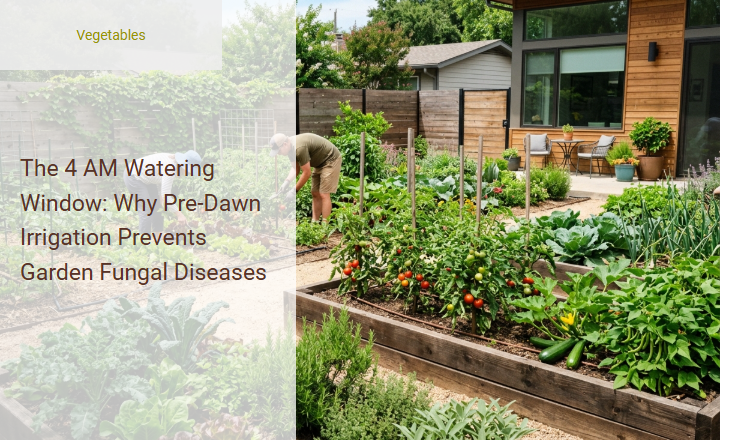
Few things are more frustrating to a dedicated gardener than watching prized tomatoes and squash succumb to powdery mildew, or seeing black spot devastate a vibrant rose bed. You water diligently, yet fungal pathogens continue to thrive. The root of this struggle lies in the delicate relationship between prolonged foliage moisture and overnight temperature drops, which together create the ideal breeding ground for devastating spore germination.
Optimizing your irrigation schedule to a precise 4 AM window grants your landscape a natural defense system, dramatically reducing disease pressure while maximizing water efficiency. While this strategy is highly effective, we must stipulate that timing alone cannot fully compensate for compacted soil or inherently poor garden drainage.
In this article, we will analyze the biological science behind the pre-dawn watering window, explain how it synchronizes with daily evaporation cycles, and provide actionable steps to program your irrigation for optimal plant health.
Read also: Morning vs Evening for Garden Watering
Introduction: The Chronobiology of Your Garden
Plants operate on internal biological clocks that dictate their nutrient uptake, respiration, and defenses. While gardeners carefully select fertilizers and soil blends, they often overlook how the timing of water delivery dictates overall plant health. Watering at the wrong hour can inadvertently foster pathogens or waste valuable resources. Targeting the pre-dawn 4 AM watering window aligns perfectly with a plant's natural circadian rhythm, offering the ideal balance of hydration, cellular pressure, and disease prevention.
The Fungal Enemy: How Spores Colonize Wet Leaves
Fungal pathogens are opportunistic organisms that require specific environmental cues to transition from dormant spores into destructive mycelial networks. When water remains stagnant on foliage, it softens the waxy cuticle of the leaf, allowing microscopic spores of pathogens like Podosphaera pannosa (powdery mildew) or Diplocarpon rosae (black spot) to hydrate, swell, and penetrate the host tissue. Without surface water, these spores remain inert and harmless.
The biological process of germination happens surprisingly fast. Spores of Colletotrichum species can germinate and form infection structures called appressoria within just a few hours of continuous moisture exposure. Keeping leaves dry is your primary line of defense against these microscopic invaders.
Deciphering the "Leaf Wetness Period"
In professional horticulture, managing the microclimate around your plants is key to disease prevention. A critical metric used by agricultural scientists is the leaf wetness period, which measures the total continuous duration that free water from rain, dew, or irrigation remains on the aerial parts of a plant. Fungal pathogens typically require a minimum of 8 to 12 consecutive hours of wetness to successfully breach a leaf's cellular barriers.
By scheduling irrigation to minimize this critical window, you break the infection cycle. Watering at a time that allows the rising sun to quickly evaporate surface droplets ensures the leaf wetness period never reaches the threshold required for spore germination.
Why 4 AM is the Ultimate Sweet Spot
The hour of 4 AM represents a unique intersection of meteorology and plant physiology. During this pre-dawn window, environmental conditions align perfectly to maximize irrigation efficiency while protecting the plant structure from disease and stress.
- Minimal Wind: Winds are typically at their calmest just before dawn, ensuring that sprinkler patterns remain precise and water lands exactly where intended rather than drifting away.
- Cool Temperatures: Low ambient temperatures reduce immediate evaporation rates, allowing water to slowly percolate deep into the soil.
- Optimal Turgor Pressure: Plants are preparing for sunrise; their vascular systems are ready to absorb water to build up cell turgidity for the upcoming day's photosynthesis.
The Hidden Dangers of Evening Watering
Watering at dusk might seem convenient, but it traps moisture in the soil and on the foliage for the duration of the cool, dark night. Without sunlight or wind to drive evaporation, plants remain wet for up to ten hours or more, creating a perfect incubation chamber for pathogens.
"Watering plants in the evening is akin to leaving them in a cold, wet towel overnight; it weakens their cellular defenses and provides the extended dampness that soil-borne oomycetes and foliar fungi need to devastate healthy tissue."
This stagnant moisture also cools the soil excessively, starving roots of oxygen and encouraging water mold pathogens like Pythium and Phytophthora, which cause devastating root rot.
The Inefficiency of Midday Irrigation
Irrigating during the heat of the afternoon is highly inefficient. When the sun is high and temperatures peak, a vast amount of applied water evaporates before it even reaches the root zone. Furthermore, cold water applied to hot soils can shock sensitive root systems, disrupting their metabolic processes.
Studies in agricultural water management show that up to 30% to 50% of water applied during midday is lost immediately to evaporation, making it an expensive and wasteful practice. Droplets remaining on leaves can also act as tiny magnifying glasses, focusing intense sunlight and causing localized leaf scorch.
Maximizing Soil Hydration and Root Intake
Pre-dawn irrigation leverages gravity and soil physics to build a water reservoir in the root zone. Because the atmosphere is highly humid and cool at 4 AM, the capillary action of the soil is unimpeded by rapid upward transpiration. Water moves steadily downward, saturating the rhizosphere-the narrow zone of soil directly influenced by root secretions and associated microorganisms.
Once the sun rises, the plant's stomata open, initiating transpiration. Because the root zone is already fully hydrated, the plant can easily draw up moisture to keep pace with the day's heat, avoiding wilt and drought stress.
Automating the 4 AM Window
Waking up at 4 AM to water your garden is impractical for most. Fortunately, modern irrigation technology makes targeting this pre-dawn sweet spot effortless and highly reliable.
- Install a Smart Wi-Fi Controller: Upgrade your standard manual timer to a smart irrigation controller that adjusts watering times based on hyper-local weather feeds.
- Set Up Drip Irrigation Lines: Deliver water directly to the soil surface using emitter tubing. This bypasses the foliage entirely, ensuring leaves remain bone dry.
- Configure the 4 AM Schedule: Program your zones to begin watering sequentially, starting at 4:00 AM, ensuring all zones complete their cycles before full sunrise.
- Integrate Soil Moisture Sensors: Pair your controller with soil moisture probes to skip the 4 AM run if the soil is already sufficiently hydrated from recent rainfall.
Early Warning Signs of Fungal Distress
Even with optimal watering schedules, changes in weather can sometimes trigger fungal outbreaks. Monitoring your garden daily for subtle changes in the leaves, stems, and soil will allow you to intervene before pathogens cause systemic damage.
| Symptom | Likely Cause | Immediate Action |
|---|---|---|
| White, powdery residue on leaf surfaces | Powdery Mildew (foliar fungus) | Prune affected leaves; apply organic neem oil spray; shift watering strictly to pre-dawn. |
| Black spots with yellow halos on lower leaves | Black Spot (spore-driven pathogen) | Remove fallen debris around plant base; improve air circulation; avoid overhead watering. |
| Wilting despite wet soil and leaf yellowing | Root Rot (Oomycete infection) | Allow soil to dry completely; improve drainage; apply a bio-fungicide if necessary. |
Conclusion: A Sunrise Routine for a Disease-Free Garden
Aligning your irrigation schedule with the natural rhythm of your garden is one of the most effective, low-cost strategies for cultivating vibrant, resilient plants. By targeting the 4 AM window, you drastically cut down the leaf wetness period, starving fungal spores of the moisture they require to colonize leaf tissue. This simple scheduling adjustment ensures that water is delivered when it is most beneficial and least destructive.
Adopting this pre-dawn routine transforms your gardening practice from reactive disease management to proactive health promotion. By pairing natural plant biology with modern irrigation tools, you can establish an effortless, self-sustaining loop that keeps your soil hydrated, your leaves dry, and your entire garden thriving.
Summary
Watering your garden during the "4 AM window" is one of the most effective strategies for preventing devastating fungal diseases while maximizing water efficiency. This pre-dawn timing ensures that plants receive deep hydration before the sun rises and triggers rapid evaporation. More importantly, it minimizes the duration of leaf wetness. Unlike evening watering, which leaves foliage damp and vulnerable to pathogens like powdery mildew, black spot, and root rot overnight, 4 AM irrigation allows leaves to dry quickly as the sun comes up, disrupting fungal lifecycles.
Additionally, early morning watering takes advantage of cooler temperatures and calmer winds, reducing water waste and maximizing soil absorption. Utilizing automatic hose timers can easily automate this practice, helping gardeners cultivate resilient, disease-free plants by simply optimizing their irrigation schedule.
Leave a comment