
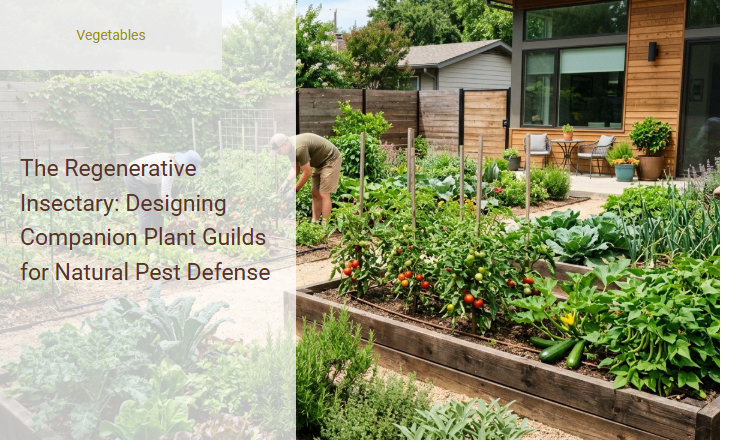
Commercial and homestead growers alike constantly battle devastating pest pressures, often watching chemical interventions trigger costly secondary outbreaks and soil degradation. To address this cycle, we must first recognize that chronic pest infestations are not the root problem, but rather a symptom of ecological fragmentation inherent in simplified planting systems.
Transitioning to a regenerative insectary model grants growers a self-sustaining, low-input defense system. However, this shift stipulates a move away from reactive eradication toward proactive, observation-based biodiversity. By strategically integrating companion guilds-such as planting yarrow to harbor predatory hoverflies, or placing dill to attract parasitoid wasps-you can establish a highly targeted, functional living shield.
In this guide, we will analyze the key principles of predatory insect ecology, detail specific plant guild blueprints for temperate and subtropical climates, and outline the management steps required to transition your acreage into a self-regulating ecosystem.
Read also: Copper vs Diatomaceous Earth for Snail Control
Introduction to Regenerative Insectaries
For decades, conventional agriculture and home gardening have relied heavily on chemical interventions to manage pest populations. This approach often results in a degraded environment and a relentless cycle of chemical dependency. Shifting the gardening paradigm involves embracing regenerative insectaries. These are intentionally designed ecosystems that prioritize natural biological control over synthetic eradication.
By planning and planting companion plant guilds, growers can establish a self-sustaining environment where nature maintains its own balance. Instead of viewing insects as pests to be destroyed, this methodology welcomes biodiversity. We can design functional plant communities that attract, feed, and shelter beneficial organisms, creating a resilient landscape that thrives without chemical intervention.
Understanding Your Allies: Predators and Parasitoids
To successfully transition away from chemical controls, we must understand the life cycles and behaviors of our insect allies. These beneficial organisms generally fall into two categories: predators that actively hunt pests, and parasitoids that use pests to host their developing offspring. By creating habitats that cater to their needs, we can establish a permanent security force in our gardens.
- Ladybugs: Famous for their voracious appetite, both adult ladybugs and their lizard-like larvae consume hundreds of aphids, scale insects, and mites daily.
- Lacewings: Often referred to as aphid lions, the delicate larvae of green lacewings are aggressive predators that target soft-bodied pests, thrips, and caterpillar eggs.
- Hoverflies: While adult hoverflies are excellent pollinators feeding on nectar, their tiny, slug-like larvae crawl along leaves devouring dense colonies of aphids.
- Parasitic Wasps: These tiny, non-stinging wasps lay their eggs inside or on host insects, such as tomato hornworms or aphids. The developing larvae consume the pest from the inside out, effectively ending the pest cycle.
Core Principles of Companion Plant Guilds
A companion plant guild is more than just a random collection of flowers; it is a carefully structured plant community designed to maximize ecological interactions. To build an effective guild, we must look at how plants interact with one another and their environment, focusing on spatial optimization, deep root dynamics, and resource distribution.
Guild ecology teaches us that plants are not competitors, but cooperators. By stacking functions within a single spatial unit, we mimic natural forest edges where every organism supports the survival of another.
In a well-designed guild, taller plants provide structural support and light filtration, while deep-rooted dynamic accumulators draw up subsoil nutrients. Meanwhile, low-growing ground covers protect soil moisture and prevent weed invasion. This symbiotic arrangement ensures that resources are shared efficiently, maximizing the health of the entire plant community and providing a diverse array of nectar and pollen sources for beneficial insects.
Designing for Continuous Bloom: Seasonal Succession
Beneficial insects require a constant, uninterrupted supply of pollen and nectar throughout their active seasons. If a gap in flowering occurs, these helpful predators will either starve or migrate elsewhere in search of food. To prevent this, we must select plants that bloom sequentially from the first warm days of early spring through the final frosts of late autumn.
| Season | Target Beneficials | Recommended Plants |
|---|---|---|
| Early Spring | Overwintering queen bumblebees, early emerging parasitic wasps | Sweet alyssum, dandelions, willow catkins |
| Mid Summer | Lacewings, ladybugs, hoverflies, predatory wasps | Dill, fennel, yarrow, buckwheat |
| Late Autumn | Late-season pollinators, hoverflies preparing for hibernation | Goldenrod, asters, sunflowers |
Trap Cropping and Barrier Plants
While some plants are designed to attract beneficial predators, others serve as decoy targets or physical shields to protect your main food crops. This practice, known as trap cropping, involves planting highly appealing companion plants at the perimeter of the garden to draw destructive pests away from your prized vegetables.
For example, planting nasturtiums near squash or brassicas will lure aphids and caterpillars away, keeping your main crops clean. Similarly, mustard greens can be used as a sacrificial crop to intercept flea beetles. Surrounding your garden beds with tall sunflowers not only creates a physical barrier against windborne pests but also acts as an attractive foraging station that intercepts aphids and attracts larger predatory birds.
Creating Microclimates and Physical Shelters
Providing food is only half the battle; beneficial insects also need safe places to nest, seek shelter from extreme weather, and overwinter safely. By incorporating diverse physical structures and varied planting configurations into your garden, you can establish stable microclimates that keep your pest-control allies on-site year-round.
- Beetle Banks: Low, mounded ridges planted with perennial bunchgrasses that provide essential overwintering habitat for predatory ground beetles.
- Rock Piles: Loose stacks of stones that absorb solar heat during the day and offer cool, damp crevices for nocturnal predators.
- Insect Hotels: Bundles of hollow reeds, drilled wooden blocks, and dry twigs that offer nesting cavities for solitary bees and lacewings.
- Dense Groundcovers: Thick blankets of low-growing plants like clover or creeping thyme that shade the soil surface and maintain high humidity.
Step-by-Step Guide to Constructing a Guild
- Assess and Prepare the Site: Observe your garden's sun exposure, wind patterns, and water drainage. Loosen the soil gently and incorporate organic compost to establish a nutrient-rich foundation.
- Select Your Anchor Plant: Choose a central crop, such as a fruit tree, berry bush, or high-value vegetable, which will serve as the focal point of your guild.
- Identify Supporting Plant Roles: Choose companion species that fulfill specific ecological functions, such as dynamic nutrient accumulators, nitrogen fixers, and insectary plants.
- Map the Spatial Layout: Arrange your chosen plants according to their mature heights and root structures, ensuring taller species do not completely shade out low-growing insectary herbs.
- Plant and Mulch: Install your selected plants during the cool morning hours, water them deeply, and apply a thick layer of organic mulch to conserve moisture and suppress weeds.
Case Study: The Orchard Insectary Guild
To understand these concepts in action, let us examine a highly successful companion plant guild built around a semi-dwarf apple tree. Apple orchards are historically prone to codling moth infestations, aphid outbreaks, and fungal diseases. By surrounding the base of the apple tree with a diverse guild of supporting plants, growers can dramatically reduce these pressures.
In this specialized ecosystem, deep-rooted comfrey acts as a dynamic accumulator, pulling vital nutrients up from the deep subsoil to feed the apple tree's shallow root system. Beside it, dill produces wide, flat umbels of tiny yellow flowers that provide easy access to nectar for parasitic wasps, which actively hunt the caterpillars of the codling moth. Meanwhile, yarrow spreads a low-growing carpet of feathery leaves and white flower heads, attracting ladybugs and hoverflies while acting as a living mulch that prevents soil erosion.
Monitoring, Maintenance, and Troubleshooting
An insectary guild is a dynamic living system that requires periodic observation to keep it functioning smoothly. Rather than ignoring the garden, active management ensures that vigorous companion plants do not crowd out slower growers, and that pest-predator ratios remain in a healthy equilibrium.
- Inspect leaf undersides weekly for beneficial insect eggs, ladybug larvae, and parasitized aphid mummies before taking any action.
- Manage aggressive spreaders by pruning back expansive companion plants like comfrey or mint twice a season to prevent them from choking out delicate nectar sources.
- Address pest surges patiently and resist the urge to spray when a minor pest infestation occurs, as predators need a temporary pest population to feed on before their numbers multiply.
Cultivating Long-Term Ecological Resilience
Embracing regenerative insectaries is a commitment to fostering a vibrant, living landscape that grows stronger with each passing season. By replacing aggressive chemical strategies with thoughtful, nature-led designs, we heal the fractured links of our local food webs. The resulting biodiversity creates a self-regulating shield that buffers our crops against unpredictable weather events and emerging pests.
As these companion plant guilds mature, they enrich the soil biology, improve water retention, and secure a permanent home for countless beneficial species. Through this cooperative approach, we move away from the constant struggle of fighting nature, choosing instead to garden in harmony with the natural cycles of the earth.
Summary
"The Regenerative Insectary: Designing Companion Plant Guilds for Natural Pest Defense" explores innovative, ecological approaches to pest management by integrating diverse, supportive plant systems. Instead of relying on synthetic chemical pesticides, this method utilizes strategic companion plant guilds to attract, feed, and shelter beneficial insects.
By cultivating a variety of flowering species-particularly those from the Asteraceae and Apiaceae families-farmers and gardeners can provide continuous nectar, pollen, and habitat for natural predators like ladybugs, lacewings, and parasitic wasps. These targeted insectary plantings establish self-regulating ecosystems that naturally keep pest populations below damaging thresholds.
Beyond pest control, these polycultures enhance biodiversity, improve soil health, and boost pollination rates. Ultimately, the article advocates for a shift from disruptive pest eradication to thoughtful ecosystem design, demonstrating how regenerative agriculture leverages nature's own checks and balances to foster resilient, sustainable food systems.
Leave a comment