
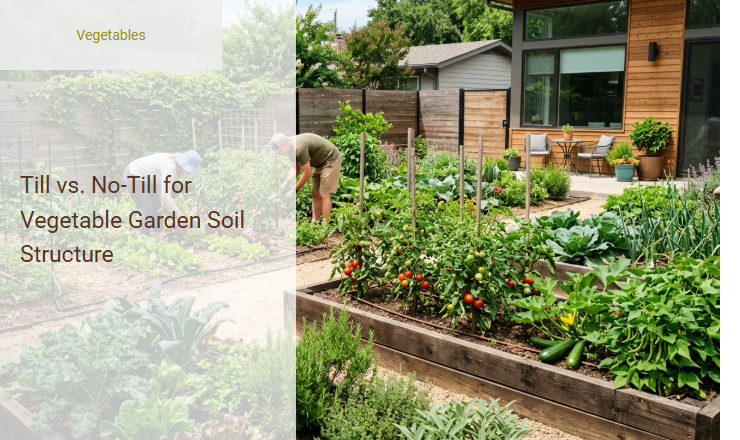
Achieving the perfect, crumbly soil structure for a thriving vegetable garden is a constant struggle, often leaving gardeners battling compacted beds and poor drainage season after season. Before deciding how to prep your plot, it is vital to understand how physical disturbance impacts the delicate underground ecosystem. Mastering the balance between soil aeration and microbial health grants you a highly resilient, self-sustaining garden that requires far less seasonal labor.
However, we must stipulate that soil rehabilitation is a gradual process rather than an overnight fix. For example, in dense clay soils, preserving natural earthworm channels and fungal networks through no-till methods proves far more effective for long-term drainage than annual rototilling. In this article, we will analyze the structural science of till versus no-till systems, evaluate their impacts on soil biology, and help you determine the optimal approach for your specific garden goals.
The Foundation of Vegetable Gardening: Understanding Soil Structure
Every thriving vegetable garden begins beneath the surface. To cultivate healthy, high-yielding crops, a gardener must first understand soil structure-the physical arrangement of soil particles (sand, silt, and clay) and the pore spaces between them. This structural integrity determines how easily roots can penetrate the earth, how well water drains, and how efficiently oxygen circulates. For generations, the standard method to prepare this foundation was heavy turning of the earth. Today, however, a passionate debate divides the horticultural world: the traditional practice of mechanical tilling versus the modern, conservation-minded philosophy of no-till gardening.
Traditional Tilling: Definition and Mechanism
Traditional soil tilling refers to the mechanical agitation and turning of the topsoil layer. Mechanized by gas-powered rototillers, tractors, or manual tools like spades and broadforks, this process shears and flips the earth. Historically, tilling played a vital role in agriculture. For centuries, farmers relied on tilling to break up compacted pasturelands, incorporate crop residues, and quickly create a uniform, pulverized seedbed ready for spring planting. This energetic disruption of the soil was long considered an essential rite of passage for any productive growing season.
The Immediate Benefits of Tilling Vegetable Beds
While long-term debates continue, there is no denying that tilling offers rapid, highly visible solutions for gardeners preparing a new planting space. By breaking up dense clods of earth in a single afternoon, it provides several immediate advantages:
- Rapid Soil Aeration: Mechanically introducing air fluffily expands the soil volume, making it easy for fragile seedling roots to spread.
- Weed Eradication: The churning action slices through established weed roots and buries existing surface vegetation, temporarily clearing the field.
- Efficient Nutrient Incorporation: It allows gardeners to thoroughly blend compost, manure, and granular fertilizers deep into the root zone instantly.
The Hidden Costs: How Tilling Disrupts Soil Biology and Structure
Despite its brief aesthetic appeal, frequent tilling inflicts severe damage on the delicate ecosystems thriving beneath the surface. When the tiller blades slice through the earth, they pulverize the stable soil aggregates that prevent erosion. This disruption tears apart complex networks of mycorrhizal fungi, which act as secondary root systems for plants, and decimates earthworm populations. Furthermore, introducing sudden rushes of oxygen causes soil microbes to rapidly consume and deplete stored organic matter, leaving the soil structurally dead and prone to crusting. Over time, the heavy machinery leaves a compacted, impenetrable layer just below the reach of the blades, known as a hardpan.
Warning: Continuous mechanical tilling strips the soil of its natural resilience, transforming a living biological network into a sterile growing medium dependent on synthetic inputs.
Embracing the No-Till Philosophy in the Garden
In stark contrast to mechanical disruption, no-till gardening is a biological approach that seeks to preserve the underground ecosystem. The core philosophy of this method is to mimic undisturbed natural environments, such as forests and prairies, where organic matter falls to the ground and decays naturally from the top down. By leaving the soil undisturbed, gardeners protect the intricate soil food web-a diverse community of fungi, bacteria, protozoa, and beneficial insects. Rather than forcing the soil into a temporary state of loose tilth, no-till methods allow nature to build long-term, stable fertility and structural integrity.
How No-Till Gardening Enhances Soil Structure and Water Retention
By leaving the earth undisturbed, the natural biological processes of the soil can flourish. Without the destructive force of blades, earthworms and microbes burrow freely, leaving behind channels that act as natural ventilation shafts. Over time, these biological activities significantly improve soil aggregates, allowing the ground to hold together against wind and rain while retaining valuable moisture.
- Increased Earthworm Activity: Undisturbed soil encourages earthworms to tunnel, depositing nutrient-rich castings and creating pathways for air and water.
- Enhanced Soil Aggregation: Microorganisms produce sticky substances like glomalin, which bind soil particles into stable crumbs that resist compaction.
- Superior Water Retention: Natural pores and undisturbed organic mulch act like a sponge, dramatically reducing evaporation and runoff.
Challenges of the No-Till Method
Transitioning to a no-till system is not without its initial hurdles, requiring patience and a shift in gardening habits. Because the soil is not being mechanically turned, gardeners often face stubborn weed pressure during the first season as dormant seeds in the topsoil germinate. Additionally, the thick layers of organic mulch required to suppress weeds can harbor cool-weather pests like slugs and snails. Acquiring the massive volume of high-quality organic matter needed to establish and maintain these protective surface layers can also be logistically challenging and expensive for those without a local source.
Side-by-Side: Tilled vs. Un-Tilled Soil Under the Microscope
| Soil Characteristic | Tilled Soil | Un-Tilled (No-Till) Soil |
|---|---|---|
| Bulk Density | Initially low (fluffy), but quickly settles into a dense, compacted state. | Consistently moderate; maintained by stable macro-pores and root channels. |
| Microbial Activity | Brief spike followed by a steep decline due to habitat destruction. | High and stable; fosters thriving mycorrhizal fungi and diverse bacterial colonies. |
| Erosion Resistance | Poor; highly susceptible to wind blowing and water runoff. | Excellent; protected by surface residues and strong aggregate bonds. |
Step-by-Step: How to Transition Your Garden to No-Till
Converting an active, tilled vegetable plot into a thriving no-till garden is straightforward when using sheet mulching, often called lasagna gardening. This technique smothers weeds and builds rich, fertile soil in place without turning a single shovelful of earth.
- Scalp and Prepare: Mow or cut down existing weeds and vegetation in the designated garden bed as close to the ground as possible, leaving the plant matter in place to decompose.
- Lay a Carbon Barrier: Cover the entire area with overlapping layers of thick, non-glossy cardboard or several sheets of newspaper to block sunlight and smother stubborn weeds.
- Add a Nitrogen Layer: Spread a two-inch layer of green, nitrogen-rich organic materials, such as fresh grass clippings, kitchen scraps, or green manure, directly over the cardboard.
- Layer Carbon-Rich Materials: Apply a four-inch layer of brown, carbon-rich materials like shredded leaves, straw, or clean wood chips to provide structure and aeration.
- Top with Finished Compost: Finish the bed with a two- to three-inch layer of well-rotted compost, which acts as the planting medium for seeds and transplants.
Choosing the Best Path for Your Vegetable Garden
Deciding between tilling and no-till depends on your unique garden ecosystem, scale, and long-term goals. While tilling may offer quick preparation for large-scale acreage or highly compacted clay soils in their first year, the long-term biological advantages of no-till are undeniable for home gardeners. By evaluating your physical stamina, access to organic materials, and the current health of your soil, you can make the right choice. Your primary cultivation method will shape the health, biodiversity, and productivity of your garden for seasons to come.
| Soil Structure Metric | Tillage (Till) | No-Tillage (No-Till) |
|---|---|---|
| Aggregate Stability | Mechanically breaks down macroaggregates; increases vulnerability to erosion. | Preserves natural aggregates; biological glues (glomalin) remain intact. |
| Pore Network | Destroys continuous vertical macropores; reduces long-term water infiltration. | Maintains continuous biopores (earthworm/root channels); optimizes drainage. |
| Compaction & Bulk Density | Creates temporary topsoil looseness but forms hardpans/plow pans below. | Increases topsoil load-bearing capacity; naturally regulates density over time. |
| Organic Matter (SOM) | Accelerates SOM oxidation through aeration; depletes structural carbon. | Accumulates SOM at the surface; enhances structural resilience and moisture hold. |
| Biological Integrity | Disrupts fungal networks (mycorrhizae) and collapses earthworm habitats. | Supports thriving fungal hyphae and soil fauna that build soil structure. |
Leave a comment