
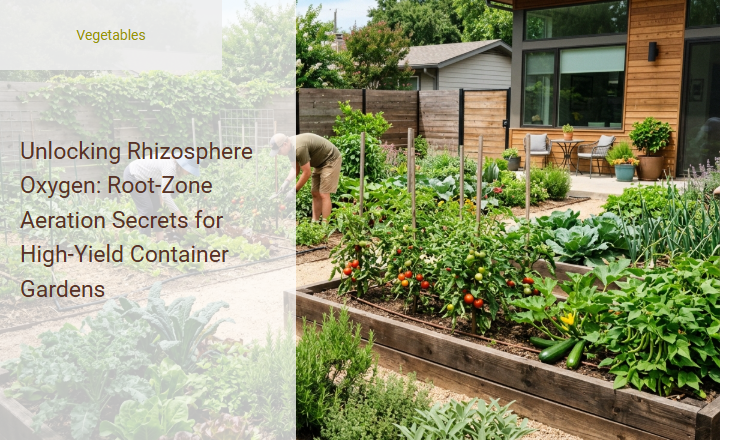
Many container gardeners struggle with stunted plant growth and mysterious root rot, often misdiagnosing these vital failures as nutrient deficiencies. In reality, the primary culprit is the physical constraint of the container itself, which naturally promotes soil compaction and waterlogged, anaerobic conditions.
Unlocking the rhizosphere-the active root-zone environment-by optimizing oxygen delivery yields a dramatic acceleration in nutrient uptake and overall plant vigor. However, achieving true rhizosphere aeration requires a shift in perspective; it is not merely about mixing in loose potting soil, but actively facilitating continuous gas exchange. For instance, transitioning from standard plastic pots to breathable fabric containers or air-pots provides concrete proof of how structural design directly prevents root circling and stimulates lateral branching.
In this guide, we will analyze the science of root respiration, evaluate the best aeration amendments, and outline actionable design strategies to maximize oxygen delivery for a high-yield harvest.
Read also: Clay Pots vs Fabric Pots for Root Aeration
The Invisible Engine: Understanding the Rhizosphere and Oxygen
The rhizosphere-the narrow, highly active zone of soil directly surrounding plant roots-serves as the critical interface where life-giving exchanges occur. Within this microscopic ecosystem, plants trade carbon-rich exudates for essential nutrients and water. In traditional in-ground farming, deep soil columns and natural subterranean channels allow for passive, continuous gas exchange. However, container gardening alters these dynamics dramatically. Confinement within non-porous walls creates a closed environment where natural capillary action is restricted, making deliberate oxygenation the single most decisive factor in achieving high-yield success.
Without the vast buffer of the earth, container root zones are highly vulnerable to compaction and waterlogging. When water fills the pore spaces in a pot, it displaces the vital gases needed by the root system. High-yield gardening demands rapid metabolic activity, which is impossible to sustain without a constant replenishment of oxygen. Understanding how to manage this dynamic within the physical limits of a container is the first step toward unlocking the true genetic potential of your plants.
The Biology of Breath: How Roots Consume Oxygen
While plant leaves absorb carbon dioxide to fuel photosynthesis, the root system must inhale oxygen to drive *aerobic respiration*. This vital cellular process breaks down stored carbohydrates to produce *adenosine triphosphate (ATP)*, the universal energy currency of plant cells. Roots are not passive straws; they rely on energy-intensive biological processes to pull essential nutrients from the surrounding soil solution.
Without a continuous supply of oxygen, the generation of *ATP* grinds to a halt. When energy reserves deplete, the root cells can no longer operate the *proton pumps* necessary for *active transport*-the mechanism required to absorb crucial macro and micronutrients against a concentration gradient. Lacking the energy to feed themselves, plants rapidly exhibit nutrient deficiencies, even in nutrient-rich media. Thus, keeping the rhizosphere oxygenated is fundamentally about powering the cellular machinery that feeds your plants.
Warning Signs: Diagnosing Root Asphyxiation and Anoxia
When oxygen levels in the rhizosphere drop too low, a condition known as anoxia occurs. Because this disaster unfolds out of sight beneath the substrate surface, gardeners must learn to read the subtle subterranean and foliar warnings of root asphyxiation before irreversible damage occurs.
To prevent crop loss, watch closely for these diagnostic symptoms of oxygen deprivation:
- Foliar Chlorosis: Leaves begin to yellow, typically starting at the bottom of the plant, as nutrient uptake fails due to lack of cellular energy.
- Epinasty: Leaves bend downward and curl unnaturally, mimicking underwatering, even though the soil is wet.
- Stunted Growth: Root tip elongation ceases completely, leading to a sudden halt in vegetative and floral development.
- Sour Odors: The container medium emits a rotten, sulfurous, or alcohol-like smell, indicating that anaerobic bacteria have overtaken the root zone.
- Root Rot (Pythium): Healthy, crisp white roots transform into mushy, brown, slimy threads that easily slough off when touched.
Container Architecture: Selecting Highly Breathable Vessels
The physical barrier of your plant's container dictates the baseline gas exchange rate of the root zone. Standard plastic and glazed ceramic pots act as solid walls, trapping moisture and restricting oxygen entry solely to the top surface of the soil and the bottom drainage holes. Modern container designs bypass this limitation by incorporating structural aeration features.
To maximize root-zone oxygenation, choose containers engineered to foster gas exchange and prevent root binding:
| Container Type | Aeration Level | Drainage Mechanism | Root Circling Prevention |
|---|---|---|---|
| Standard Plastic | Low | Bottom gravity-drainage only | None (roots circle and choke) |
| Fabric Grow Bags | Exceptional | 360-degree porous percolation | Excellent (automatic air-pruning) |
| Air-Pots (Sculpted Plastic) | High | Inward-pointing cones with open tips | Excellent (directional air-pruning) |
| Glazed Ceramic | Very Low | Single or minimal bottom holes | None (highly prone to root-bound stress) |
Designing the Substrate: High-Porosity Soil Mixes
A highly breathable container requires a substrate engineered with excellent structural porosity. Soil mixtures must contain a careful balance of micro-pores (which hold water) and macro-pores (which hold air). Over time, standard potting soils break down and compact, closing these essential air gaps.
To construct a high-porosity, structurally stable potting medium that maintains its air capacity throughout the growing season, follow this formulation guide:
- Measure out 40% high-quality coco coir or sphagnum peat moss to form the moisture-retentive organic base.
- Incorporate 30% coarse, horticultural-grade perlite or pumice to create permanent, rigid macro-pores for drainage and gas exchange.
- Add 20% well-aerated compost or worm castings to provide beneficial biology and natural nutrient cycling.
- Blend in 10% composted, medium-grade pine bark to add structural diversity, preventing compaction and ensuring long-term physical aeration channels.
Structural Drainage: Preventing the Perched Water Table
Every container of a finite height suffers from a physical phenomenon known as the perched water table. This is a zone of completely saturated, oxygen-free soil that sits at the very bottom of the pot. Gravity pulls water downward through the substrate, while capillary action pulls it upward. Where these two opposing forces equalize, a water table is suspended (or "perched") within the container.
A common but highly detrimental mistake is placing a layer of gravel or broken pottery at the bottom of a pot, believing it improves drainage. In reality, this action simply moves the perched water table higher up in the pot, closer to the active root system, reducing the usable, aerated soil volume.
"To minimize the suffocating impact of the perched water table, always select taller, narrower containers over short, squat ones. A taller soil column allows gravity to pull the saturated zone further away from the primary root system, leaving a larger percentage of the upper root zone perfectly drained and oxygenated."
Smart Irrigation: The Wet-Dry Cycle Aeration Technique
Watering container plants is not simply about hydrating the tissue; it is the primary method for driving air exchange in the substrate. When you apply water correctly, it acts like a physical piston, pushing stale, carbon-dioxide-laden air out through the bottom of the container. As gravity pulls the water through, it vacuums fresh, oxygen-rich air down from the surface into the empty macro-pores.
To make this "bellows effect" work, you must avoid constant, low-volume trickle irrigation. Instead, practice a structured wet-dry cycle. Wait to irrigate until the container has lost a significant portion of its water weight. Applying a thorough saturation until water flows freely from the drain holes, followed by a prolonged dry-back period, ensures that the root zone alternates between hydration and intense oxygenation.
Active Oxygenation: Force-Multiplying Rhizosphere Air
For growers looking to maximize yields, passive aeration can be augmented with active techniques. These advanced methods introduce elevated levels of oxygen directly to the root zone, accelerating cellular metabolism and plant growth rates.
Consider implementing these active aeration strategies to supercharge your rhizosphere:
- Diluted Hydrogen Peroxide (H2O2): Applying a highly diluted solution of food-grade hydrogen peroxide releases pure dissolved oxygen upon contact with organic matter, instantly relieving anaerobic root stress.
- Highly Aerated Compost Teas (ACT): Bubbling air through a compost tea for 24 to 48 hours before application saturates the liquid with dissolved oxygen and breeds millions of aerobic, root-protecting microbes.
- Sub-Irrigated Air injection: Utilizing specialized air-pump-driven stones inside the water reservoirs of sub-irrigated planter systems keeps the standing water oxygenated, preventing stagnation.
Thermal Regulation: Temperature's Impact on Dissolved Oxygen
There is a strict physical law governing the relationship between temperature and gases: as the temperature of water or wet substrate rises, its ability to hold dissolved oxygen decreases. In hot weather, container root zones are highly vulnerable to this inverse relationship. When container temperatures climb *above 75°F (24°C)*, dissolved oxygen levels plunge, while the roots' metabolic demand for oxygen doubles.
To protect your rhizosphere from hot-weather suffocation, prioritize thermal management. Keep container temperatures in the optimal *60°F to 68°F (15°C to 20°C)* range by utilizing light-colored fabric pots that cool through evaporation, raising containers off hot concrete surfaces, or applying a thick layer of light mulch to reflect solar radiation away from the soil surface.
The Aeration Blueprint: A Checklist for Maximum Yields
Building a high-yield container garden requires a consistent, multi-faceted approach to root-zone health. Use this step-by-step checklist to ensure your rhizosphere remains highly oxygenated and optimized for rapid nutrient uptake throughout your plant's life cycle.
Implement these practices to establish and maintain a high-yield, oxygen-rich rhizosphere:
- Select Breathable Vessels: Transition away from solid plastic or ceramic pots to fabric grow bags or air-pots to enable 360-degree gas exchange.
- Formulate for Macro-Porosity: Ensure your potting media contains at least 30% coarse aeration aggregates like perlite, pumice, or pine bark.
- Optimize Container Geometry: Choose taller containers to pull the suffocating perched water table away from the active root zone.
- Ditch the Bottom Gravel: Avoid adding gravel layers to the bottom of pots, keeping the substrate column continuous for proper drainage.
- Master the Wet-Dry Cycle: Allow containers to dry out significantly by weight between thorough waterings to maximize the bellows effect of gas exchange.
- Monitor Substrate Temperatures: Maintain root zone temperatures below 75°F (24°C) to preserve high levels of dissolved oxygen.
Summary
"Unlocking Rhizosphere Oxygen: Root-Zone Aeration Secrets for High-Yield Container Gardens" provides an essential guide to optimizing the root-zone environment for superior plant growth. Container gardening often faces challenges like soil compaction and waterlogging, which deplete vital oxygen in the rhizosphere and stunt plant development. This article explains the science of root respiration, illustrating how a lack of oxygen leads to anaerobic conditions, root rot, and severe nutrient deficiencies.
To combat these issues, the guide shares practical aeration secrets, including the formulation of highly porous growing media using perlite, pumice, and coco coir. It also advocates for the adoption of breathable air-pots or fabric containers. By implementing these strategic aeration techniques, container gardeners can dramatically enhance root health, boost nutrient uptake, and unlock the full genetic potential of their crops for maximum yields.
Leave a comment