
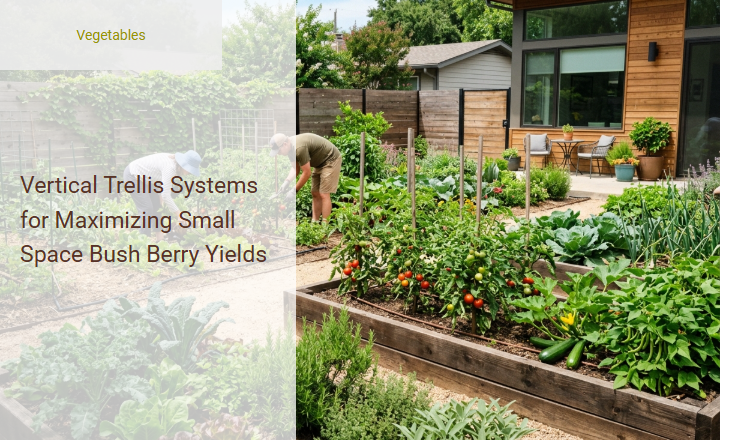
Many home gardeners and small-scale cultivators struggle with limited acreage, watching sprawling berry bushes consume precious ground space while delivering underwhelming harvests. Traditionally, bush berries are left to grow outward, creating a massive footprint that is highly impractical for compact yards, patios, or urban plots.
Transitioning to vertical trellis systems solves this spatial challenge, unlocking maximum yield potential by optimizing sun exposure and air circulation. However, this method requires a foundational stipulation: success relies on matching the right support structure with specific crop habits and pruning regimens. For example, cane-producing varieties like trailing blackberries and raspberries respond exceptionally well to vertical training, transforming chaotic thickets into neat, high-yielding walls of fruit.
In this guide, we will examine the most effective vertical trellis designs, step-by-step training techniques, and essential seasonal maintenance strategies to help you maximize your small-space berry production.
Read also: Trellis vs Bush for Cucumber Quality
Introduction to Vertical Trellising for Bush Berries
Growing luscious bush berries in a confined backyard or urban garden presents a unique set of challenges. Traditional sprawling berry patches require significant ground space, often making them impractical for small yards, patios, or balconies. Without proper support, vigorous berry plants tend to droop, crowd each other out, and drop their heavy fruit onto the damp soil, leading to rot and pest damage. Vertical trellising solves these spatial constraints by training the plants to grow upward rather than outward. By lifting the foliage and fruiting branches off the ground, you can dramatically maximize your crop yield per square foot, turning a cramped corner into a highly productive vertical orchard.
The Benefits of Going Vertical
Adopting a vertical system for your berry bushes offers several distinct advantages that improve both plant health and harvest quality. By keeping the branches organized and elevated, you create an environment where plants can truly thrive.
- Increased Sun Exposure: Elevating the canopy ensures that sunlight reaches all parts of the plant, promoting even ripening and higher sugar content in the fruit.
- Improved Air Circulation: Upright growth allows wind to flow freely through the leaves, which rapidly dries morning dew and rain, reducing the risk of fungal infections.
- Easier Harvesting: Instead of bending over or crawling through thorny brambles, you can pick ripe berries comfortably at eye level.
- Pest Reduction: Keeping the foliage and berries off the ground makes it much harder for soil-dwelling pests and crawling insects to damage your harvest.
Selecting the Best Bush Berry Varieties
Trailing Blackberries
These vigorous growers produce long, flexible canes that are naturally suited for winding along horizontal support wires. Trailing blackberries require a sturdy trellis to keep their heavy fruit-bearing canes from resting on the ground.
Primocane Raspberries
Known for bearing fruit on first-year growth, primocane raspberries benefit immensely from a vertical support structure. A trellis keeps these fast-growing, upright canes from flopping over under the weight of late-summer yields.
Dwarf Upright Blueberries
While traditional blueberries grow as dense shrubs, dwarf upright blueberries are specifically bred for compact spaces. Training them against a vertical frame helps optimize sunlight penetration and keeps the bush well-structured.
Comparing Vertical Trellis Designs
Selecting the right trellis architecture depends on the specific berry variety you wish to grow and the space available in your garden. Different structures offer varying levels of support and ease of access.
| Trellis Design | Best For | Key Advantage |
|---|---|---|
| T-Trellis | Raspberries and Blackberries | Spreads the canopy wide to maximize sun exposure and harvesting space. |
| V-Trellis | Vigorous primocane raspberries | Separates fruiting canes from new vegetative growth, improving air flow. |
| Single-Wire System | Compact spaces and dwarf blueberries | Simple to construct, taking up minimal footprint in very tight spots. |
Essential Materials and Tools
Building a durable and reliable trellis system requires selecting the right structural components. Investing in high-quality materials ensures your support structure will withstand heavy crop loads and adverse weather conditions year after year.
- Heavy-duty wooden posts (such as pressure-treated wood or rot-resistant cedar) to serve as the main end-posts and inline anchors.
- Galvanized steel wire (12 to 14 gauge) to stretch between the posts and support the heavy berry canes.
- Wire tensioners or gripple joiners to easily tighten and adjust the wire slack over time.
- Specialized fasteners, staples, or screw eyes to secure the wire lines firmly to the wooden posts.
Step-by-Step Trellis Installation Guide
Setting up your own vertical support structure is a straightforward afternoon project. Follow these step-by-step instructions to assemble a reliable trellis in your backyard or container garden.
- Position the main posts: Dig holes at least two feet deep at both ends of your intended berry row, insert the wooden posts, and pack the soil firmly to ensure stability.
- Install cross-arms: If you are building a T-trellis, bolt horizontal wooden cross-arms to the top of your posts to allow for parallel wire lines.
- Attach the hardware: Screw heavy-duty screw eyes or secure wire staples into the posts at your desired heights, typically around 2.5 feet and 5 feet from the ground.
- Run and tension the wire: Thread the galvanized wire through the hardware, attach your wire tensioners at one end, and tighten the lines until they are taut and do not sag.
- Secure your berry plants: Position your container or plant your berry bushes directly beneath the wire lines, ready for training.
Training and Pruning for Maximum Yield
To keep your vertical berry system productive, regular training and pruning are absolute necessities. Without this care, plants can quickly become tangled and less productive.
Training the Canes
As young canes grow, gently weave or tie them along the trellis wires using soft garden twine. Training canes horizontally along the lower wires encourages the development of lateral, fruit-bearing branches, which drastically increases your overall yield.
Pruning for Renewed Growth
Pruning strategies depend on whether your berry variety fruits on old wood (floricanes) or new wood (primocanes). For floricane-bearing berries, immediately cut spent canes down to the ground after they finish harvesting to allow fresh, productive canes to take their place.
Soil Preparation and Nutrient Management
High-yielding vertical berry plants require robust nutritional support to fuel their rapid upright growth and heavy fruit production. Proper soil foundation and ongoing nutrient delivery are critical to avoiding plant stress.
For optimal growth, plant your berries in well-draining, slightly acidic soil enriched with a generous amount of organic compost. Provide a steady supply of moisture via drip irrigation, especially during the fruiting phase, and apply a balanced organic fertilizer in early spring to encourage vigorous new canes.
Managing Pests and Diseases Vertically
One of the greatest benefits of vertical trellising is the natural reduction of pest and disease pressure. However, proactive management remains essential to keeping your vertical berry patch completely healthy.
- Fungal prevention is naturally enhanced by the elevated structure, which maximizes air movement around the leaves, ensuring they dry quickly after rain and preventing pathogens like powdery mildew and gray mold.
- Insects like aphids and spider mites can be easily monitored at eye level and controlled using organic neem oil or insecticidal soap sprays.
- Birds, which are often attracted to the highly visible fruit on a trellis, can be deterred by draping lightweight bird netting over the entire structure during the harvest window.
Harvesting Tips and Off-Season Care
Efficient Harvesting
Because your berries are neatly arranged along the wires, you can easily spot fully ripe, intensely colored fruit without damaging delicate adjacent clusters. Pick berries in the cool morning hours and place them gently into shallow containers to prevent bruising.
Off-Season and Winter Maintenance
During the winter dormancy, inspect your trellis structure for any loose wires or shifted posts. Securely tie remaining canes to protect them from winter winds, and apply a thick layer of mulch over the root zones to protect the plants from freezing temperatures.
Summary
Vertical trellis systems offer an innovative and highly efficient solution for home gardeners and commercial growers looking to maximize bush berry yields in limited spaces. By training sprawling berry varieties-such as blackberries, raspberries, and certain blueberries-to grow upward rather than outward, these structural systems optimize footprint efficiency.
Vertical training dramatically improves sunlight penetration throughout the canopy and enhances air circulation, which collectively reduces the risk of fungal diseases. Furthermore, keeping the plants elevated prevents fruit from touching the soil, minimizing rot and pest damage. Utilizing trellis designs like the T-trellis or V-trellis not only simplifies harvesting and pruning but also transforms chaotic berry patches into organized, high-yielding vertical gardens. Ultimately, vertical trellising proves that small-space cultivation can yield abundant, high-quality fruit without sacrificing plant health.
Leave a comment