
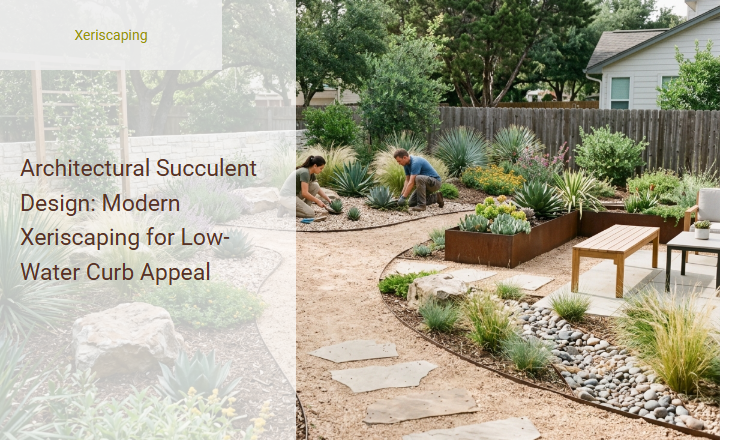
For many homeowners in arid climates, maintaining a lush, traditional lawn has become an exhausting, uphill battle characterized by soaring water bills and relentless weekend maintenance. Yet, sacrificing curb appeal to comply with local drought restrictions is a compromise few are willing to make.
Before abandoning your home's exterior aesthetic entirely, it is helpful to understand how modern landscape architecture has evolved past the thirsty turf-grass standards of the past. Embracing architectural xeriscaping grants homeowners a sophisticated, high-contrast exterior that actually thrives in arid conditions, instantly elevating the property's market value.
However, successful xeriscaping requires a shift in mindset; it is not merely a matter of scattering gravel and planting random desert flora. A truly modern aesthetic demands deliberate spatial zoning and structural contrast, utilizing dramatic focal points like the architectural Agave americana juxtaposed against the soft, flowing textures of Blue Chalksticks (Senecio serpens).
In this article, we will examine the core principles of succulent design, from selecting high-impact specimens to mastering soil drainage and layering, ensuring your low-water landscape remains a vibrant, year-round asset.
Read also: Cacti vs Euphorbia for Desert Landscaping
Introduction to Modern Xeriscaping
As suburban landscapes transition away from thirsty green lawns, modern xeriscaping has emerged as the premier approach to sustainable outdoor design. By prioritizing architectural succulent design, homeowners can curate striking, sculptural front yards that command attention. This design philosophy dramatically enhances home curb appeal while significantly conserving precious water resources in arid and semi-arid regions.
Core Principles of Architectural Succulent Design
Architectural succulent design treats plants as living sculptures. Instead of dense, chaotic flower beds, this approach relies on clean lines, deliberate placement, and high-contrast pairings to create a sophisticated, low-water landscape. The core principles of this design methodology include:
- Form: Prioritizing bold geometric shapes, such as perfect rosettes, towering spires, and branching spheres.
- Texture: Juxtaposing smooth, waxy leaves against rough, spiny, or deeply ridged plant surfaces.
- Scale: Utilizing massive specimen plants alongside low-growing varieties to establish a sense of depth and grandeur.
- Minimalist Aesthetics: Embracing restraint by allowing individual specimens enough space to be appreciated as standalone art pieces.
Selecting Statement Succulents as Focal Points
The Structural Majesty of Agave
Agave species, such as the massive Agave americana or the highly architectural Agave ovatifolia (Whale's Tongue Agave), serve as magnificent anchors. Their wide, rigid rosettes provide an unmatched focal point that anchors the entire garden layout.
The Texture and Height of Yucca
Yucca rostrata (Beaked Yucca) offers a shimmering sphere of pale blue-green leaves perched atop a textured, fibrous trunk. This plant introduces critical vertical movement and a soft, shimmering texture that contrasts beautifully with broad-leafed succulents.
Tree Aloes for Dramatic Silhouette
Species like Aloidendron barberae (Tree Aloe) bring scale and dramatic branching structures to the landscape. Their winding, muscular branches and terminal rosettes create a striking silhouette against home exteriors and open skies.
Selecting Companion Plants for Contrast
To prevent a succulent garden from looking static or overly hostile, it is crucial to introduce companion plants that soften the hard edges of architectural specimens. Low-water ornamental grasses and delicate groundcovers provide the necessary movement and contrast to elevate the entire composition.
In addition to grasses, choosing low-profile, colorful groundcovers such as Myoporum parvifolium or various Sedum species creates a vibrant, living carpet that fills the gaps between focal points while retaining soil moisture.
Integrating Hardscape Elements
Hardscaping serves as the canvas and frame for an architectural succulent garden. Incorporating structural elements provides a clean, deliberate backdrop that highlights the natural geometry of the plants.
- Basalt Columns: Tall, dark stone pillars mimic the vertical lines of columnar cacti and add a powerful geological element.
- River Rocks and Cobble: Smooth stones placed around the base of plants provide a clean texture contrast and protect the root zones.
- Decomposed Granite: A fine, permeable pathway material that offers a warm, neutral color palette to make green and blue succulents pop.
- Geometric Pathways: Large-format concrete pavers separated by dark gravel introduce a modern, linear flow through the garden.
Designing Layout and Spatial Composition
Achieving a balanced, modern look requires careful spatial planning and a commitment to the "less is more" philosophy. Use this step-by-step layout guide to arrange your modern xeriscape:
- Identify the Primary Viewpoints: Determine where the garden will be viewed from most frequently, such as the driveway, front porch, or interior windows.
- Position the Structural Anchors: Place your largest statement plants (like Tree Aloes or large Agaves) off-center within these sightlines to create dynamic, asymmetrical focal points.
- Layer by Height: Surround the focal points with mid-sized companion shrubs and ornamental grasses, stepping down to low-lying groundcovers near paths and borders.
- Incorporate Negative Space: Leave ample areas covered only by decorative gravel or mulch to give the eye a place to rest and to allow individual plants to stand out.
Soil Preparation and Drainage Foundations
The secret to keeping architectural succulents healthy and vibrant lies beneath the surface. Standard garden soil retains far too much water, which quickly leads to root rot-the primary killer of drought-tolerant plants.
"To ensure the longevity of your architectural succulents, you must construct a highly porous growing medium. A blend of 50% native soil, 25% coarse pumice, and 25% sharp sand provides the ideal balance of aeration and structural support."- Landscape Architecture Technical Guide
Smart Irrigation and Water Management
The Power of Hydrozoning
Even drought-tolerant plants require water to establish their root systems. Grouping plants with identical moisture needs into specific hydrozones ensures that no specimen is overwatered or underwatered, maximizing water conservation.
Precision Drip Systems
Utilizing a dedicated drip irrigation system delivers water directly to the root zones, minimizing evaporation. Equipping the system with a smart, weather-based controller allows for automated adjustments based on local rainfall patterns.
Seasonal Maintenance and Longevity
While modern succulent xeriscaping is incredibly low-maintenance compared to traditional turf lawns, regular seasonal care is essential to preserve its pristine, architectural appearance.
- Grooming: Remove dead lower leaves from Agaves and Aloes using sterile shears to keep the trunks clean and prevent pests from nesting.
- Pest Management: Monitor the tight crevices of rosettes for mealybugs and scale, treating infestations early with insecticidal soap or neem oil.
- Frost Protection: Protect sensitive columnar cacti and soft-leafed succulents during extreme winter cold snaps by covering them with breathable frost cloths.
Transforming Curb Appeal and Property Value
Investing in modern succulent xeriscaping is a powerful way to elevate your home's exterior aesthetic. Replacing a resource-intensive lawn with a striking, sculptural garden creates an unforgettable first impression that sets your property apart in the neighborhood. Beyond the immediate visual impact, this sustainable upgrade delivers long-term financial benefits. Homeowners enjoy drastically reduced water bills, minimal ongoing landscaping costs, and a resilient garden that thrives year-round, ultimately driving up overall property value while supporting ecological health.
Summary
"Architectural Succulent Design: Modern Xeriscaping for Low-Water Curb Appeal" explores the intersection of sustainable landscaping and modern design. The article highlights how homeowners can transform traditional, water-intensive lawns into eco-friendly, visually striking front yards using structural succulents. By strategically placing plants like agaves, yuccas, and columnar cacti, designers can create dramatic focal points, rich textures, and clean geometric lines that enhance a home's exterior.
The guide emphasizes the ecological benefits of xeriscaping-chiefly drastic water reduction-while proving that low-maintenance gardens do not sacrifice aesthetic appeal. It offers practical advice on soil preparation, strategic grouping, and utilizing contrasting gravel to make these sculptural plants pop. Ultimately, the article serves as an inspiring, actionable blueprint for achieving sustainable, high-impact curb appeal in arid and semi-arid regions.
Leave a comment