
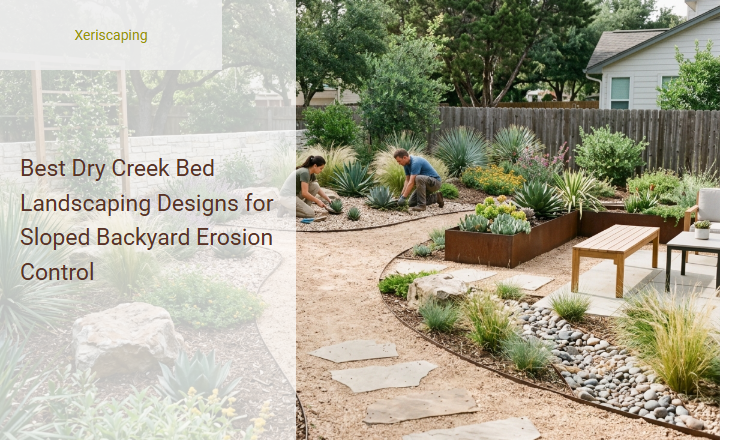
Managing a sloped backyard often feels like a losing battle against nature, especially when heavy seasonal rains turn your lawn into a muddy channel of eroded topsoil and ruined turf. Before attempting to combat this runoff, it is essential to understand how gravity and soil composition interact on your specific incline. Fortunately, a well-engineered dry creek bed offers a dual solution: it tames destructive water flow while instantly transforming an unsightly drainage path into a high-end, low-maintenance landscape feature.
However, successful erosion control requires more than simply piling gravel on a hill. It demands strategic grading, heavy-duty geotextile fabric, and a calculated mix of smooth river rocks, heavy anchor boulders, and deep-rooted native plantings to secure the slope permanently. In this guide, we will examine the top dry creek bed designs, material selections, and essential installation techniques to help you reclaim your sloped backyard.
Read also: Rock Gardens vs Wildflower Meadows for Sloped Terrains
Understanding Sloped Backyard Erosion and the Dry Creek Solution
Sloped backyards often face severe soil degradation during periods of heavy rainfall. When torrential downpours hit an incline, gravity accelerates the water flow, creating rapid runoff that strips away fertile topsoil, damages landscaping, and carves unsightly gullies into the terrain. To combat this destructive force, homeowners are turning to a highly effective and visually striking landscaping strategy: the dry creek bed. A dry creek bed acts as a functional, beautiful solution designed to mimic a natural stream bed, capturing excess runoff and channeling it safely through your property without washing away your valuable soil.
Key Benefits of Dry Creek Bed Landscaping
Integrating a dry creek bed into your sloped yard does more than solve a drainage issue; it elevates the entire utility and aesthetic value of your outdoor space. Here are the primary advantages of this landscape feature:
- Water Redirection: Safely guides heavy rainwater away from your home's foundation and toward safe drainage zones.
- Soil Conservation: Prevents erosion by slowing down surface water velocity and keeping topsoil intact.
- Low Maintenance: Once installed, it requires very little upkeep compared to traditional lawns or delicate garden beds.
- Aesthetic Appeal: Adds a natural, rugged beauty to your yard, turning a problematic drainage ditch into a gorgeous focal point.
Design Concept 1: The Meandering S-Curve
For gentle to moderate slopes, a straight channel can actually accelerate water flow, worsening erosion. The classic S-curve design solves this by guiding water through a series of gentle, winding turns that mimic natural river paths. By incorporating these curves, you force the water to travel a longer distance, which naturally slows down its velocity and allows it to gradually seep into the ground. Emphasizing a natural, flowing sweep rather than sharp angles ensures that the water moves harmoniously through the landscape without overtopping the banks.
Design Concept 2: The Cascading Terraced Creek
Steep slopes require a more robust intervention to handle high-velocity runoff. A terraced or stepped dry creek bed uses flat, horizontal shelves separated by vertical drops to control the descent of rushing water.
Professional Landscaping Tip: Install sturdy check dams and large boulders at the drops of each terrace to act as natural speed bumps, breaking the kinetic energy of the water before it can wash away downstream elements.
Design Concept 3: The Boulder-Anchored Channel
In areas prone to intense torrential downpours, lightweight stones can easily get swept away by the sheer force of the current. The boulder-anchored design relies on strategically placed, heavy anchor stones positioned at key deflection points and along the curves of the channel. These massive boulders provide crucial structural stability, locking the smaller river rocks and gravel securely in place so the creek bed maintains its shape and function during the most severe storms.
Selecting the Right Stone Sizes and Materials
Achieving both durability and a natural appearance requires a thoughtful hierarchy of stone sizes. Using only one rock size looks artificial and fails to control water movement effectively.
- Large Boulders: These serve as the structural anchors, placed along the edges and bends to absorb the impact of fast-flowing water.
- Medium River Rocks: These make up the primary bedding of the creek channel, providing a smooth, interlocking surface that allows water to glide through.
- Pea Gravel: This smaller material is used to fill the gaps between larger stones, preventing soil from washing up from underneath and stabilizing the entire rock layout.
Best Plants to Stabilize Creek Bed Banks
To ensure the long-term integrity of your dry creek bed, vegetation is essential. Deep-rooted, moisture-tolerant plants and ornamental grasses bind the soil along the banks, preventing erosion and bank collapse. Consider planting native ferns, switchgrass, or creeping groundcovers that thrive in both wet and dry conditions. For detailed care instructions on these varieties, check out our comprehensive plant care guides to help your green border flourish.
Crucial Construction Steps: Trenching and Underlayment
The secret to a long-lasting dry creek bed lies beneath the stones. Proper ground preparation prevents sinking, shifting, and weed intrusion over time.
- Dig a trench along your marked path, aiming for a depth of 12 to 18 inches, with a wide, shallow "V" or "U" shape.
- Grade the slope consistently to ensure water flows smoothly toward the designated exit point without pooling in unwanted areas.
- Lay down a heavy-duty, professional-grade woven geotextile fabric across the entire trench to keep the soil beneath from mixing with your clean stones while suppressing stubborn weed growth.
Essential Maintenance Tips for Longevity
While dry creek beds are exceptionally low-maintenance, a small amount of routine care will keep them functioning perfectly for decades. Regularly clear out fallen leaves, twigs, and organic debris that can clog the channel and cause water to overflow. After major storm events, inspect the creek bed to reposition any displaced stones and check for signs of soil erosion or undercutting along the edges so you can address minor issues before they threaten the structure.
Transforming Your Sloped Yard into a Functional Oasis
A sloped backyard does not have to be a source of constant erosion anxiety. By implementing a beautifully crafted dry creek bed, you redirect destructive stormwater while introducing a dynamic, natural stone feature to your property. This thoughtful addition solves your drainage challenges, secures your soil, and elevates your outdoor living space into a stunning, value-adding landscape masterpiece.
Summary
Managing erosion in a sloped backyard can be a major challenge, but incorporating a dry creek bed offers a highly functional and visually stunning solution. This guide explores the best dry creek bed landscaping designs specifically tailored for controlling runoff and preventing soil washout on hillsides. By mimicking natural stony waterways, these designs safely channel excess rainwater away from your home's foundation.
Key design elements include utilizing a diverse mix of river rocks, gravel, and larger anchor boulders to stabilize the slope. Pairing these stone features with deep-rooted native plants and ornamental grasses along the banks further secures the soil while absorbing moisture. Additionally, the article covers essential installation steps, such as proper grading, laying durable landscape fabric, and designing natural curves to slow down rapid water flow. Ultimately, these creative solutions transform a problematic slope into an attractive, low-maintenance garden feature.
Leave a comment