
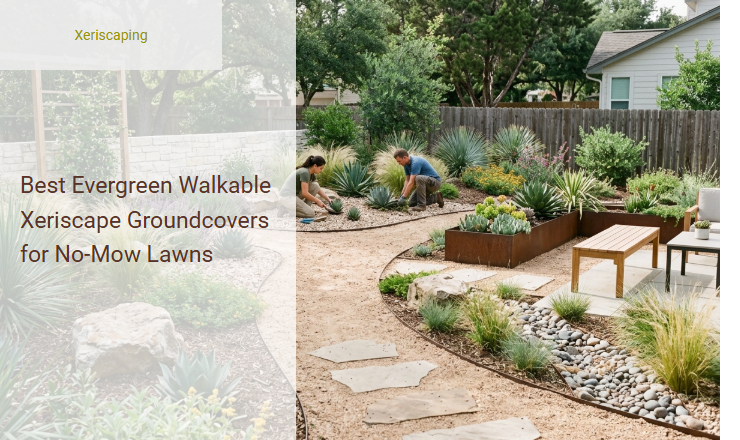
Maintaining a pristine turf lawn often feels like an expensive, endless battle against weeds, soaring water bills, and relentless mowing schedules. While traditional grass has long been the default suburban standard, its massive resource consumption is driving homeowners to seek sustainable alternatives. Transitioning to a xeriscape lawn grants you a vibrant, year-round green landscape while permanently eliminating the mower and slashing your water usage.
However, successful adoption requires a realistic stipulation: "walkable" groundcovers are designed for light-to-moderate foot traffic, rather than high-impact recreation. Resilient, low-profile species like Thymus serpyllum (Creeping Thyme) and Dymondia margaretae (Silver Carpet) prove that drought-tolerant plants can indeed withstand daily steps while maintaining their lush texture.
Below, we examine the finest evergreen, foot-traffic-tolerant groundcovers, detail their specific growing zones, and provide a professional roadmap to establishing your own resilient, no-mow sanctuary.
Read also: Yarrow vs Clover for Drought-Tolerant Groundcover
Introduction to Sustainable Turf Alternatives
Transitioning from traditional, water-thirsty lawns to eco-friendly options is a powerful step toward conservation. By choosing walkable xeriscape groundcovers, homeowners can achieve a lush, evergreen aesthetic without the environmental toll of constant irrigation and chemical treatments.
Why Choose a No-Mow Xeriscape Lawn?
Swapping turfgrass for low-growing alternatives offers significant ecological benefits, transforming your yard into a sustainable sanctuary.
Economic and Ecological Perks
- Water savings of up to 80% compared to traditional turf.
- Minimal maintenance, eliminating the need for weekly mowing.
- Lower carbon footprint by keeping gas-powered mowers off the lawn.
- Year-round green aesthetics that survive harsh, dry seasons.
Key Factors: Foot Traffic and Drought Tolerance
Selecting the perfect species requires balancing visual appeal with practicality. Property owners must evaluate how much activity the area will receive alongside regional climate conditions.
Analyzing Plant Durability
Groundcovers are rated by their ability to withstand heavy, moderate, or light foot traffic. Combining this rating with drought-tolerance data ensures your living carpet survives both playtime and dry spells.
Creeping Thyme (Thymus serpyllum): The Fragrant Perennial
Creeping Thyme is a premier choice for those seeking sensory delight alongside resilience. It releases a soothing, herbal aroma when stepped on and erupts in stunning purple flowers during summer.
"A fragrant tapestry that thrives on neglect and welcomes light footsteps."
This plant is ideal for areas with moderate foot traffic, requiring almost no water once established.
Kurapia (Lippia nodiflora): The High-Traffic Performer
If you need a utility-scale lawn replacement that shrugs off heavy wear, Kurapia is an exceptional candidate.
- Establishes a deep rooting system that anchors the soil.
- Offers superb weed suppression by forming a dense, sterile mat.
- Maintains a low-growth habit that never requires mowing.
Dymondia (Dymondia margaretae): The Silver Carpet
Dymondia margaretae offers a striking variegated look, featuring narrow green leaves with brilliant silver undersides. This low-profile groundcover is highly drought-resistant and handles heavy stepping with ease.
It forms a tight, dense mat that rolls over uneven terrain like a glistening silver carpet.
Elfin Thyme (Thymus praecox 'Elfin'): The Ultra-Low Profile Choice
For tight spaces, Elfin Thyme provides a miniature, slow-spreading texture. It grows only a fraction of an inch tall, making it a stellar selection for planting between stepping stones.
This variety provides a cushion-like feel underfoot while maintaining a highly compact structure.
Preparing Your Soil for Success
Achieving a flawless alternative lawn starts beneath the surface. Proper preparation prevents future weeds and ensures strong root systems.
Essential Pre-Planting Phases
- Eradicate existing weeds and grass completely using organic sheet mulching or solarization.
- Improve drainage in compacted soils by tilling in coarse sand or fine gravel.
- Enrich the top layer with organic compost to give young plugs vital nutrients.
Planting and Establishment Care
Proper placement and early hydration dictate how quickly your new groundcover forms a solid, seamless carpet.
Proactive Root Development
- Space plugs 6 to 12 inches apart, depending on how quickly the variety spreads.
- Water daily for the first three to four weeks to keep the soil consistently moist.
- Gradually taper off irrigation as the roots dig deeper into the soil profile.
Long-Term Maintenance for a Flawless Lawn
Once established, your xeriscape lawn requires minimal intervention. Keep the area pristine by hand-pulling occasional weeds during the transition period and applying deep, infrequent watering during extreme heat waves. Designing dedicated pathways ensures high-traffic zones remain lush and undamaged, protecting your investment for years to come with minimal effort.
Summary
Transitioning from traditional grass turf to a walkable, evergreen xeriscape is an excellent way to create a beautiful, low-maintenance, and eco-friendly yard. These resilient groundcovers offer the perfect "no-mow" alternative, providing year-round green foliage with minimal water requirements once established. Highly tolerant of light to moderate foot traffic, top varieties such as creeping thyme (Thymus serpyllum), kurapia, dymondia, and Roman chamomile form dense, lush carpets that naturally suppress weeds and resist pests.
Beyond their practical drought tolerance and the elimination of noisy lawnmowers, many of these plants release pleasant aromas when stepped on and produce delicate flowers that support local pollinators. Embracing these hardy, walkable groundcovers allows homeowners to significantly reduce water consumption, eliminate the need for chemical fertilizers, and enjoy a vibrant, sustainable landscape that thrives even in challenging climates.
Leave a comment