
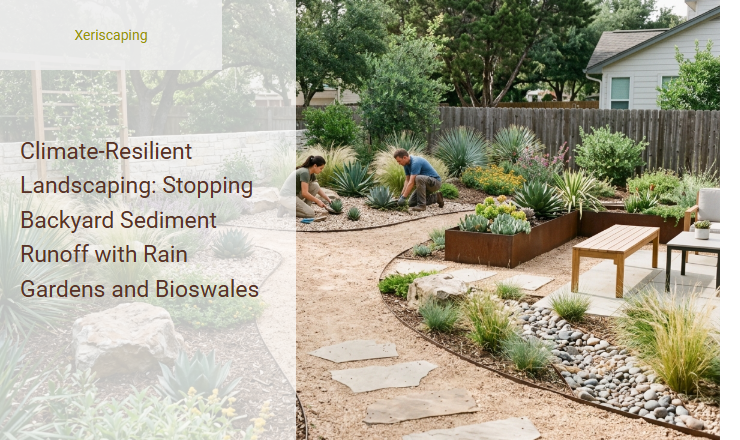
Every heavy rainstorm leaves many homeowners watching their valuable topsoil wash away, leaving behind unsightly gullies, muddy lawns, and compromised foundations. Before jumping straight to mitigation, we must first recognize how shifting, increasingly intense climate patterns have completely overwhelmed traditional turfgrass drainage. Addressing this modern challenge with climate-resilient landscaping does more than stop erosion; it grants property owners long-term peace of mind and enhanced land value.
However, effective runoff control is not as simple as digging a hole; it requires a calculated understanding of site-specific hydrology and soil infiltration rates. By integrating engineered soil matrices, strategic stone channeling, and deep-rooted native plants like Switchgrass and Purple Coneflower, homeowners can scientifically slow, spread, and sink stormwater.
In this guide, we will analyze the functional differences between rain gardens and bioswales, outlining the precise design principles and plant selections required to transform your drainage liabilities into a high-performing ecological asset.
Read also: Silt Fences vs Coir Logs for Construction Runoff
Introduction to Climate-Resilient Landscaping and Sediment Runoff
Climate change is driving increasingly intense rainfall events that put a severe strain on residential properties. When heavy downpours hit saturated or compacted ground, the water cannot infiltrate quickly enough, resulting in severe backyard soil erosion and muddy sediment runoff. This destructive cycle washes away precious earth and damages property. To combat this growing challenge, homeowners are turning to climate-resilient landscaping solutions like rain gardens and bioswales, which mimic natural hydrology to manage stormwater right where it falls.
The Ecological Impact of Backyard Soil Erosion
When backyard soil washes away, the damage extends far beyond ruined landscapes. Sediment runoff carries fertilizers, pesticides, and debris directly into local waterways, clouding the water and blocking vital sunlight.
"Excessive sediment suffocates aquatic life, destroys fish spawning grounds, and alters the natural flow of rivers and streams."
Additionally, this displaced soil clogs storm drains, increasing the risk of localized street flooding, while simultaneously stripping residential yards of their nutrient-rich, valuable topsoil that plants need to thrive.
Demystifying Rain Gardens: Nature's Sponge
What is a Rain Garden?
A rain garden is a shallow, purposefully designed depression planted with deep-rooted native vegetation. Positioned to intercept stormwater from roofs, driveways, and lawns, it acts like a natural sponge, temporarily collecting water and allowing it to soak slowly into the ground.
How It Filters Water
As water pools in the rain garden, soil layers and plant roots work together to filter out pollutants. This process cleanses the water before it replenishes local groundwater tables.
Understanding Bioswales: Engineered Drainage Channels
The Mechanics of a Bioswale
A bioswale is an engineered, gently sloped drainage channel designed to manage larger, concentrated volumes of stormwater. Unlike a static rain garden, a bioswale actively directs water flow from one point to another along a vegetated pathway.
Slowing Down High-Velocity Runoff
By utilizing dense plantings, specialized soil mixtures, and gravel barriers, a bioswale slows the speed of rushing water, filters out heavy sediments, and promotes infiltration along its path, reducing downstream erosion.
Rain Gardens vs. Bioswales: Key Differences and Selection
Choosing between these two features depends on your yard's specific layout and water management needs. Here is a comparison to help you select the best approach:
- Purpose: Rain gardens are built for pooling and infiltration, while bioswales are engineered to convey and filter moving water.
- Topography: Rain gardens work best on flat or gently sloping lawns. Bioswales are ideal for naturally sloped paths where water naturally flows.
- Yard Size: Rain gardens fit well in standard suburban backyards, whereas bioswales often require more linear space.
- Water Volume: Bioswales handle high-velocity, concentrated runoff from large impervious surfaces, while rain gardens manage localized runoff.
Site Assessment: Finding the Perfect Location and Soil Testing
Before digging, you must thoroughly evaluate your property to ensure your runoff mitigation system works safely and effectively.
- Observe your yard during a rainstorm to map natural drainage pathways and locate low points.
- Calculate the size of the drainage area, such as the roof section or driveway feeding your chosen location.
- Dig a hole 12 inches deep, fill it with water, and measure how quickly it drains to perform a soil percolation test.
- Ensure the site is at least 10 feet away from your home's foundation to prevent water damage.
Designing and Digging Your DIY Rain Garden
Creating a functional rain garden requires careful shaping and grading to ensure water pools correctly without overflowing toward your home.
- Outline the shape of your garden using a garden hose or spray paint to establish the boundaries.
- Dig the basin to a depth of 4 to 8 inches, keeping the bottom perfectly flat so water distributes evenly.
- Use the excavated soil to build a sturdy downslope berm to retain water within the basin.
- Create a designated rock-lined overflow zone to safely direct excess water away during extreme storms.
Constructing a Bioswale for High-Volume Water Flow
Building a bioswale involves creating a structured path that can handle moving water without washing away its own foundation.
- Grade a shallow, wide channel with a gentle slope of one to four percent to guide water flow.
- Line the bottom of the channel with layers of coarse gravel and stone to slow water velocity.
- Incorporate a compost-rich, fast-draining engineered soil mixture to support robust plant growth.
- Cover bare soil with shredded hardwood mulch or erosion control blankets to secure the channel walls.
Planting Guide: Choosing Deep-Rooted, Climate-Resilient Vegetation
The Wet Zone
The lowest part of your rain garden or bioswale experiences the most frequent flooding. Choose native plants that tolerate standing water.
- Swamp Milkweed
- Blue Flag Iris
- Cardinal Flower
The Transitional Zone
This middle zone experiences fluctuating moisture levels, requiring plants that handle both wet and dry conditions.
- Joe-Pye Weed
- Black-Eyed Susan
- Switchgrass
The Dry Zone
The upper rim of your system rarely stays wet, making drought-tolerant species the best option.
- Purple Coneflower
- Little Bluestem
- Yarrow
Long-Term Maintenance and Troubleshooting for Erosion Control
Regular upkeep ensures your climate-resilient landscaping features remain fully functional year after year.
- Weed the planted areas regularly to prevent aggressive invasive species from choking out native plants.
- Remove accumulated sediment and debris from the entry points to prevent clogging.
- Replenish hardwood mulch annually to protect the soil and retain essential moisture.
- Inspect the integrity of the berms and rock overflows after major storms to repair any erosion spots immediately.
Summary
As extreme weather events become more frequent, climate-resilient landscaping has emerged as a vital practice for homeowners looking to mitigate stormwater damage. "Climate-Resilient Landscaping: Stopping Backyard Sediment Runoff with Rain Gardens and Bioswales" outlines effective, nature-based strategies to combat soil erosion and safeguard local watersheds.
The article focuses on two primary features: rain gardens and bioswales. Rain gardens are shallow, vegetated basins designed to collect and absorb standing water, while bioswales are gently sloped, planted channels engineered to redirect and slow down heavy runoff. Together, these installations act as natural filtration systems that trap sediment, filter out pollutants, and recharge groundwater supplies. By incorporating these sustainable landscaping elements, property owners can prevent backyard erosion, foster local biodiversity, and build long-term ecological resilience against the challenges of a changing climate.
Leave a comment