
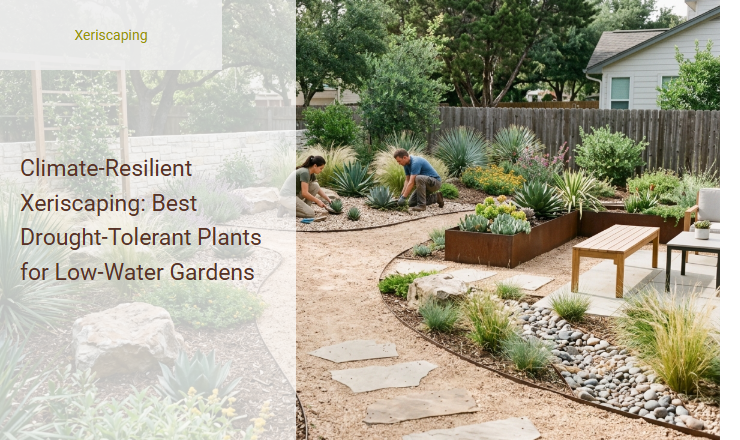
As scorching summers and unpredictable rainfall patterns become the norm, many homeowners struggle to maintain vibrant yards without facing exorbitant water bills or strict municipal restrictions. This ecological reality requires a fundamental shift in how we approach residential landscaping, moving away from thirsty turf grasses toward sustainable design.
Transitioning to climate-resilient xeriscaping offers a powerful solution, granting you a stunning, low-maintenance sanctuary that slashes water consumption by up to 60%. However, successful xeriscaping requires a brief stipulation: "drought-tolerant" is not synonymous with "zero care," as even the hardiest species require deliberate establishment phases and proper soil preparation to thrive.
By incorporating proven survivors such as Agave, Lavender, and Purple Coneflower, you can build a resilient, water-wise ecosystem. In this guide, we will analyze the best plant varieties for arid conditions, detail essential soil integration techniques, and outline strategic irrigation practices to ensure your garden remains lush throughout the dry season.
Read also: Pruning vs Shearing for Natural Plant Growth
Introduction to Climate-Resilient Xeriscaping
In an era of shifting weather patterns and prolonged droughts, traditional gardening methods are facing unprecedented ecological challenges. Sustainable gardeners are increasingly turning to xeriscaping, a systematic approach to landscaping designed specifically for areas susceptible to drought or where water conservation is a priority. Derived from the Greek word *xeros*, meaning dry, this practice goes beyond merely choosing drought-hardy plants; it represents a comprehensive philosophy of climate-resilient garden design.
The core principles of this method involve careful planning, soil improvement, efficient irrigation, and the selection of flora native to arid regions. By embracing water conservation as a guiding principle, homeowners can create stunning, vibrant sanctuaries that thrive in harmony with local climate limits. This shift not only reduces municipal water consumption but also establishes a stable habitat that supports local ecology through changing seasonal extremes.
Laying the Groundwork: Soil Preparation and Drainage
The success of any low-water landscape begins beneath the surface. Many drought-tolerant plants are adapted to nutrient-poor soils but will suffer immediately from root rot if left in standing water. Improving soil structure ensures that water moves efficiently past root systems while leaving just enough moisture to sustain growth. Adjusting heavy clay soils requires introducing structural amendments to increase pore space and improve aeration.
To create the ideal root environment, cultivate the native soil deeply and integrate organic compost to encourage beneficial microbial activity. For heavy soils, incorporating coarse sand and crushed gravel helps open up dense layers, facilitating rapid drainage. Incorporating these specific soil amendments creates an open, aerated matrix where delicate roots can expand without suffocating during heavy rainfall events.
The Strategic Principle of Hydrozoning
Hydrozoning is the intentional practice of grouping plants with similar water, soil, and sun exposure requirements. Instead of distributing demanding plants throughout the garden-which leads to overwatering some areas and underwatering others-hydrozoning organizes the landscape into distinct water-use zones. This strategic placement ensures that every drop of irrigation is used to its maximum potential.
"By matching plant water demands with specific microclimates in your yard, hydrozoning maximizes irrigation efficiency, reduces water waste by up to 50%, and fosters healthier, more resilient plant communities."
Typically, a hydrozoned yard is divided into high, moderate, low, and very low water-use areas. High-water plants are placed near the home where runoff can be easily captured, while extremely drought-hardy varieties are situated on the outer boundaries where they can survive solely on natural rainfall.
Essential Succulents and Cacti for Structural Impact
Succulents and cacti form the architectural backbone of many climate-resilient gardens. Their unique evolutionary adaptations allow them to store moisture in fleshy leaves, stems, or roots, maintaining a bold structural presence even in intense heat.
Agave Americana (Century Plant)
This striking succulent features massive, sculpted rosettes of thick, blue-green leaves that rise dramatically from the ground. Its sharp margins and terminal spines offer clean lines and high visual contrast.
- Water Needs: Extremely low; water only during prolonged dry spells.
- Sun Exposure: Full, intense sun to light partial shade.
- Soil Preference: Sandy, gravelly, and exceptionally well-draining soil.
Opuntia (Prickly Pear Cactus)
With its flat, paddle-like stems and colorful spring blooms, Opuntia provides both structural interest and seasonal beauty. It serves as an excellent natural barrier and focal point.
- Water Needs: Nil once established; relies on seasonal rainfall.
- Sun Exposure: Unfiltered, full sun.
- Soil Preference: Highly rocky, alkaline, or sandy substrates.
Ornamental Grasses for Texture and Movement
While succulents offer rigid structure, low-water ornamental grasses introduce soft textures, height, and kinetic movement. They capture the wind, creating calming rustling sounds and bringing dynamic life to static spaces.
Muhlenbergia capillaris (Pink Muhly Grass)
Famous for its breathtaking clouds of airy, vibrant pink-purple seed heads in late autumn, this grass forms dense, upright clumps of fine green foliage that remain attractive year-round.
- Plant in early spring to allow root systems to establish before summer heat.
- Space specimens at least three feet apart to accommodate their mature, airy spread.
- Cut back old foliage to a few inches above the ground in late winter to encourage fresh spring growth.
Schizachyrium scoparium (Little Bluestem)
A native bunchgrass displaying blue-green leaves in summer that transition to brilliant bronze, copper, and orange hues as autumn approaches.
- Select a site with poor, dry soil to prevent the grass from growing too tall and flopping over.
- Water sparingly during the first growing season, then taper off completely.
- Group in odd numbers along borders to simulate natural meadow drifts.
Resilient Mediterranean Herbs and Shrubs
Hailing from regions characterized by hot, dry summers and mild, wet winters, Mediterranean plants are natural candidates for sustainable landscapes. Many of these species possess highly aromatic oils within their leaves; these volatile oils act as natural cooling agents, minimizing water loss from solar radiation.
Rosmarinus officinalis (Rosemary)
This woody evergreen shrub is incredibly versatile, offering needle-like leaves and delicate blue flowers. It thrives on neglect, tolerating intense heat and rocky, nutrient-poor soils with a pH range of 6.5 to 8.5.
Lavandula angustifolia (English Lavender)
Prized for its fragrant purple spikes and silver-green foliage, lavender demands excellent air circulation and dry conditions. It performs poorly in heavy, waterlogged soils, requiring a highly alkaline pH range of 7.0 to 8.0 to thrive over several seasons.
Native Wildflowers for Biodiversity and Pollinator Support
Integrating native wildflowers into your xeriscape is one of the most effective ways to support local biodiversity. Because native plants have co-evolved with local insect and bird populations, they provide crucial food sources and nesting habitats that exotic species cannot match.
Echinacea purpurea (Purple Coneflower)
This hardy perennial features daisy-like purple petals surrounding a prominent, spiny golden-brown cone. It attracts a wide array of butterflies and native bees throughout the summer months.
Eschscholzia californica (California Poppy)
Boasting brilliant orange cup-shaped blooms, this wildflower easily reseeds itself in dry, sunny fields, providing critical early-season pollen for foraging insects. You can identify native species suitable for your exact geographic coordinates using this regional native plant finder database.
Mulching Strategies for Soil Moisture Retention
Mulch acts as a protective barrier over the soil, shielding it from direct sunlight, reducing evaporation rates, and keeping root zones cool during peak summer heat. Selecting the appropriate material depends on your specific plant selections and aesthetic preferences.
Organic options like double-shredded wood chips decompose slowly over time, adding vital organic matter to the soil and nurturing beneficial soil fungi. While excellent for woody shrubs and Mediterranean herbs, organic mulch can retain too much moisture directly against the collars of cacti and succulents. For arid species, inorganic options such as fine gravel or polished river rock are highly recommended. These mineral mulches allow water to drain instantly away from the crown of the plant while preventing weed seeds from finding a hospitable place to germinate.
Smart Irrigation and Micro-Drip Systems
Even the most drought-resistant gardens require supplemental water during their initial establishment phase. Implementing a precise micro-drip irrigation system ensures that water is delivered directly to the root zones of individual plants, virtually eliminating loss from wind drift and evaporation.
Modern smart irrigation controllers adjust watering patterns automatically based on real-time weather forecasts. For optimal results, set your emitters to run at a rate of 0.5 to 1.0 GPH (gallons per hour) for deep root penetration. During hot periods, programming a run cycle of 45 minutes once or twice a week is far more beneficial than shallow daily misting, as it encourages roots to grow deep into the soil matrix where moisture remains protected from surface heat.
Long-Term Maintenance and Seasonal Care of Xeriscapes
A mature xeriscape requires significantly less physical labor than a traditional grass lawn, yet it is not entirely maintenance-free. Regular checkups ensure the landscape remains tidy, healthy, and structurally sound throughout the changing seasons. Hand-weeding should be done early in the spring before unwanted weeds can compete with your target plants for limited subterranean moisture.
Pruning should be performed strategically: cut back ornamental grasses in late winter, and shape Mediterranean shrubs immediately after their spring flowering period. Checking irrigation lines for leaks or clogged emitters in the spring prevents water waste and protects your plants from unexpected drought stress during the hottest months of the year.
Summary
As climate change accelerates global droughts, climate-resilient xeriscaping has emerged as a vital, sustainable approach to modern landscaping. This guide highlights the best drought-tolerant plants designed to thrive in low-water gardens without sacrificing vibrant aesthetic appeal. By strategically incorporating resilient species-such as water-storing succulents, deep-rooted ornamental grasses, and hardy native perennials like lavender, yarrow, and coneflowers-homeowners can design lush, eco-friendly outdoor spaces.
Beyond plant selection, the article delves into essential xeriscaping techniques, including soil enrichment, organic mulching, and targeted drip irrigation. Transitioning to a water-wise garden not only conserves precious municipal water resources but also significantly reduces maintenance time and utility costs. Ultimately, embracing these climate-resilient practices empowers gardeners to cultivate beautiful, biodiverse sanctuaries that remain sustainable even during the harshest dry seasons.
Leave a comment