
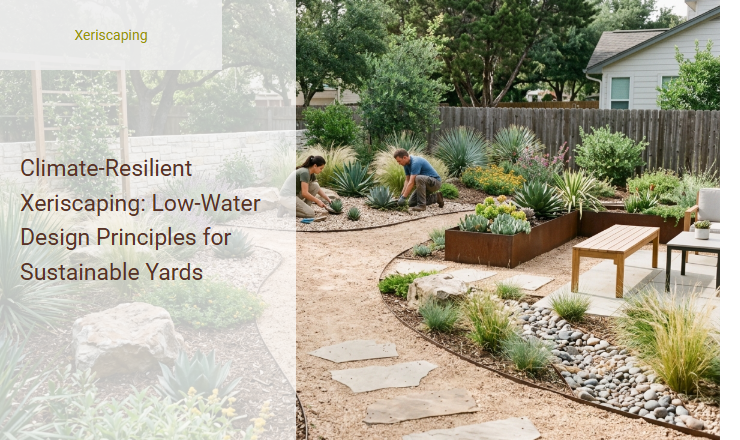
Homeowners today face a frustrating battle against soaring water utility bills and brittle, yellowing lawns as summers grow increasingly hot and dry. Traditional, turf-heavy landscaping is simply failing to keep pace with these intensifying climate realities. Fortunately, adapting your outdoor space does not mean sacrificing curb appeal; climate-resilient xeriscaping grants you a vibrant, property-enhancing landscape that thrives on minimal resources.
To be clear, sustainable xeriscaping is not merely a barren arrangement of gravel and cacti. Instead, it is a sophisticated, living ecosystem. By strategically incorporating deeply rooted native perennials, organic mulches, and efficient drip irrigation, you can slash outdoor water use by up to 60% while supporting local biodiversity.
In this article, we will detail the core design principles, soil preparation techniques, and smart zoning strategies required to transition your yard into a lush, water-wise sanctuary.
Read also: Hardscaping vs Softscaping for Low Maintenance
Introduction to Climate-Resilient Xeriscaping
As global temperatures rise and prolonged droughts become the new normal, traditional high-water landscaping is no longer sustainable. Homeowners and urban planners alike are turning to climate-resilient xeriscaping, a systematic approach to outdoor design that drastically reduces or eliminates the need for supplemental irrigation. By focusing on water conservation, biodiversity, and regional ecology, this practice transforms vulnerable, thirsty lawns into vibrant, self-sustaining ecosystems that thrive under environmental stress.
Building a Strong Foundation with Soil Amendment
Before selecting plants, you must evaluate your soil structure to ensure optimal water management. Healthy soil acts as a sponge, holding moisture long enough for roots to access it while allowing excess water to drain away, preventing root rot. Testing your soil's texture allows you to determine how to amend it effectively for a low-water landscape.
For gardeners dealing with sandy soils, water quickly drains away before plants can absorb it. Incorporating organic compost adds vital structure, helping the soil retain essential moisture and nutrients. Conversely, tightly packed clay soils suffer from poor drainage and compaction. Adding compost to heavy clay breaks up the dense particles, improving aeration and allowing roots to penetrate deeper into the ground.
The Core Principle of Hydrozoning
Hydrozoning is the practice of grouping plants with similar water, soil, and sunlight requirements into distinct hydrozones. This targeted layout maximizes irrigation efficiency, prevents overwatering, and ensures that drought-tolerant species are not drowned by the moisture requirements of thirstier plants.
- High Water Zone: Dedicated to small areas near the house, such as vegetable beds or high-traffic ornamental plants.
- Moderate Water Zone: Consists of transitional plants, such as established perennials and shrubs, requiring occasional watering during dry spells.
- Low Water Zone: Comprises hardy native plants and drought-tolerant species that thrive on natural rainfall once established.
- Very Low Water Zone: Reserved for desert-adapted species, succulents, and cacti that require no supplemental water.
Selecting Native and Drought-Tolerant Flora
Native Plants
Native species have spent thousands of years adapting to local rainfall patterns, soil conditions, and pests. Incorporating plants like the Echinacea purpurea (Purple Coneflower) or Salvia apiana (White Sage) ensures a resilient garden that supports local pollinators with minimal intervention.
Adapted Plants
Adapted plants originate from similar Mediterranean or arid climates around the world. Species such as the architectural Agave americana and deep-rooted perennials like Lavandula angustifolia (English Lavender) provide reliable structure and color while requiring minimal water resources.
Practical Strategies for Turf Reduction
Traditional turfgrass is one of the largest consumers of residential water. Replacing non-functional lawn areas with eco-friendly alternatives reduces resource consumption while adding depth and texture to your yard design.
- Identify high-water, low-use turf areas that can be easily converted.
- Utilize sheet mulching (cardboard and compost layers) to naturally suffocate the grass without chemicals.
- Install permeable hardscaping, such as gravel pathways or flagstone patios, to allow rainwater to sink back into the aquifer.
- Plant low-growing native groundcovers, like creeping thyme or sedum, to create a lush green look that never needs mowing.
The Critical Role of Mulching
Mulch acts as a protective blanket for your soil. A thick layer of mulch suppresses weed growth, buffers soil temperatures against extreme heat, and dramatically lowers water evaporation rates from the soil surface, keeping root systems cool and moist.
Designing High-Efficiency Irrigation Systems
Overwatering often stems from inefficient delivery methods, such as overhead sprinklers that lose massive amounts of water to wind and evaporation. Designing a targeted irrigation system delivers water precisely where it is needed most: the root zone.
- Micro-Drip Emitters: Slowly apply water directly to the base of individual plants to eliminate waste.
- Bubblers: Provide localized, deep soaking for trees and large shrubs that require deep watering cycles.
- Smart Weather-Based Controllers: Adjust watering schedules automatically based on real-time local weather data and soil moisture levels.
Harnessing Rainwater and Greywater Systems
Active and Passive Rain Harvesting
Passive harvesting reshapes the landscape to direct rain where it is needed, using swales and rain gardens to capture runoff. Active harvesting stores water in cisterns or rain barrels for dry periods.
Greywater Diversion
Greywater systems safely redirect gently used water from washing machines, showers, and bathroom sinks directly into the landscape, providing a consistent, recycled water supply for trees and ornamental shrubs.

Sustainable Maintenance for Low-Water Yards
While xeriscapes require significantly less maintenance than traditional lawns, they are not entirely maintenance-free. Establishing a seasonal routine ensures the long-term health and aesthetic appeal of your sustainable garden.
"The secret to managing a successful xeriscape is minimal, deliberate intervention. By stepping back and letting native plants self-regulate, we allow a natural balance to establish, avoiding the cycle of over-pruning and over-fertilizing that weakens plants."
Focus on hand-weeding early in the season before weeds can compete for water. Prune only to remove dead wood or to encourage healthy growth patterns, and avoid synthetic fertilizers which trigger rapid, water-thirsty growth spurts.
The Long-Term Ecological and Financial Payoff
Transitioning to a climate-resilient xeriscape yields significant rewards. Homeowners enjoy dramatically lower water bills and reduced maintenance costs, while communities benefit from decreased strain on local water infrastructure and the creation of vital urban wildlife habitats.
Embrace the future of landscaping today by designing a yard that works in harmony with your local climate, protecting our most precious natural resource for generations to come.
Summary
"Climate-Resilient Xeriscaping: Low-Water Design Principles for Sustainable Yards" explores the vital role of xeriscaping in modern, eco-friendly landscaping. As climate change intensifies droughts and water scarcity, traditional resource-intensive lawns are becoming increasingly unsustainable. This article outlines key design principles to transform standard yards into vibrant, water-wise havens.
The core methodology emphasizes thorough planning, soil improvement, and the selection of native, drought-tolerant plants. It highlights the importance of mulching to retain soil moisture and reduce evaporation. Furthermore, the guide advocates for efficient irrigation practices, such as drip systems, and the strategic grouping of plants with similar water needs, a concept known as hydrozoning.
Ultimately, climate-resilient xeriscaping goes beyond mere water conservation; it fosters local biodiversity, reduces maintenance costs, and creates beautiful, hardy outdoor spaces. By adopting these sustainable design principles, homeowners can significantly lower their ecological footprint while maintaining highly aesthetic landscapes.
Leave a comment