
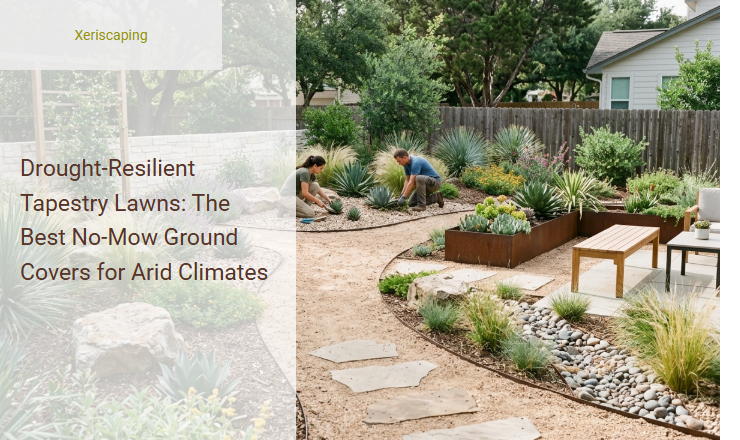
Maintaining a traditional green lawn in arid climates is an uphill battle against scorching heatwaves and soaring water rates. Traditional turfgrass is increasingly unsustainable, forcing homeowners to seek alternative landscaping strategies that conserve resources without sacrificing aesthetic appeal.
By transitioning to a drought-resilient tapestry lawn, you gain a vibrant, biodiverse ecosystem that dramatically slashes utility bills while eliminating the chore of weekly mowing. It is important to stipulate, however, that while these ground covers are highly self-sufficient once mature, they do require careful irrigation during their initial establishment phase to secure deep root systems.
Once established, hardy, low-profile species such as Kurapia, Creeping Thyme, and Dymondia thrive in intense sun and poor soil. Below, we will evaluate the best no-mow species suited for arid regions and outline the essential steps to design, plant, and maintain your own water-wise tapestry lawn.
Read also: Solar Lighting vs Low-Voltage LED for Nighttime Aesthetics
Redefining the Lawn: The Rise of Arid Tapestry Lawns
The traditional, bright green grass lawn has long been a staple of suburban landscaping, but in drought-prone regions, it is rapidly becoming an ecological liability. Maintaining a pristine monoculture turf demands millions of gallons of water, heavy chemical fertilizers, and constant mowing. Enter the tapestry lawn, a revolutionary and eco-friendly alternative that replaces thirsty turfgrass with a rich, low-lying mosaic of diverse, drought-tolerant ground covers. By blending various low-maintenance plants, homeowners can transition away from resource-heavy monocultures toward a resilient, biodiverse, and water-wise living carpet that thrives in arid climates.
Why Go No-Mow? The Benefits of Ground Cover Tapestries
Transitioning to a tapestry lawn offers massive environmental and practical advantages for homeowners looking to reduce their ecological footprint. By replacing traditional grass with adapted ground covers, you unlock a suite of sustainable benefits:
- Drastic Water Reduction: These drought-resilient plants require up to 80% less water than traditional lawns, significantly lowering utility bills and conserving precious local water resources.
- Zero Mowing Emissions: Because these ground covers naturally stay low to the ground, you can retire your lawnmower, eliminating carbon emissions and saving hours of weekend labor.
- Soil Conservation: Deep, intertwined root systems hold the soil in place, preventing erosion and improving soil structure without the need for synthetic fertilizers.
- Pollinator Support: Unlike sterile grass, a tapestry lawn provides critical nectar and pollen sources for bees, butterflies, and other essential local pollinators.
Principles of Designing a Living Mosaic
Creating a successful tapestry lawn requires thinking like an artist with a living canvas. Instead of planting a single species, you select a palette of ground covers that harmonize in height, texture, and growth rate to form a functional green carpet.
"A great tapestry design balances ecological resilience with year-round visual interest by layering diverse foliage types."
To achieve this, group plants with similar water needs but contrasting leaf shapes and colors. Combine fine-textured creeping varieties with broader-leafed options, and select species with staggered blooming periods to ensure your lawn displays splashes of color across different seasons while maintaining a uniform, low profile.
Creeping Thyme: The Fragrant, Foot-Traffic Friendly Carpet
Creeping Thyme (Thymus serpyllum) stands out as one of the most versatile and beloved choices for any tapestry lawn layout.
- Drought Tolerance: Extremely resilient, this hardy herb thrives in poor, rocky soils and requires minimal supplemental watering once established.
- Visual Appeal: During the summer, it erupts into a dense blanket of tiny purple-pink blooms that attract beneficial insects.
- Sensory Delight: Stepping on this ground cover releases a pleasant, herbal aroma, making it perfect for pathways and interactive lawn areas.
- Sun Loving: It performs best in fully exposed, sun-drenched areas where traditional turfgrass would quickly wither.
Kurapia: The Ultra-Low Water, High-Performance Turf Replacement
For areas that require a highly durable, fast-establishing turf alternative, Kurapia (Lippia nodiflora) represents a cutting-edge horticultural breakthrough.
- Deep Root System: Kurapia roots penetrate deep into the soil, allowing the plant to survive severe heatwaves and prolonged dry spells.
- Low-Growing Habit: It naturally hugs the ground, rarely exceeding a few inches in height, which completely eliminates the need for mowing.
- Weed Suppression: Its dense, rapid growth pattern creates a tight biological barrier that prevents invasive weeds from taking root.
- Foot Traffic Tolerance: It easily withstands moderate foot traffic, making it a highly functional space for children and pets.
Dymondia Margaretae: The Silver Carpet for Coastal and Desert Hardiness
Commonly known as Silver Carpet, Dymondia margaretae provides a striking, metallic aesthetic that contrasts beautifully with green foliage.
- Variegated Foliage: The leaves feature a deep green upper surface with a brilliant silver underside, creating a shimmering effect when caught by the breeze.
- Chokes Out Weeds: Its growth is incredibly tight and dense, forming a flat, weed-resistant mat that resembles a living outdoor rug.
- Extreme Drought Resilience: Adapted to harsh coastal and desert conditions, it thrives on minimal moisture and tolerates salty air.
- Perfect for Tight Spaces: It is exceptionally well-suited for filling narrow gaps between flagstones, pavers, and pathway borders.
Preparing the Foundation: Soil and Site Setup for Arid Success
The long-term success of your tapestry lawn depends heavily on proper preparation before the first plant goes into the ground.
- Lawn Removal: Completely eradicate existing turfgrass using sheet mulching or solarization to ensure grass roots and weeds do not compete with your new ground covers.
- Soil Amendment for Drainage: Most drought-tolerant species hate "wet feet." Incorporate organic compost and coarse sand or gravel to ensure rapid, clean drainage.
- Testing Soil pH: Verify your soil's pH levels to make sure they align with your selected species, adjusting the soil naturally to create an optimal growing environment.
Smart Irrigation: Establishing Your Tapestry Lawn Without Wasting Water
While mature tapestry lawns are exceptionally water-wise, they require careful monitoring during their initial phase. During the first few months, keep the soil consistently moist to help the individual plugs spread and knit together. Once the plants show active new growth, gradually transition to a deep, infrequent watering schedule. Utilizing subsurface drip irrigation or micro-sprinklers minimizes evaporation and encourages roots to grow deep into the soil profile, creating a self-sustaining system that resists heatwaves with ease.
Low-Effort Maintenance: Keeping Your Tapestry Vibrant Year-Round
Once established, your living mosaic requires a fraction of the upkeep of a standard lawn, but simple routine care will keep it looking its best.
- Minimal Weeding: Hand-pull any stray weeds during the first spring; as the tapestry thickens, weeding tasks will drop to almost zero.
- Seasonal Edging: Trim back aggressive runners along concrete borders and walkways once or twice a year to maintain clean, crisp lines.
- Patch Repair: Simply divide healthy plants from thriving areas of your lawn and replant them into any bare spots that develop.
- Organic Pest Management: Avoid harsh chemicals; instead, rely on the natural biodiversity of your lawn to attract beneficial predatory insects.
Cultivating a Greener Future: Your Tapestry Lawn Journey Begins
Embracing an arid tapestry lawn is more than a design choice; it is a commitment to a sustainable future. By replacing thirsty, demanding turfgrass with a resilient blend of drought-tolerant ground covers, you actively conserve water, eliminate mowing pollution, and build a thriving sanctuary for local wildlife. Start small or transform your entire yard to experience a gorgeous, living mosaic that proves eco-friendly landscaping is both deeply practical and breathtakingly beautiful.
Summary
The article "Drought-Resilient Tapestry Lawns: The Best No-Mow Ground Covers for Arid Climates" explores an eco-friendly and visually stunning alternative to traditional, water-guzzling turfgrass. In response to increasing water scarcity, homeowners in arid regions are turning to "tapestry lawns"-biodiverse lawns composed of various low-growing, drought-tolerant ground covers. These lawns require no mowing and significantly less water than standard grass.
By blending resilient, low-profile species like creeping thyme, sedum, chamomile, and miniature clover, gardeners can create a lush, textured carpet that thrives in harsh, dry climates. Beyond conserving precious water resources, these tapestry lawns foster local biodiversity by supporting pollinators, eliminating the need for harmful chemical fertilizers, and reducing soil erosion. Ultimately, this sustainable landscaping trend proves that arid-climate yards can be both highly ecological and exceptionally beautiful.
Leave a comment