
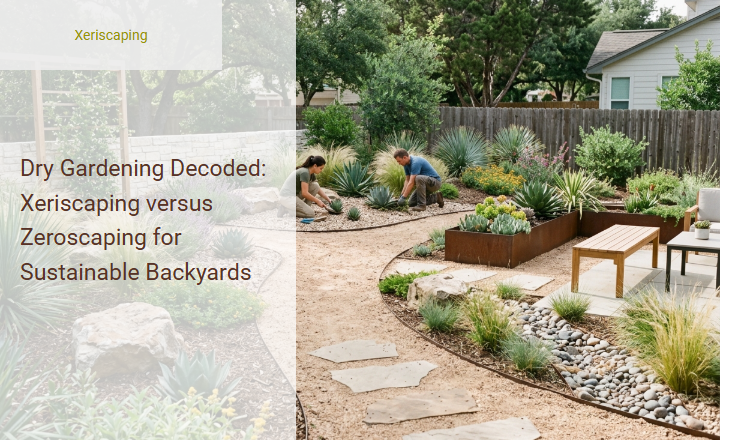
For many homeowners, maintaining a vibrant, emerald lawn has become an exhausting, uphill battle against soaring water utility bills and intensifying summer heatwaves. As municipal water restrictions tighten nationwide, maintaining traditional high-water turf grass is rapidly becoming an unsustainable relic of the past.
Embracing dry gardening grants you a climate-resilient backyard that slashes maintenance hours while elevating your property value. However, a successful transition is not simply a matter of halting irrigation; it stipulates a fundamental understanding of local soil ecology and smart design. Utilizing structural, drought-tolerant specimens like Agave americana or deeply-rooted Lavender proves that water-wise yards can be architecturally stunning and rich in biodiversity.
To help you navigate this transition, this guide will decode the critical distinctions between xeriscaping and zeroscaping, evaluating their ecological impacts, cost profiles, and aesthetic outcomes for your sustainable backyard.
Read also: Xeriscaping vs Zeroscaping for Aesthetic Appeal
Introduction: The Green Dilemma in Arid Landscapes
As global temperatures rise and water resources become increasingly scarce, homeowners face a growing challenge: maintaining an attractive yard without draining local reservoirs. Traditional, thirsty turf lawns are rapidly becoming unsustainable relics of the past. In response, the movement toward water conservation through dry gardening has surged in popularity. However, as property owners seek sustainable alternatives, a common point of confusion arises between two frequently conflated terms: xeriscaping and zeroscaping. While they sound remarkably similar, their execution, aesthetic value, and environmental footprints are vastly different.
Demystifying Xeriscaping: More Than Just Cactus
Xeriscaping is a systematic approach to landscaping designed specifically for areas susceptible to drought or where water conservation is practiced. The term is derived from the Greek word xeros, meaning dry, combined with "scape," representing a view or scene. Far from being a barren wasteland populated only by prickly cacti, a professionally designed xeriscape is a vibrant, living ecosystem.
This gardening philosophy relies on selecting drought-tolerant plants, enhancing the soil with organic matter to retain what moisture is available, and implementing highly efficient irrigation systems like drip lines. By grouping plants with similar water requirements together, xeriscaping achieves a lush, colorful, and dynamic garden that thrives with minimal supplemental watering.
Understanding Zeroscaping: The Minimalist Approach
Zeroscaping represents a radical shift away from living vegetation toward a minimalist, non-living landscape. The "zero" in zeroscaping literally refers to the goal of zero irrigation, which is achieved by replacing plants and soil with inorganic materials. While it guarantees a zero-water footprint, the result is often a stark, sterile environment that provides little to no shade or natural beauty.
The primary materials used to construct a zeroscaped yard include:
- Gravel and crushed stone of various sizes and colors
- Large river rocks and decorative boulders
- Concrete slabs, pavers, and patios
- Decomposed granite for stable pathways
Xeriscaping vs. Zeroscaping: The Core Differences
To better understand how these two dry gardening styles compare, it is helpful to look at their structural and ecological differences side by side.
| Feature | Xeriscaping | Zeroscaping |
|---|---|---|
| Primary Focus | Water-efficient living plants | Inorganic, non-living materials |
| Biodiversity | High; supports birds, bees, and local insects | Negligible; offers no habitat or food sources |
| Aesthetic Appeal | Lush, colorful, natural, and seasonal | Stark, geometric, industrial, and static |
| Ecological Impact | Improves soil health and cools the local climate | Can degrade soil biology and increase heat retention |
Environmental Impact: Biodiversity and Local Ecosystems
The environmental consequences of choosing one method over the other are profound. Xeriscaping acts as an ecological haven in urban environments. By incorporating native wildflowers, shrubs, and ornamental grasses, it provides critical nectar, pollen, and shelter for local pollinators and migratory birds. Furthermore, the active plant canopy cools the surrounding air through transpiration, actively fighting the urban heat island effect.
Conversely, zeroscaping contributes to localized environmental degradation. When natural soil is covered with gravel and stones, it absorbs and radiates solar heat, elevating ambient temperatures around the home. This thermal mass effect is well-documented by climate researchers.
"Replacing vegetative cover with dark, non-reflective surfaces like gravel, concrete, and asphalt absorbs more solar radiation, leading to elevated temperatures in urban and suburban developments."
Cost Analysis: Upfront Investment and Long-Term Value
When planning a landscape renovation, financial sustainability is just as important as environmental stewardship. A realistic cost comparison reveals distinct financial trajectories for xeriscaping and zeroscaping.
While zeroscaping requires very little ongoing maintenance or water costs, the initial cost of hauling and installing tons of rock can be surprisingly high. Xeriscaping, though requiring an upfront investment in soil amendments, native plants, and drip irrigation, offers superior long-term financial dividends and home valuation benefits. Here is a ranking of the most effective cost-saving priorities for dry gardening:
- Drip Irrigation Conversion: Maximizes water efficiency and directly lowers utility bills.
- Native Plant Sourcing: Buying native species ensures higher survival rates and lower replacement costs.
- Organic Mulching: Retains moisture and suppresses weeds, cutting down on maintenance labor and herbicide costs.
- Phased Installation: Spreading the landscaping project over several seasons to manage cash flow.
Step-by-Step Guide to Designing a Xeriscape Backyard
Creating a beautiful, water-wise backyard requires careful planning and structured execution. Follow these steps to transform your lawn into a thriving xeriscape.
- Analyze and Improve the Soil: Test your soil's drainage. Add organic compost to clay or sandy soils to improve nutrient retention and aeration.
- Practice Hydrozoning: Group plants with similar water, soil, and sun exposure requirements together to prevent over- or under-watering.
- Select Native Species: Research and choose native, drought-resistant perennials, shrubs, and trees that naturally thrive in your local climate.
- Install a Smart Irrigation System: Lay down drip lines directly to the root zones and connect them to a weather-based smart controller.
- Apply a Deep Layer of Mulch: Spread 2 to 3 inches of organic mulch (like wood chips) around plants to lock in soil moisture and prevent weed growth.
Best Practices for Integrating Zeroscaping Safely
While an entirely zeroscaped yard has significant environmental drawbacks, there are specific scenarios where these non-living elements are highly appropriate and functional. High-traffic walkways, fire-resistant zones directly adjacent to the home foundation, and small drainage swales are ideal candidates for rock-based landscaping.
To avoid common pitfalls such as weed growth through stones, soil compaction, and excessive heat reflection, consider the following guidelines:
- Always lay down a high-quality, water-permeable landscape fabric beneath gravel to suppress weeds while allowing the soil to breathe.
- Use light-colored gravel or river rock rather than dark basalt or lava rock to minimize heat absorption.
- Incorporate organic boundaries to break up large expanses of stone, preventing your yard from looking like a parking lot.
The Hybrid Model: Blending Both for Maximum Sustainability
Homeowners do not have to make an all-or-nothing choice between these two methods. In fact, the most successful and aesthetically pleasing sustainable backyards utilize a hybrid model that blends the structural benefits of zeroscaping with the ecological richness of xeriscaping.
This approach uses hardscapes-like gravel pathways, stone retaining walls, and patios-to define functional outdoor living areas. These structured zones are then softened and brought to life by lush, drought-tolerant planting beds that attract local wildlife and keep the property cool.
[Conceptual Layout: A winding pathway of light-colored crushed granite (Zeroscaping) bordered by deeply mulched beds featuring native purple coneflower, blue grama grass, and desert willow trees (Xeriscaping).]
Conclusion: Choosing the Right Path for Your Backyard
The transition toward water-conscious gardening is a powerful step toward a more sustainable future. While zeroscaping offers an option for low-traffic pathways and immediate fire-safe zones, xeriscaping stands out as the superior choice for supporting biodiversity, cooling the local climate, and maintaining a vibrant, inviting outdoor living space.
Take the time to assess your local climate, soil quality, and lifestyle needs. By choosing to implement native plants, efficient irrigation, and structured hardscaping, you can create a resilient, beautiful oasis that honors the local environment while significantly lowering your water footprint.
Summary
The article "Dry Gardening Decoded: Xeriscaping versus Zeroscaping for Sustainable Backyards" demystifies two popular low-water landscaping methods that are frequently confused but yield vastly different ecological and aesthetic results.
Xeriscaping is a thoughtful, sustainable gardening practice designed to conserve water through the strategic use of drought-tolerant native plants, organic mulch, and efficient irrigation. This approach actively fosters local biodiversity while maintaining a lush, living landscape. Conversely, zeroscaping literally means "zero landscaping," replacing living plants with gravel, rocks, and soil. While zeroscaping drastically cuts water use, it can contribute to the urban heat island effect and offers virtually no habitat for local wildlife.
Ultimately, the article advocates for xeriscaping as the superior, eco-friendly choice, proving that homeowners can cultivate vibrant, beautiful, and environmentally responsible backyards without draining precious water resources.
Leave a comment