
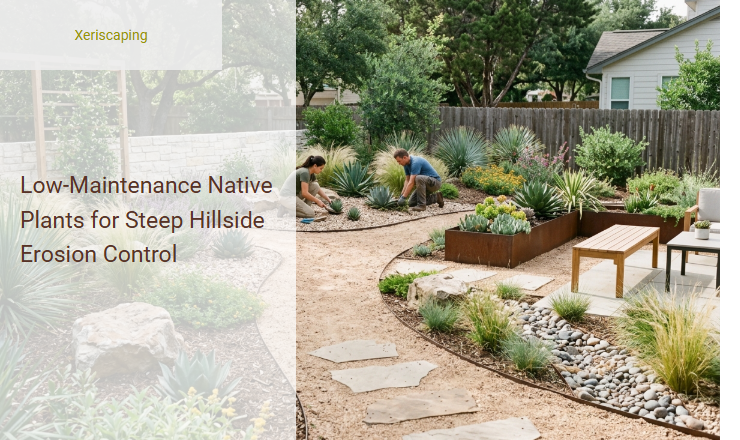
Managing a steep slope is a constant battle against gravity, where heavy rains wash away precious topsoil and traditional mowing feels nearly impossible. While engineered retaining walls offer a structural fix, they are often prohibitively expensive and disrupt the natural flow of the landscape.
Utilizing native plants instead grants a self-sustaining, cost-effective defense system that enhances local biodiversity while permanently securing the soil. However, successful stabilization requires acknowledging that even "low-maintenance" species need a deliberate establishment phase and strategic site preparation to withstand initial runoff. Proven living anchors, such as the deep-rooted Switchgrass (Panicum virgatum) and the sprawling Creeping Juniper (Juniperus horizontalis), demonstrate how nature can effortlessly bind shifting ground.
In this guide, we will analyze the top native species tailored for erosion control, outline effective planting techniques for steep gradients, and provide a step-by-step framework to ensure your hillside remains stable and beautiful for years to come.
Read also: Terracing vs Grading for Steep Slopes
The Steep Slope Challenge
Steep hillsides present a dramatic landscape feature, but they also pose a significant environmental and structural hazard. When left bare, slopes are highly vulnerable to the relentless forces of gravity and water. Heavy rainfall washes away topsoil, carves deep gullies, and destabilizes the entire hillside, potentially leading to destructive landslides that threaten property and safety.
While many property owners turn to concrete retaining walls as a quick fix, these engineered structures are expensive, prone to cracking over time, and disrupt natural water drainage. A far more sustainable and cost-effective approach is utilizing native plants. By working with nature rather than against it, a carefully selected vegetative cover provides a low-maintenance, self-repairing solution that secures the earth far more deeply than concrete ever could.
Ground-Binding Roots: How Plants Hold the Soil
To successfully control erosion on an active slope, a plant community must work across different layers of the soil. The science of vegetative stabilization relies on two distinct root architectures working in tandem: deep anchors and surface nets.
Deep taproots act like living soil anchors, driving straight down through loose topsoil into the bedrock or heavy subsoil below. These powerful roots pin the unstable upper layers of earth to the solid geological foundation beneath, preventing deep-seated slope failures. Conversely, fibrous roots form a dense, intertwined web right below the surface. This shallow, highly branched root system knits the topsoil together, dramatically reducing surface runoff and keeping precious organic matter from washing away during heavy downpours.
Hardy Native Shrubs for Deep Anchor Support
For the primary structural backbone of your slope, you need tough, woody plants that can establish deep root systems even in poor, rocky, or compacted soils.
Creeping Juniper
Known botanically as Juniperus horizontalis, this incredibly resilient evergreen excels on dry, sun-baked slopes. It sends down deep anchoring roots while spreading its woody branches close to the ground, offering year-round soil protection and wind resistance.
Fragrant Sumac
The Rhus aromatica is an aggressive root-sprouting shrub that excels at binding loose soil. Its extensive root system rapidly colonizes empty spaces, making it highly effective at stabilizing severely degraded slopes where other plants fail to take hold.
Stanford Manzanita
An elegant western native, Arctostaphylos stanfordiana thrives in nutrient-poor, dry soils. Its deep, woody root system provides exceptional physical stability to steep banks while its striking red bark and evergreen leaves offer exceptional visual interest.
Creeping Groundcovers for Surface Protection
Once deep-rooting shrubs are in place, creeping groundcovers act as a living mulch, shielding the soil from the physical impact of raindrops and choking out invasive weeds.
Creeping Phlox
This vibrant groundcover blankets slopes in a dense mat of evergreen foliage and colorful spring blooms.
- Soil Requirement: Well-drained, sandy, or rocky soil.
- Moisture Requirement: Dry to medium; highly drought-tolerant once established.
Wild Ginger
An excellent choice for shaded or north-facing slopes, this plant spreads via shallow rhizomes to create an interlocking root carpet.
- Soil Requirement: Moist, rich, organic soils.
- Moisture Requirement: Consistently moist; prefers full to partial shade.
Kinnikinnick
Also known as bearberry, this tough, mat-forming evergreen shrub excels at protecting sandy, acidic slopes.
- Soil Requirement: Poor, sandy, acidic, or gravelly soils.
- Moisture Requirement: Extremely low; highly drought-resistant.
Resilient Native Grasses with Fibrous Roots
Native grasses are the unsung heroes of erosion control. Their incredibly dense, fibrous root systems can reach depths of several feet, creating a virtually impenetrable underground mesh that holds onto every grain of soil.
Little Bluestem
This clump-forming grass features a root system that can reach up to eight feet deep. As wind sweeps across the hillside, its blue-green summer blades and bronze autumn foliage bring beautiful movement and texture to the landscape while its roots anchor the hillside.
Switchgrass
An exceptionally robust species, this grass shrugs off both severe drought and temporary flooding. Its massive, web-like root system acts as an underground sponge, trapping moisture and filtering out sediments from surface runoff.
Blue Grama
Ideal for arid regions and low-water landscapes, this short, warm-season grass forms a tight sod. Its highly branched root network binds the immediate topsoil layer, making it perfect for filling the gaps between larger shrubs and trees.
Preparing the Slope: Erosion Blankets and Terracing
Before putting any plants in the ground, you must temporarily stabilize the soil. Without immediate mechanical support, a single heavy rainstorm can wash away both your plants and your hard work before root systems have a chance to develop.
- Clear away dead weeds and loose debris, taking care not to disturb the underlying soil structure more than necessary.
- Install biodegradable jute netting or coconut coir blankets across the slope, securing them tightly with landscape staples to prevent water from running underneath the fabric.
- Place coconut coir logs horizontally across the slope at regular intervals to slow down surface runoff and catch migrating sediment.
- Create small, flat pocket terraces for individual plants, carving out miniature shelves that interrupt the continuous downward angle of the hill.
Planting Best Practices for Sloped Terrain
Planting on an incline requires specialized techniques to ensure water flows toward the plant's roots rather than rushing past them down the hill.
Always stagger your planting layout in a triangular pattern rather than planting in straight rows; this forces flowing water to weave zig-zag fashion down the hill, slowing its momentum. For each plant, dig a flat planting bench into the hillside. When backfilling the hole, build up a crescent-shaped soil basin or berm on the downhill side of the plant to catch and hold rainwater.
Crucial Safety & Conservation Tip: Never till or disturb the entire surface of a steep slope. Spot-planting preserves the surrounding soil crust and prevents massive, systemic erosion events during the planting phase.
Establishing Your Slope Garden with Minimal Effort
The first year is the most critical phase for a slope-stabilization project. While native plants are incredibly self-sufficient once mature, they require careful monitoring during their initial establishment phase.
Install a temporary drip irrigation system laid out along the contours of the hill. Overhead watering should be strictly avoided, as it can trigger the very surface erosion you are trying to prevent. Water deeply and infrequently during the first three to six months to encourage roots to grow downward rather than stay near the surface. Apply a three-inch layer of shredded hardwood mulch-which knits together better than wood chips-to conserve moisture and suppress weeds during the first full growing season.
Beyond Stability: Creating a Thriving Ecosystem
Using native plants to cure erosion issues does more than just secure the physical earth. It actively heals the local environment, transforming a barren, hazardous slope into a rich, self-sustaining biological sanctuary.
Native shrubs, grasses, and groundcovers provide vital nectar, pollen, and nesting materials for local bees, butterflies, and birds. Additionally, by slowing down water runoff and absorbing nutrients on-site, this living barrier prevents sediment and chemical fertilizers from polluting local waterways, keeping nearby rivers and streams clean.
A Sustainable, Living Shield for Your Hillside
Over time, the engineered solutions we build to hold back nature will inevitably degrade, rust, or crack. A living shield of native plants behaves in the exact opposite manner: it grows stronger, deeper, and more resilient with each passing year.
As the roots intertwine and the foliage blankets the earth, your hillside will transition from a high-maintenance erosion hazard into a stunning, self-repairing ecosystem. By choosing native species, you are investing in a permanent, beautiful, and ecologically responsible solution that keeps your land firmly in place for generations to come.
Summary
Managing steep slopes prone to erosion can be a daunting challenge for homeowners and landscapers alike. Fortunately, incorporating low-maintenance native plants offers an eco-friendly and highly effective solution. Unlike non-native species, native plants possess deep, robust root systems that naturally anchor loose soil, absorb excess rainwater, and significantly reduce runoff. Once established, these resilient plants require minimal watering, pruning, or fertilizing, saving both time and resources.
Excellent choices for erosion control include hardy groundcovers, native ornamental grasses, and deep-rooting shrubs such as creeping juniper, wild lilac, and switchgrass. By selecting plants adapted to the local climate and soil conditions, property owners can stabilize unstable hillsides without relying on expensive retaining walls. Ultimately, integrating native flora not only prevents devastating soil loss but also enhances local biodiversity, creates vital wildlife habitats, and adds lasting natural beauty to the landscape.
Leave a comment