
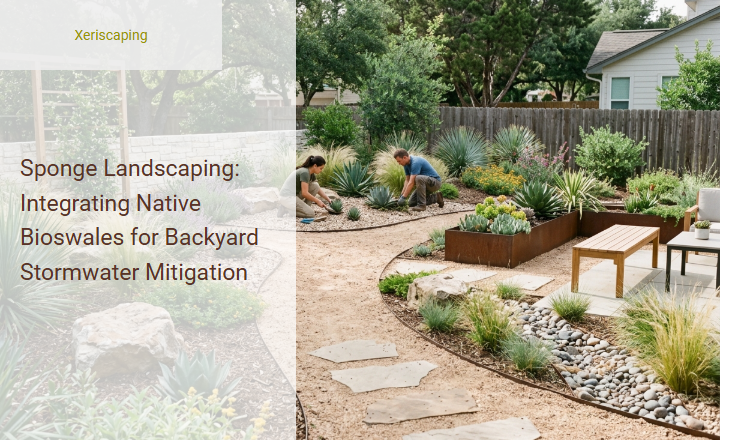
For many homeowners, heavy seasonal downpours bring the frustrating realities of waterlogged lawns, soil erosion, and structural threats from standing water. While traditional drainage solutions rely on invasive trenching and concrete piping, looking first to natural hydrology provides a far more sustainable path forward.
Integrating native bioswales-the cornerstone of "sponge landscaping"-grants property owners a self-managing, ecologically vibrant system that filters and absorbs runoff naturally. It is important to stipulate, however, that a functional bioswale is an engineered system requiring precise grading and soil assessment, rather than just a simple ditch. Utilizing a structured bed of river rock paired with deep-rooted native species, such as Switchgrass (Panicum virgatum) and Joe-Pye Weed (Eutrochium maculatum), ensures the channel successfully slows and sinks high volumes of water.
This guide will detail how to analyze your backyard's topography, select resilient native plants, and execute a step-by-step installation to transform stormwater liabilities into beautiful environmental assets.
Read also: Rain Gardens vs Bioswales for Urban Runoff
The Rise of Sponge Landscaping
In modern urban and suburban environments, traditional development has replaced natural fields and forests with impervious surfaces like concrete, asphalt, and rooftops. When heavy rains fall, this structural shift prevents water from soaking into the ground, resulting in massive volumes of stormwater runoff. This runoff floods streets, overburdens sewer systems, and carries harmful pollutants directly into local waterways. To combat this ecological disruption, forward-thinking homeowners are turning to the principles of *sponge landscaping*-a design philosophy that mimics natural hydrology by absorbing, filtering, and slowing water where it lands.
One of the most effective ways to implement this concept on a residential scale is by installing a backyard bioswale. These engineered channels serve as a beautiful, sustainable alternative to concrete pipes and drains, transforming a common drainage headache into a thriving *ecological asset* that heals the local water cycle.
What is a Native Bioswale?
A bioswale is a gently sloped, vegetated channel designed to capture, direct, and filter stormwater runoff. Rather than allowing water to pool stagnantly or rush off your property, this landscape feature slows the flow, traps sediment, and allows the water to gradually infiltrate back into the ground. Through this process, soil microbes and plant roots naturally break down pollutants, heavy metals, and fertilizers before they can reach the water table.
While often confused with rain gardens, there is a key functional difference: bioswales are dynamic conveyance channels designed to transport moving water along a specific slope, whereas rain gardens are shallow, static basins meant to hold and infiltrate ponded water in a single spot. This makes bioswales a core component of sponge landscaping, as they actively direct excess stormwater safely away from structural foundations while maximizing ground absorption along the way.
Assessing Your Backyard's Drainage Profile
Before breaking ground on your bioswale, you must conduct a thorough site assessment to understand how water naturally moves across your property during a storm event. Observing these patterns ensures your bioswale will be positioned in the most effective location.
Follow these essential steps to analyze your yard's unique drainage profile:
- Identify runoff sources: Walk your property during a heavy rain to see where water flows from your roof downspouts, driveway, patio, or neighbor's property.
- Locate the natural low points: Note where water naturally collects or flows; your bioswale should ideally follow these existing drainage pathways.
- Conduct a soil percolation test: Dig a hole 12 inches deep, fill it with water, let it drain completely, fill it again, and measure how quickly the water level drops to determine if your soil drains well enough for infiltration.
- Check for obstacles: Ensure your proposed path keeps water at least 10 feet away from your home's foundation to prevent basement water issues.
- Call before you dig: You must contact your local utility location service (such as 811) to mark all underground gas, water, and electrical lines before starting any excavation.
Designing the Anatomy of a Bioswale
A highly functional bioswale relies on a specific physical structure to capture, clean, and guide stormwater. Each zone plays a distinct role in managing water velocity and volume, ensuring the landscape functions efficiently even during torrential downpours.
- Inflow Zone: The entry point where runoff enters the channel from your downspout or lawn, often stabilized with a splash pad of river rocks to dissipate water energy.
- Gentle Side Slopes: The banks of the swale, which should be graded to a gradual, stable slope to prevent soil erosion and allow for easy planting.
- Shallow Channel Bed: The bottom of the swale, which must maintain a gentle slope of
1% to 2%and a depth of 6 to 18 inches to ensure steady but controlled water movement. - Compost-Rich Filter Bed: A permeable subsurface layers of engineered soil that filters out pollutants as the water slowly percolates downward.
- Overflow Outlet: A designated exit point at the end of the swale, often lined with larger stones, designed to safely release excess water during extreme storms that exceed the bioswale's absorption capacity.
Soil Engineering for Maximum Absorption
The secret to an exceptionally efficient bioswale lies beneath the surface. Standard garden soil, particularly clay-heavy soil, easily becomes compacted and waterlogged, which prevents stormwater from draining and starves plant roots of essential oxygen. To maximize absorption and filtration, you must replace your native soil along the channel bottom with an engineered soil mixture designed specifically for high permeability.
"An ideal engineered soil matrix for stormwater filtration consists of 60% clean, coarse sand, 20% organic compost, and 20% nutrient-rich topsoil." - National Stormwater Management Guidelines
This balanced ratio allows water to drain rapidly through the sand while the organic compost binds to pollutants and feeds the plant roots. The topsoil retains just enough moisture to keep the vegetation healthy during dry spells without allowing the channel to turn into a muddy bog.
Selecting the Right Native Plants
Native plants are the engine of any bioswale. Unlike non-native species, native plants have deep, robust root systems that anchor the soil, prevent erosion, and create channels that guide water deep into the earth. Because a bioswale experiences both intense wet periods and extended dry spells, the plants must be highly resilient and strategically placed in zones according to their moisture tolerance.
| Bioswale Zone | Moisture Level | Recommended Native Species | Root Characteristics |
|---|---|---|---|
| Swale Bottom (Wet Zone) | Constantly wet to moist | Soft Rush, Blue Flag Iris, Swamp Milkweed | Fibrous, water-filtering roots |
| Side Slopes (Transition Zone) | Occasionally wet, quickly draining | Joe-Pye Weed, Switchgrass, Cardinal Flower | Deep, stabilizing root networks |
| Swale Edges (Dry Zone) | Mostly dry, well-draining | Purple Coneflower, Black-Eyed Susan, Little Bluestem | Drought-tolerant, deep taproots |
Step-by-Step Excavation and Grading
Once you have mapped out your design and selected your plants, it is time to begin the physical transformation of your yard. Proper excavation and grading are essential to ensure that water flows exactly where you want it to, without ponding for too long or washing away your hard work.
- Outline and excavate: Mark the path of your bioswale with spray paint or a garden hose, then dig out the channel to a depth of 18 to 24 inches to accommodate the engineered soil mix.
- Establish the gradient: Ensure the bottom of the channel slopes downward at a continuous, gentle grade of
1% to 2%(a drop of 1 to 2 feet for every 100 feet of length) toward your designated overflow area. - Shape the side slopes: Grade the banks of the swale to a gentle slope, ideally using a
3:1ratio (3 feet of horizontal width for every 1 foot of vertical rise) to prevent cave-ins. - Backfill with engineered soil: Fill the bottom of the excavated channel with 12 to 18 inches of your sand-compost-topsoil mix, leaving a shallow basin at the top to collect water.
- Construct the berms: Use the excavated native soil to build up small earthen berms along the low side of the swale to help contain and direct runoff within the channel.
Planting Techniques and Erosion Control
With the structure in place, you can begin planting. To maximize the structural integrity of your bioswale, plant your selected native species densely. Tight planting groupings ensure that as the plants grow, their roots will knit together to form a living barrier that resists erosion from rushing water.
Because young plants need time to establish themselves, you must protect the bare soil from washing away during early storm events. Use the following materials to secure your bioswale during this vulnerable phase:
- Biodegradable jute or coir blankets: Roll these natural fiber mats over the slopes to hold the soil in place while allowing plants to grow through the mesh.
- Double-shredded hardwood mulch: Apply a 2-inch layer of heavy mulch, which interlocks and resists floating away better than light wood chips.
- River rock or cobblestones: Place larger stones at high-velocity areas, such as the inflow and outflow zones, to dissipate energy and protect delicate young root systems from erosion.
Long-Term Maintenance and Troubleshooting
While native bioswales are designed to be self-sustaining ecosystems, they do require a basic level of care to keep them functioning at peak performance. Routine maintenance is simple once the plants are established, but keeping an eye out for potential issues will extend the life of your installation.
During the first year, make sure to weed regularly so invasive species do not outcompete your native plants, and water your new plantings during dry spells. Essential seasonal tasks include clearing fallen leaves and debris in the autumn to prevent blockages, and cutting back dead vegetation in early spring to encourage vigorous new growth.
Clearing Sediment Buildup
Over time, stormwater will deposit silt and sediment in the bottom of your swale. If you notice a thick layer of mud choking out your plants or slowing down water infiltration, gently shovel out the accumulated sediment and replenish the mulch layer.
Resolving Standing Water
If your bioswale holds standing water for more than 48 hours after a rainstorm, your soil may have become clogged or compacted. You can troubleshoot this by aerating the soil bed, incorporating more organic compost, or digging a small French drain beneath the bioswale to help carry excess water away.
Cultivating a Resilient Local Ecosystem
By transforming a troublesome wet spot or a boring turf lawn into a dynamic, native-planted bioswale, you are taking a major step toward restoring the natural hydrology of your property. These living landscapes do more than just manage water; they serve as a bridge between the built environment and the natural world, purifying runoff, reducing localized flooding, and replenishing vital underground aquifers.
Beyond these immediate hydrological benefits, your backyard bioswale will quickly become a haven for local biodiversity. *As you nurture this living landscape*, you will see birds, bees, and butterflies flocking to the native blooms and shelter you have provided. By embracing the philosophy of sponge landscaping, your individual yard joins a growing collective movement of urban conservation, proving that sustainable water stewardship begins right at home.
"Sponge Landscaping: Integrating Native Bioswales for Backyard Stormwater Mitigation" explores innovative, eco-friendly residential landscaping techniques designed to manage excess rainwater naturally. By adapting the global "sponge city" concept to a residential scale, homeowners can utilize native bioswales-specially engineered channels planted with deep-rooted vegetation and layered with porous soils-to capture, filter, and slowly release stormwater runoff.
This sustainable approach prevents backyard flooding, reduces soil erosion, and alleviates pressure on municipal drainage systems. Furthermore, using native plants minimizes the need for chemical fertilizers and artificial irrigation while actively filtering pollutants and supporting local pollinators. Ultimately, the article provides a practical roadmap for transforming standard lawns into resilient, biodiverse, and aesthetically pleasing ecosystems that restore the natural hydrologic cycle, empowering property owners to play an active role in local environmental conservation.
Summary
Leave a comment