
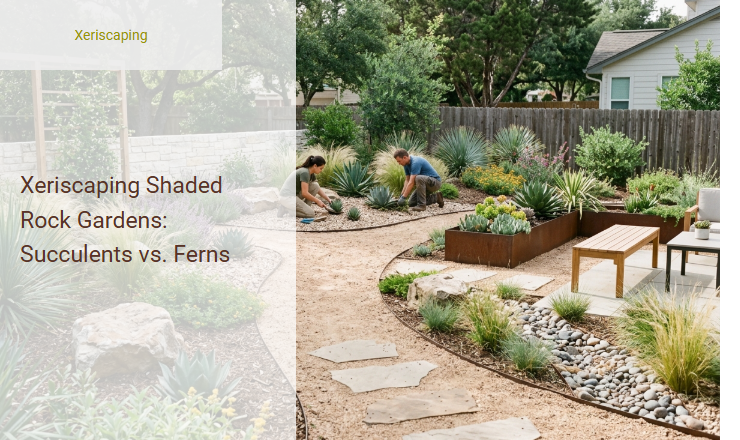
Designing a vibrant landscape in dry, shaded rocky areas is one of gardening's most frustrating challenges, often resulting in withered plants and wasted effort. Before selecting flora, we must first analyze the unique microclimates of sheltered zones, where tree canopies and rocky structures block both sunlight and rainfall. Mastering this delicate environmental balance grants you a lush, architecturally striking sanctuary that slashes water usage while maintaining year-round visual interest.
However, successful shaded xeriscaping stipulates that we distinguish between true drought tolerance and mere survival; even low-water specimens require targeted soil preparation to establish in restrictive rock pockets. For instance, stonecrop succulents like Sedum ternatum demand rapidly draining grit, whereas resilient ferns such as Dryopteris erythrosora (Autumn Fern) rely on moisture-retaining organic pockets to endure dry spells.
This article will compare these two plant families across critical parameters-including moisture efficiency, soil adaptability, and aesthetic texture-to help you determine the optimal contender for your shaded rock garden.
Introduction to Shady Xeriscaping
Xeriscaping is often associated with sun-drenched desert landscapes populated by cacti and gravel. However, applying water-wise gardening principles to the cool, dark recesses of a shaded rock garden opens up a highly sophisticated design realm. In these sheltered zones, an unexpected rivalry and exquisite synergy emerge between two contrasting botanical families: succulents and ferns. While succulents evoke structural, geometric resilience, ferns bring delicate, lace-like movement. Together, they challenge the traditional boundaries of shade gardening, proving that low-water landscapes can be lush, textured, and deeply captivating.
The Dual Challenge of Shade and Drought
Managing a garden that suffers from both minimal sunlight and limited moisture-often referred to as dry shade-is one of the most demanding trials a horticulturist can face. In natural ecosystems, dry shade typically occurs beneath mature tree canopies or in the rain shadow of steep structures, where foliage blocks sunlight and root systems aggressively extract every drop of water. Traditional shade-loving plants, which usually rely on consistent humidity and damp soil, quickly wither under these parched conditions, while classic sun-loving desert plants rot from a lack of light-driven transpiration.
"Dry shade represents a severe ecological bottleneck, demanding species that can photosynthesize efficiently in low light while conserving precious cellular moisture." - The Dry Shade Gardening Manual
Shade-Loving Succulents: Resilient Minimalists
While many succulent varieties crave intense sunlight, a select group of resilient minimalists thrives in muted light conditions. These shade-tolerant succulents have adapted to maximize light absorption while maintaining their characteristic drought resistance, showcasing plump, water-storing leaves and architectural forms.
- Haworthia: Known as windowed plants, these small African succulents feature translucent leaf tips that allow sunlight to penetrate deep into their tissues, making them exceptionally suited for deep shade.
- Sempervivum: Commonly called hens-and-chicks, these rosette-forming plants adapt beautifully to rocky crevices in filtered light, relying on tight leaf arrangements to prevent water loss.
- Gasteria: Characterized by thick, tongue-shaped leaves, these slow-growing plants thrive in low-light environments, using deep green pigments to capture minimal solar energy.
Xeric Ferns: Delicate Foliage with Surprising Toughness
Ferns are historically depicted as moisture-loving forest dwellers, yet certain xeric species have developed incredible evolutionary tricks to survive prolonged dry spells. These tough plants utilize specialized biological mechanisms, such as curling their fronds to reduce transpiration or entering a dormant state until moisture returns, allowing them to decorate rocky dry shade with ethereal grace.
- Polystichum munitum (Western Sword Fern): Once established in a shady rock garden, this robust fern develops a deep root system that can withstand months of severe drought while keeping its leathery, evergreen fronds intact.
- Polypodium glycyrrhiza (Licorice Fern): Often growing directly on mossy rocks, this species goes dormant during dry summer months and bursts back to life with the first autumn rains, making it perfect for seasonally dry crevices.
- Cheilanthes lanosa (Hairy Lip Fern): Featuring a dense coat of fine hairs on its foliage, this small fern excels at trapping ambient moisture and reflecting excess heat in dry, rocky outcroppings.
Visual Harmony: Textures, Forms, and Colors
Combining succulents and ferns in a shaded rock garden creates an extraordinary visual dialogue centered on contrast. The rigid, sculptural forms of succulents provide solid anchors that ground the garden design, while the delicate, feathery fronds of xeric ferns inject fluid movement and lightness. This interplay of fleshy and airy textures prevents the shade garden from looking flat or monotonous. When nestled among natural stone, the smooth surfaces of succulents mirror the hard qualities of the rocks, while the intricate patterns of the ferns soften the stony edges, resulting in a balanced, multidimensional landscape.

Soil Chemistry and Drainage Dynamics
Designing a shared environment for succulents and ferns requires careful attention to soil composition, pH levels, and drainage behaviors. Although both groups are adapted to dry shade, their specific soil preferences must be carefully balanced to prevent root rot in succulents while keeping enough organic matter to sustain xeric ferns.
| Plant Group | Ideal Soil Mix | pH Range | Drainage Requirement |
|---|---|---|---|
| Shade Succulents | Gritty, mineral-heavy mix with coarse sand and pumice | 6.0 to 7.0 (Slightly acidic to neutral) | Sharp, immediate drainage to prevent rot |
| Xeric Ferns | Loamy, organic-rich soil blended with leaf mold and fine gravel | 5.5 to 6.5 (Moderately acidic) | Moderate drainage with moisture retention capability |
Leveraging Rock Formations for Microclimates
In a dry shade garden, natural rock formations are not merely decorative; they are functional tools used to manipulate temperature, moisture, and light. By strategically placing boulders, slabs, and gravel, you can engineer microclimates that cater to the distinct needs of both succulents and ferns. Vertical crevices can shield delicate fern roots from dry winds, while large, flat stones absorb and radiate minimal ambient heat, keeping nearby shade-tolerant succulents warm during chilly nights. Sloping terrain helps channel water away from succulent crowns and directs it deeper into the root zones where established xeric ferns can seek it out.
Irrigation Best Practices for Dry Shade
Water management in a shaded, low-water rock garden requires a disciplined approach to balance the hydration needs of ferns without overwatering sensitive succulents. Implementing a systematic irrigation plan is essential for establishing healthy root systems and maintaining the visual appeal of both plant types.
- Establishment Watering: Provide deep, targeted watering twice a week during the first growing season to help both ferns and succulents develop robust root networks.
- Targeted Micro-Drip Application: Install localized drip emitters that deliver water directly to the base of individual ferns while keeping the surrounding succulent zones relatively dry.
- Seasonal Adjustments: Reduce irrigation frequency significantly during the winter months when evaporation is low and plants enter a semi-dormant phase.
- Monitoring Soil Moisture: Utilize a moisture meter or perform hand checks to ensure the top two inches of soil have dried completely before reintroducing water.
Companion Planting in the Shadows
To bridge the dramatic aesthetic gap between geometric succulents and soft ferns, smart gardeners introduce companion plants that share similar low-water and low-light tolerances. These intermediate species help soften transitions, unify the color palette, and fill empty spaces without demanding extra resources.
Designing Your Balanced Shaded Sanctuary
Achieving a sustainable, year-round aesthetically pleasing xeriscape in the shadows is entirely possible through thoughtful planning and layering. By placing your structural succulents in elevated rock crevices where drainage is immediate, and positioning your tough, arching ferns in the deeper, organic-rich pockets at the base of boulders, you create a self-sustaining ecosystem. This layout ensures that each plant thrives in its preferred microclimate while contributing to a unified design. Through the careful combination of fleshy minimalists and feathery survivors, your shaded rock garden transforms into a resilient, low-maintenance sanctuary that defies the typical expectations of dry-shade landscaping.
| Feature | Succulents (Shade-Tolerant) | Ferns |
|---|---|---|
| Light Tolerance | Filtered sun to light shade; prone to stretching (etiolation) in deep shade. | Full shade to dappled light; fronds burn easily in direct sunlight. |
| Moisture & Water | Drought-tolerant; requires dry periods. Highly susceptible to rot in damp shade. | Requires consistent moisture and high humidity; cannot tolerate drying out. |
| Soil Requirements | Gritty, sandy, rapidly draining mineral substrate with low organic matter. | Rich, humus-heavy, moisture-retentive soil with good aeration. |
| Growth Habit | Compact, geometric, fleshy rosettes; slow-growing and architectural. | Feathery, arching fronds; delicate texture that softens harsh rock edges. |
| Rock Garden Placement | Elevated crevices, dry ledges, and well-draining sloped pockets. | Damp bases of rocks, deep shaded hollows, and north-facing crevices. |
Leave a comment