
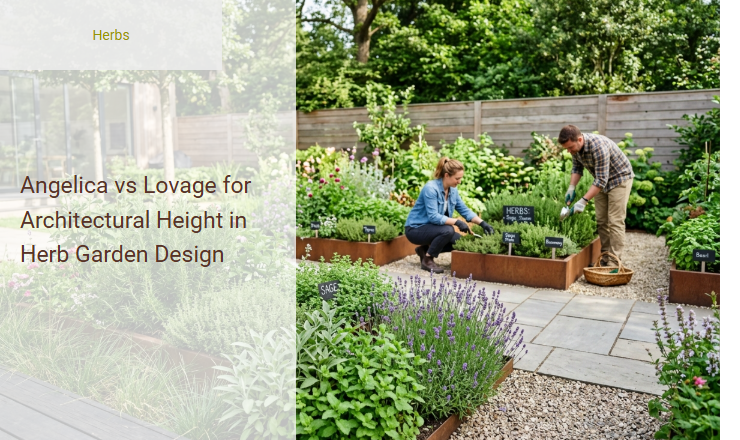
Herb garden designers often struggle to introduce dramatic vertical structure without disrupting the tidy, accessible layouts of low-growing culinary plots. While traditional designs rely heavily on low-lying thyme and mounded sage, achieving true architectural presence requires a deliberate shift in scale. Integrating the right towering specimen grants your landscape a commanding focal point that anchors the entire design throughout the seasons.
However, successful vertical design stipulates that structural beauty must align with realistic maintenance and lifespans. This is where botanical giants like Angelica archangelica (Angelica) and Levisticum officinale (Lovage) serve as indispensable, proven tools for the modern landscaper.
In this analysis, we will compare these two powerhouses across their growth habits, aesthetic impacts, and cultural needs to help you select the ideal architectural anchor for your garden design.
Rising Above the Beds: The Need for Architectural Height in Herb Gardens
Traditional herb gardens often suffer from a flat, low-growing monotony. While rosemary, thyme, and lavender offer delightful textures, their horizontal growth patterns can leave the landscape feeling two-dimensional and visually stagnant. To breathe life and movement into these spaces, modern garden design demands vertical structural elements that draw the eye upward and create layers of depth. By incorporating tall, architectural plants, gardeners can establish focal points that anchor the surrounding greenery and define the garden's spatial boundaries.
Among the vast array of aromatic plants, two botanical titans rise supreme to meet this architectural challenge: Angelica archangelica and Levisticum officinale. These premier giants of the herb world do not merely grow; they command attention. Rising up to eight feet in height, they offer the perfect combination of structural grandeur, sensory delight, and historical utility, transforming ordinary herb plots into dynamic, multi-dimensional landscapes.
Angelica archangelica: The Majestic Biennial Sculpture
The Drama of Form and Color
Few plants can match the theatrical presence of Angelica archangelica. This magnificent specimen functions as a living sculpture in the garden, boasting an incredibly bold and architectural silhouette. From its sturdy base, it sends up massive, hollow stems that are heavily burnished with deep purple tones, creating a striking contrast against the surrounding green foliage.
The foliage itself is a masterclass in texture. Deeply cut, bright green, and pinnately compound, the leaves fan out in a lush display before the plant elevates its true crowning glory: massive, spherical umbels of chartreuse flowers. These starry globes appear in mid-summer, hovering like green-yellow celestial bodies above the garden. Even as the blossoms fade to seed, the sheer scale of this biennial giant remains unmatched, offering a dramatic visual profile that anchors the summer border.
Levisticum officinale: The Dense, Celery-Scented Pillar
A Tower of Emerald Foliage
In contrast to the sculptural drama of Angelica, Levisticum officinale, or Lovage, offers a dense, robust, and dependable vertical column of greenery. This hardy plant is one of the earliest to emerge in the spring, shaking off the winter chill with an incredibly rapid growth spurt. Within weeks, it forms a thick mound of lush, glossy, celery-like leaves that release a rich, savory aroma whenever brushed against.
As the season progresses, Lovage sends up stout, hollow flowering stalks that easily reach heights of six to eight feet. These stalks terminate in delicate, flat-topped clusters of pale yellow flowers. While less spherical than those of Angelica, these airy umbels form a continuous, solid vertical backdrop that filters light beautifully while defining the perimeter of the herb garden with clean, vertical lines.
Silhouette and Form: Spheres vs. Columns
When integrating these herb giants into your garden design, understanding their distinct geometric profiles is essential. Each plant manipulates garden space in a unique way, allowing you to achieve different structural goals depending on your layout.
- Angelica's Spherical Dominance: With its wide, branching habit and massive round flower heads, Angelica acts as a dynamic focal point. It commands attention in the center of a bed or at a key transition point, drawing the eye with its exploding, spherical form.
- Lovage's Columnar Reliability: Lovage grows with a narrower, more upright habit. Its dense foliage starts closer to the ground, creating a solid, leafy pillar that makes it an excellent choice for a boundary hedge, a natural screen, or a lush green backdrop to frame shorter plants.
Lifespan and Design Permanence: Biennial vs. Perennial
The long-term success of your vertical garden design depends heavily on the lifespan of these two species. While both offer impressive height, they demand very different approaches to placement, propagation, and maintenance due to their distinct biological lifecycles.
| Feature | Angelica archangelica | Levisticum officinale |
|---|---|---|
| Lifecycle | Biennial (dies after flowering in its second year) | Long-lived herbaceous perennial |
| Design Permanence | Dynamic and shifting; relocates via self-seeding | Permanent structural anchor in the same location |
| Maintenance Needs | Requires monitoring seedlings to maintain placement | Requires occasional division every few years |
Because Angelica is a biennial, it spends its first year establishing a lush rosette of leaves, bursts into majestic bloom in its second year, and then dies after dropping its seeds. This means its position in the garden is fluid, shifting from year to year as new seedlings emerge. Lovage, on the other hand, is a highly permanent perennial that returns to the exact same spot year after year, growing larger and more robust, making it the superior choice for permanent border structures.
Seasonal Evolution: From Spring Shoots to Winter Skeletons
The architectural contribution of these herbal giants is not limited to the warm summer months. Both plants undergo a dramatic seasonal transformation that provides visual interest to the garden for nearly twelve months of the year, transitioning beautifully from vibrant spring growth to structured winter silhouettes.
The true test of an architectural plant is how it holds the garden space when the color has faded, standing strong against the frost and snow.
In spring, both plants erupt with succulent, fast-growing shoots that promise the grandeur to come. By mid-summer, they reach their peak height and bloom, filling the air with life. As autumn arrives, the foliage fades, but the sturdy skeletal structures remain. Leaving the dried seed heads of both Angelica and Lovage intact provides striking winter interest, as their frost-dusted stalks and hollow stems capture the cold winter light and stand as sculptural sentinels in the dormant landscape.
Cultural Demands: Sun, Soil, and Moisture for Peak Performance
To achieve their maximum height potential and avoid the dreaded "flopping" that can ruin their architectural effect, both Angelica and Lovage require specific environmental conditions. Because they produce such massive amounts of biomass in a single season, they are heavy feeders that cannot thrive in poor, dry soils.
Both herbs perform best in rich, moist, well-draining soil packed with organic matter. Angelica naturally thrives in damp, semi-shaded environments, such as riverbanks, and therefore requires consistent moisture and protection from harsh, drying afternoon sun. Lovage is slightly more tolerant of full sun but still demands regular watering to sustain its lush canopy. Providing a thick layer of mulch and a balanced organic fertilizer in early spring ensures these giants have the nutrient foundation they need to stand tall and strong without requiring staking.
Softening the Giants: Companion Planting for Scale
As Angelica and Lovage focus their energy on upward growth, their lower stems can become bare, leggy, or visually untidy. To integrate these towering plants seamlessly into the garden, designers use companion planting to skirt their bases, hiding bare stems while creating a pleasing transition of scale from the ground up.
- Low-growing, spreading herbs like creeping thyme, sweet woodruff, or nasturtiums form a lush carpet that keeps the soil cool and damp around the giants' roots.
- Mid-height, fine-textured herbs such as bronze fennel, dill, or chives offer a contrasting soft texture that complements the bold foliage of the taller plants.
- Shade-tolerant leafy greens and herbs like parsley, chervil, and mint thrive in the dappled shade cast by the towering stalks above.
Beyond Aesthetics: Culinary and Medicinal Utility
While their architectural prowess is undeniable, both of these giants bring immense practical value to the homestead. Choosing between them may come down to how you wish to utilize them in the kitchen or apothecary. Angelica is historically celebrated for its medicinal qualities, and its sweet, aromatic stems are traditionally candied for confectionery use or utilized to flavor herbal liqueurs like Chartreuse.
Lovage, on the other hand, is a powerhouse in the culinary arts. Every part of the plant-leaves, stems, roots, and seeds-carries an intense, savory flavor that tastes like a concentrated cross between celery and yeast extract. It is a vital addition to stocks, soups, stews, and salads, making it the preferred choice for gardeners who prioritize immediate culinary utility alongside structural impact in the landscape.
The Designer's Verdict: Choosing Your Herb Garden Giant
Selecting the right giant for your herb garden depends on your design philosophy and kitchen needs. If you seek a dramatic, sculptural centerpiece that brings a wild, naturalistic romance to the landscape, Angelica archangelica is your ideal match. Its shifting lifespan keeps the garden dynamic, while its showstopping chartreuse globes create unforgettable visual focal points.
Conversely, if your goal is to build a reliable, permanent green boundary, screen out unsightly views, or fuel a passionate culinary habit, Levisticum officinale is the clear winner. Its steady perennial nature ensures a solid structural backdrop year after year, delivering exceptional garden design permanence alongside unparalleled culinary rewards. Whichever you choose, elevating your herb garden with one of these magnificent giants will forever change how you view your edible landscape.
| Architectural Feature | Angelica (Angelica archangelica) | Lovage (Levisticum officinale) |
|---|---|---|
| Typical Height | 6 to 9 feet (1.8 to 2.7 meters) | 6 to 8 feet (1.8 to 2.4 meters) |
| Structural Longevity | Biennial; reaches maximum height in year two, then dies after flowering. | Herbaceous perennial; reliably returns to full height every spring. |
| Visual Form & Impact | Statuesque with massive, spherical green/white flower umbels; dramatic focal point. | Dense, bushy foliage base with erect stems and flat yellow umbels; ideal background screen. |
Leave a comment