
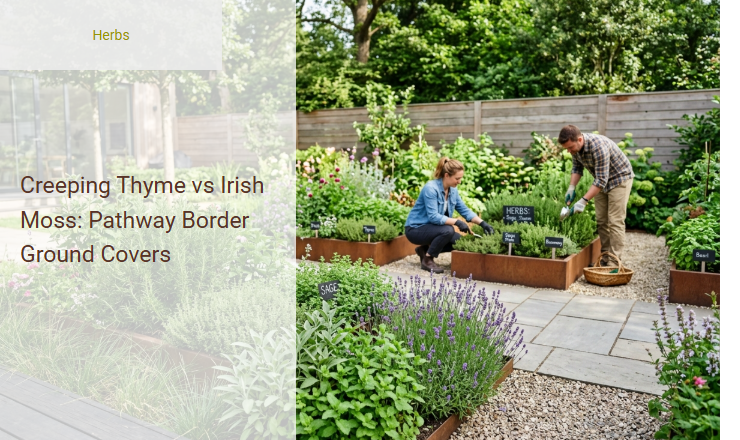
Designing a pathway border often leaves gardeners frustrated, struggling to find a low-profile green filler that survives foot traffic without overrunning the stone. Before choosing a plant, however, one must first analyze the local microclimate and soil structure of the walkway.
Selecting the correct species grants your home a seamless, living tapestry that instantly elevates curb appeal. Still, sustainable success stipulates that you recognize these plants are not interchangeable; each requires specific moisture and light conditions to survive. For instance, sun-loving Thymus serpyllum (Creeping Thyme) thrives in dry, rocky crevices, while the velvet-like Sagina subulata (Irish Moss) demands consistent moisture and partial shade.
To help you make the right investment, this analysis compares both ground covers across key categories: foot-traffic durability, growth rate, and seasonal maintenance requirements.
Introduction to Pathway Ground Covers: Creeping Thyme vs Irish Moss
Designing a garden path is about more than just laying down stone or gravel; it is about creating a living, breathing transition through your outdoor space. Among the most popular choices for softening the hard edges of flagstones and pavers are Creeping Thyme and Irish Moss. These low-growing living carpets are highly favored by landscape designers for their ability to transform cold hardscaping into lush, inviting walkways.
While both plants serve a similar aesthetic purpose, they bring vastly different textures, colors, and requirements to your garden. Choosing the right one depends heavily on your specific microclimate, soil type, and design goals. Let us explore how these two outstanding ground covers compare to help you choose the ideal fit for your pathway borders.
Meet Creeping Thyme: The Fragrant, Sun-Loving Bloomer
Belonging to the mint family (Lamiaceae), Thymus serpyllum, commonly known as Creeping Thyme, is a resilient and highly aromatic evergreen perennial. This woody-stemmed ground cover is celebrated for its tiny, fragrant leaves that release a soothing herbal scent when brushed against. During the peak of summer, it transforms into a vibrant carpet covered in dense clusters of purple, pink, or lavender blooms, attracting bees and butterflies to the garden.
This Mediterranean native thrives in hot, sunny locations where other plants wither. It has a strong preference for full sun and possesses outstanding drought tolerance once its root system is fully established. It is an excellent choice for xeriscaping and sunny walkways that receive minimal supplemental watering.
Meet Irish Moss: The Lush, Velvet Carpet
Despite its common name, Irish Moss (Sagina subulata) is not a true moss but a member of the pink family (Caryophyllaceae). It earns its name from its incredibly dense, moss-like growth habit that forms a rich, velvety carpet of vibrant, emerald-green foliage. In late spring and throughout the summer, this lush mound is studded with delicate, tiny white star-like flowers that offer a striking contrast to its deep green backdrop.
Unlike true mosses, Irish Moss requires sunlight to thrive, though it performs best in partial shade, especially in hotter climates. It prefers cool, moist conditions and will struggle in arid, scorching heat, making it perfect for damp, shaded garden paths that need a touch of bright, soft greenery.
Visual Comparison: Texture, Color, and Growth Habit
Creeping Thyme: The Textured, Spreading Herb
Creeping Thyme features a distinctly woody, branching growth habit. Its stems lay flat, spreading horizontally to weave around stepping stones. The foliage is coarse and textured, with tiny, oval-shaped leaves that create a casual, rustic look. Its color varies from grayish-green to dark forest green, culminating in a dramatic wave of colorful summer blossoms.
Irish Moss: The Dense, Pillowy Mound
In contrast, Irish Moss offers an incredibly dense, cushion-like, mounding habit. It grows tightly together, forming an almost seamless, smooth velvet rug that hugs the contours of the ground. The needle-like leaves are soft to the touch and maintain a brilliant, translucent green color year-round, looking consistently manicured and neat.
Soil and Light Requirements: Sun vs Shade
To ensure these ground covers thrive along your pathways, matching them to your garden's specific environmental conditions is crucial. Their soil and light needs are virtually opposite:
- Creeping Thyme: Thrives in full sun, requiring at least six hours of direct sunlight daily. It prefers dry, sandy, rocky, or poor soil with excellent drainage. Rich, soggy soils will lead to root rot.
- Irish Moss: Prefers full sun to partial shade, requiring protection from the intense afternoon sun in warmer zones. It demands rich, fertile, moist, yet well-draining soil to prevent dry patches and browning.
Foot Traffic Tolerance: Can You Step on Them?
When planting between pavers, understanding foot traffic tolerance is essential. Both plants can handle light to moderate foot traffic, but they react differently to being stepped on. Walking on them occasionally will not destroy the plants, making them great choices for casual garden paths.
Creeping Thyme has tough, flexible woody stems. When crushed underfoot, it releases a delightful, spicy-sweet herbal aroma that enhances the sensory experience of walking through the garden. Irish Moss, on the other hand, feels incredibly soft and spongy under barefoot, but its lack of deep woody roots means it can easily tear or slide away under heavy friction or scraping shoes.
Maintenance and Care: Watering, Weeding, and Spreading
Watering Protocols
Their water requirements differ significantly once established:
- Creeping Thyme: Needs deep watering only during severe dry spells. Overwatering is its greatest enemy.
- Irish Moss: Requires consistent moisture. It needs regular watering to prevent the soil from drying out, especially during hot summer months.
Weeding and Establishment Challenges
Weeding is the biggest challenge during the first year of planting ground covers. Because these plants are low to the ground, aggressive weeds can easily choke them out before they form a solid mat. Hand-weeding is highly recommended until the plants grow dense enough to naturally suppress weed seeds.
Managing Growth and Spreading
To keep your pathway looking tidy, you must manage their spread:
- Creeping Thyme can be trimmed back with garden shears after flowering to maintain its shape and prevent it from climbing over stones.
- Irish Moss can be divided easily by slicing sections with a trowel and replanting them elsewhere if they begin to spill too far over walkway boundaries.
Pros and Cons: Creeping Thyme vs Irish Moss
| Ground Cover | Pros | Cons |
|---|---|---|
| Creeping Thyme | Aromatic scent, drought-tolerant, attracts pollinators, beautiful summer blooms, excellent erosion control on slopes. | Can become woody and sparse over time, requires post-bloom shearing, struggles in poorly drained soil. |
| Irish Moss | Luxurious velvet texture, vibrant green year-round color, soft under barefoot, tidy and uniform growth habit. | Requires consistent moisture, prone to browning in dry heat, susceptible to tearing under heavy traffic. |
Planting Guide: How to Establish Pathway Borders
- Prepare the Soil: Clear all weeds, grass, and debris from the spaces between your paving stones. Loosen the soil to a depth of at least 4 to 6 inches, mixing in compost for Irish Moss or sand for Creeping Thyme to optimize drainage.
- Determine the Spacing: Space your plugs or small starter plants about 6 to 9 inches apart. This allows enough room for them to spread and fill in the gaps without overcrowding each other immediately.
- Plant the Plugs: Gently remove the plants from their nursery pots. Dig a small hole between the stones, place the plant so the crown is level with the soil surface, and firm the soil around the roots.
- Water Thoroughly: Water the newly planted plugs gently but deeply right after planting to settle the soil around the roots.
- Maintain Initial Moisture: Keep the soil consistently moist for the first 4 to 6 weeks until the root systems are established, regardless of which variety you chose.
The Verdict: Choosing the Right Ground Cover for Your Path
Selecting the perfect living carpet for your walkway comes down to assessing your garden's natural environment and your personal design aesthetic. If you have a hot, dry, sunny path with sandy soil, Creeping Thyme is the superior choice, rewarded by its fragrant leaves and colorful summer blossoms. It is ideal for low-maintenance, drought-prone landscapes.
If you have a shaded, cool, or naturally damp pathway and desire a neat, highly polished look that feels soft underfoot, Irish Moss is the better fit. By matching the plant to your specific soil, light, and climate, you will enjoy a stunning, resilient green border that beautifully softens your hardscape for years to come.
| Feature | Creeping Thyme (Thymus serpyllum) | Irish Moss (Sagina subulata) |
|---|---|---|
| Growth & Appearance | Low, woody groundcover; loose carpet texture; fragrant foliage with pink/purple summer blooms. | Dense, velvety, moss-like cushion; bright green translucent leaves with tiny white spring flowers. |
| Sun & Moisture | Full sun; highly drought-tolerant; prefers dry, sandy, poor, well-draining soils. | Full sun to partial shade; requires consistent moisture; intolerant of dry, hot conditions. |
| Traffic Tolerance | Moderate to high; resilient to stepping; releases herbal fragrance when bruised. | Light to moderate; soft underfoot but prone to tearing or browning under heavy impact. |
| Optimal Pathway Role | Ideal for sunny stepping stone gaps, dry borders, and high-heat walkways. | Best for cool, moist flagstone joints, shaded borders, and high-luxury low-traffic paths. |
Leave a comment