
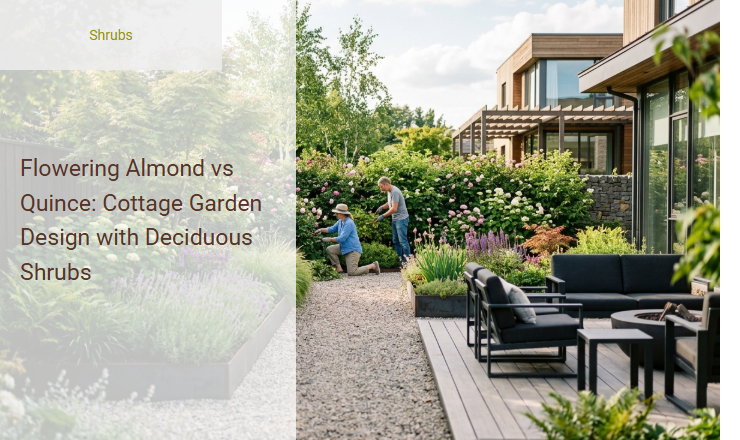
Designing a cohesive cottage garden often leaves homeowners struggling to select early-season shrubs that deliver striking visual impact without overtaking the landscape. Before focusing on specific varieties, we must first consider how deciduous structures anchor garden borders, providing critical architectural interest during the transition from winter to spring.
Carefully selecting these foundational plants grants you a reliable, low-maintenance canvas of vivid early blooms and lush summer foliage. However, long-term success is contingent on matching the plant to your site's specific soil drainage and sunlight exposure. For example, the delicate pink pom-poms of the Dwarf Flowering Almond (Prunus glandulosa) require different soil conditions than the rugged, architectural branches of the Flowering Quince (Chaenomeles speciosa).
To help you make an informed decision, this guide compares their growth habits, maintenance requirements, and design applications to help you choose the ideal specimen for your landscape.
Embracing Cottage Charm: Flowering Almond and Quince
The classic cottage garden is a celebration of romantic abundance, where paths are softened by spilling foliage and every corner promises a burst of nostalgic color. To capture this timeless aesthetic, gardeners look to deciduous shrubs that announce the arrival of spring with dramatic flair. Among the most cherished of these early performers are the flowering almond (Prunus glandulosa) and the flowering quince (Chaenomeles). These premier shrubs provide a vital bridge between the cold dormancy of winter and the lush warmth of late spring, offering an exquisite display of blossoms that dance along bare branches.
Integrating these heritage plants into your landscape establishes an immediate sense of history and charm. While the flowering almond delights with its soft, cloud-like presence, the flowering quince provides a brilliant, structural pop of color. Together, they create a sensory awakening that defines the very essence of cottage gardening.
Botanical Profiles: Understanding the Contenders
Flowering Almond (Prunus glandulosa)
The flowering almond is a multi-stemmed, deciduous shrub native to East Asia. It features a relatively compact, rounded growth habit that makes it highly manageable in smaller garden spaces.
- Mature Size: Typically reaches 3 to 5 feet in both height and spread.
- Growth Habit: Upright and spreading, with slender, arching branches that create a delicate, airy silhouette.
- Stems: Smooth and thornless, offering a gentle texture that is easy to handle during planting and maintenance.
Flowering Quince (Chaenomeles)
In contrast, the flowering quince is a rugged, woody shrub known for its tough disposition and architectural form. Belonging to the Rosaceae family, it brings a more dramatic, structural presence to the landscape.
- Mature Size: Can range from 3 to 10 feet tall and wide, depending on the specific cultivar.
- Growth Habit: Sprawling, dense, and often tangled, forming an impenetrable barrier if left unmanaged.
- Stems: Armed with sharp thorns along its grey-brown, twisting branches, which adds a protective element to its beauty.
A Symphony of Spring Blooms: Colors and Textures
When spring arrives, both shrubs transform bare wood into spectacular floral showcases, yet their sensory impacts are beautifully distinct. The flowering almond produces a soft, ethereal cloud of color. Its blossoms are tightly packed, miniature rosettes that cling closely to the slender stems, resembling delicate pom-poms of pastel pink or pristine white.
"The sight of a flowering almond in full bloom is like gazing upon a soft pink mist captured in the early morning light."
The flowering quince offers a bold, dramatic contrast. Its cup-shaped flowers feature five distinct, waxy petals surrounding a cluster of bright yellow stamens. Coming in intense shades of scarlet red, vivid orange, and warm coral, these blossoms pop with electric energy against the dark wood. The Chaenomeles flower feels sculptural and robust, a striking counterpoint to the fluffy, frilly texture of the Prunus glandulosa.
Strategic Placement in Cottage Garden Design
Designing a cottage garden requires balancing wild, natural growth with intentional layering. Placing these shrubs strategically ensures your garden feels cohesive and visually striking throughout the year.
- Background Anchors: Use the taller, thorny varieties of flowering quince as a protective, colorful background hedge. They look exceptional when planted against weathered wooden fences or brick walls.
- Middle Border Integration: Position the compact flowering almond in the middle of mixed perennial borders. Its soft texture blends seamlessly with emerging spring foliage, creating a gentle transition of scale.
- Framing Pathways: Plant flowering almonds near pathways and garden gates where visitors can admire the intricate rosettes close up. Avoid placing thorny quince cultivars directly against tight walkways to prevent snagging clothes.
Seasonal Evolution: Beyond the Spring Flush
While early spring is their moment of glory, both shrubs offer a changing palette as the season progresses. Once the petals fall, they transition into their summer and autumn roles, continuing to enrich the landscape.
The Post-Bloom Greenery of Flowering Almond
After its pink mist fades, the flowering almond clothes itself in clean, light green foliage. The leaves are narrow, finely serrated, and form a neat, unobtrusive mound. Throughout summer, this shrub serves as an excellent, quiet green backdrop that allows flashy summer-blooming perennials to take center stage. In autumn, the leaves turn a soft yellow before dropping to reveal the fine, twiggy winter structure.
The Autumn Harvest of Flowering Quince
The flowering quince takes a more dramatic path as summer wanes. It develops glossy, dark green leaves that are thick and leathery. By late summer and autumn, the flowers give way to hard, yellowish-green fruits known as quinces. These bitter, fragrant fruits cling to the branches and release a delightful, apple-like aroma. While too tart to eat raw, they make exquisite jellies and preserves, adding a practical, edible element to your cottage plot.
Soil, Sun, and Site Requirements
| Feature | Flowering Almond | Flowering Quince |
|---|---|---|
| Sun Exposure | Full sun to light afternoon shade | Full sun to partial shade |
| Soil Type | Moist, fertile, rich loam | Adaptable to clay, loam, or sandy soils |
| Drainage | Highly well-drained | Well-drained but tolerates poor drainage |
| USDA Zones | 4 to 9 | 5 to 9 |
Pruning and Maintenance for Vigorous Growth
Timing and Technique for Flowering Almond
Because the flowering almond blooms on the previous year's growth, pruning must be done immediately after the spring bloom fades. Always sterilize your pruning shears with a solution of isopropyl alcohol to prevent the spread of plant pathogens.
- Cut back spent flowering stems by half to promote fresh, vigorous shoots.
- Thin out older stems at ground level to maintain a light, airy canopy.
- Clear any fallen leaves around the base to deter pests like aphids.
Managing the Robust Flowering Quince
Flowering quince is highly vigorous and can become tangled without regular upkeep. Prune in late spring to maintain structure and encourage dense flower bud formation for the following year.
- Remove one-third of the oldest branches down to the base using heavy-duty loppers.
- Shorten side branches to keep the growth habit within bounds.
- Maintain a clean zone around the roots to prevent fungal issues like leaf spot.
Ecological Value: Welcoming Garden Wildlife
An authentic cottage garden is more than a visual feast; it is a thriving sanctuary for local wildlife. Incorporating these deciduous shrubs helps build a robust local food web, starting in the very early weeks of the year when other resources are scarce.
The early spring blossoms of both the flowering almond and the flowering quince provide a critical source of nectar and pollen for hungry pollinators. Wakeful bumblebees, honeybees, and early butterflies depend on these reliable nectar sources to sustain themselves during chilly spring days. The bright cup-shaped blooms of the quince are especially attractive to larger bees, which find easy landing platforms on the sturdy petals.
As the season progresses, the flowering quince continues to support local fauna. The dense, thorny framework of the Chaenomeles offers highly secure nesting sites for songbirds, protecting them from predators. In late autumn, the aromatic quince fruits provide a valuable, late-season food source for birds and small mammals who forage on the ground as the weather turns cold.
Ideal Companion Plants for a Harmonious Tapestry
Early Spring Bulbs
Underplant both shrubs with spring-blooming bulbs to create a layered, multi-dimensional display. The yellow of daffodils and the deep purples of grape hyacinths offer a spectacular contrast to the pink of the flowering almond and the fiery orange of the quince.
- Daffodils
- Grape Hyacinths
- Crocuses
Herbaceous Perennials
As the shrub blossoms fade, late spring and summer perennials rise to continue the cottage narrative. Choose species with soft, contrasting foliage to balance the woody structure of the shrubs.
- Lady's Mantle
- Bleeding Hearts
- Columbines
Romantic Groundcovers
Establish a carpet of evergreen or semi-evergreen groundcovers around the base to keep roots cool and suppress weeds naturally.
- Sweet Woodruff
- Creeping Phlox
The Verdict: Choosing the Perfect Shrub for Your Garden
Deciding between these two classic shrubs depends on your specific garden goals, space constraints, and safety preferences. If you have a cozy garden walkway and want a soft, child-friendly environment, the flowering almond is an ideal selection. Its thornless, compact nature and cloud-like Prunus blossoms bring instant magic without the risk of scratches.
If you prefer a rugged, multi-seasonal workhorse, the flowering quince is your best match. The Chaenomeles offers unparalleled visual drama, protective thorny branches that double as defensive hedging, and a harvest of fragrant autumn fruit. Whichever specimen you welcome into your landscape, both plants deliver the rich history, ecological benefits, and spectacular early spring beauty that define the heart of a cottage garden.
| Cottage Garden Feature | Flowering Almond (Prunus glandulosa) | Flowering Quince (Chaenomeles speciosa) |
|---|---|---|
| Bloom Aesthetic | Soft, fluffy, double-pink or white pom-pom flowers; classic "fairytale" look. | Bold, cup-shaped scarlet, orange, pink, or white flowers on bare, rustic branches. |
| Growth Habit & Structure | Delicate, upright, arching multi-stemmed shrub (3–5 ft). Thornless and airy. | Dense, sprawling, and tangled shrub (3–10 ft) with sharp thorns; excellent barrier. |
| Autumn/Winter Interest | Minimal; yellow fall foliage; inconspicuous, non-ornamental red fruit. | High; produces large, fragrant yellow pome fruits used for traditional cottage preserves. |
| Wildlife Value | Provides early nectar for pollinators; low nesting value due to open structure. | Excellent nesting site for birds (thorns protect from predators); high nectar value. |
| Resilience & Care | Requires regular pruning; susceptible to pests, diseases (brown rot), and frost damage. | Extremely tough; drought-tolerant, clay-tolerant, and highly resistant to pests and disease. |
Leave a comment