
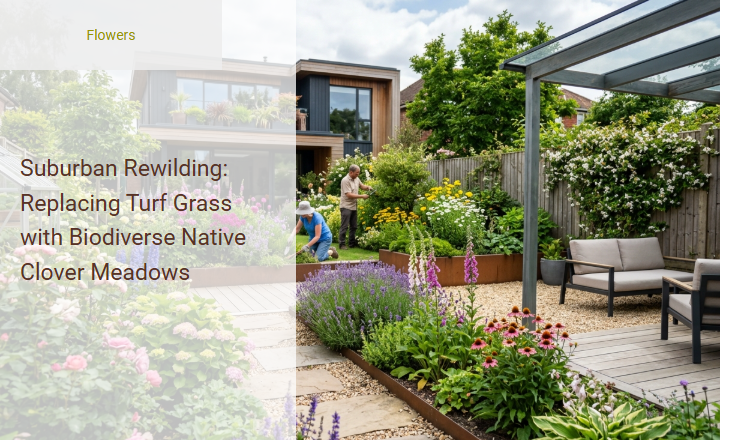
Many suburban homeowners find themselves trapped in an exhausting, costly cycle of mowing, watering, and chemically treating traditional turf grass, only to maintain an ecological dead zone. Before exploring sustainable alternatives, we must first recognize how deeply ingrained suburban aesthetic standards have historically mandated these high-maintenance lawns. Fortunately, transitioning to a biodiverse native clover meadow grants property owners a self-fertilizing, drought-tolerant landscape that dramatically reduces resource consumption.
However, successful rewilding requires a shift in expectations: establishing a clover meadow is not an overnight, zero-effort solution, as thorough turf eradication and seed-to-soil contact are critical for success. Integrating resilient species like Trifolium repens (white clover) or specialized microclover varieties ensures a lush, pollinator-friendly canopy that thrives without synthetic fertilizers. In this guide, we will examine the step-by-step process of soil preparation, species selection, and seasonal establishment to help you successfully transition your lawn into a thriving micro-ecosystem.
Read also: Wildflowers vs Cultivars for Meadow Gardens
The Cost of the Classic Lawn
The traditional American suburban lawn represents a significant, often overlooked ecological burden. Across the country, pristine turf lawns cover millions of acres, functioning as green deserts that strip the local environment of vital resources. To maintain their uniform, manicured appearance, these lawns demand massive resource inputs.
Statistically, the toll is immense: lawn care in the United States consumes over 3 trillion gallons of water every year. Furthermore, homeowners apply more than 70 million pounds of chemical pesticides and fertilizers annually to keep weeds at bay. This chemical dependency runs off into local waterways, disrupts aquatic life, and sterilizes the soil, leaving backyards completely devoid of ecological value.
Embracing the Rewilding Movement
Suburban rewilding is a direct response to this ecological crisis. It is the intentional practice of returning managed lawns back to their natural state, allowing native plant communities to reclaim the landscape. This movement shifts our relationship with nature from one of strict control to one of active stewardship.
"Rewilding is not about abandoning our outdoor spaces; it is a conscious decision to collaborate with nature, transforming our properties into self-sustaining habitats that support life rather than suppress it."
By replacing uniform grass with native flora, homeowners actively repair broken food webs, cool their local microclimates, and foster a dynamic, resilient landscape right outside their doors.
The Ecological Marvel of Native Clover
For those looking to transition away from turf without losing a usable, low-growing ground cover, native clover is an exceptional choice. Unlike non-native turf grasses, clover acts as a natural soil builder. Through a symbiotic relationship with soil bacteria, clover performs nitrogen fixation, pulling nitrogen from the atmosphere and converting it into a usable nutrient that naturally enriches the earth.
Species such as Trifolium reflexum (buffalo clover) and Trifolium carolinianum (Carolina clover) are incredibly resilient. They develop deep root networks that anchor the soil, prevent erosion, and allow the plants to remain green and vibrant even during prolonged periods of drought.
Nurturing Local Pollinators and Wildlife
Transitioning a traditional lawn into a biodiverse clover meadow immediately revitalizes local wildlife networks. Unlike sterile grass monocultures, clover produces abundant, nectar-rich flowers that serve as a critical food source for struggling native bee species, bumblebees, and butterflies.
Beneath the surface, the complex root structures of a clover-rich yard cultivate a healthy soil ecosystem. Earthworms, beneficial insects, and diverse soil microorganisms thrive in this pesticide-free habitat, rebuilding the foundational layers of the local food web.
Tangible Resource Savings
Replacing traditional turf grass with a native clover blend yields significant, immediate reductions in household utility costs and maintenance labor. Here is a direct comparison of the resource inputs required for both landscapes:
- Water Demands: Turf grass requires frequent, heavy irrigation to survive summer heat, whereas established clover is highly drought-tolerant and thrives almost entirely on natural rainfall.
- Fertilizer Inputs: Turf grass requires multiple synthetic fertilizer applications annually; clover naturally self-fertilizes by pulling nitrogen from the air.
- Mowing Frequency: Turf lawns require weekly mowing throughout the growing season, while clover grows to a low, uniform height and only requires mowing a few times a year.
Preparing Your Soil for the Transition
To ensure a successful transition from turf to a thriving clover meadow without using toxic chemical herbicides, follow this organic sheet mulching process:
- Mow your existing grass as short as possible on the lowest lawnmower setting to weaken the turf.
- Lay down overlapping layers of plain, unprinted cardboard or thick newspaper over the entire area to block out all sunlight.
- Spread a four-to-six-inch layer of rich organic compost, aged manure, or wood chips over the barrier to weigh it down and jumpstart decomposition.
- Allow the layers to sit for several weeks to naturally smother the grass and create a fertile, weed-free planting bed.
Selecting the Perfect Seed Blend
Selecting the ideal seed mixture requires analyzing your local climate, USDA hardiness zone, and soil composition. Clover can be sown as a pure stand, but combining it with native companion grasses and wildflowers creates a highly resilient, biodiverse ecosystem.
[Conceptual Diagram: A cross-section of a balanced seed mix showing 60% native clover, 30% low-growing native bunchgrasses, and 10% local wildflowers, optimized for clay soil in Zone 7]
Sowing and Nurturing Early Growth
The optimal times to sow your clover seed mix are early spring or late autumn, when moderate temperatures and natural rainfall support early root development. Gently rake the prepared soil surface, scatter the seeds evenly, and press them lightly into the ground to ensure good soil-to-seed contact.
During the initial phase of growth, watering is paramount to success. Warning: Keep the soil surface consistently moist during the first two to three weeks of germination; if the delicate seedlings dry out even once during this critical period, the crop may fail.
Managing a Mature Clover Meadow
Once your clover meadow is established, the demanding chore of weekly yard work becomes a thing of the past. Maintenance is minimal: a high-clearance mow once in late spring and again in late autumn is generally all that is needed to encourage fresh growth and manage natural plant succession.
Cultivating a New Suburban Aesthetic
Embracing a rewilded clover landscape does more than heal the local environment; it challenges the outdated aesthetic of the sterile suburban lawn. As neighborhoods witness the living, changing colors of a dynamic meadow filled with bird song and pollinator life, the definition of a beautiful yard naturally evolves.
By taking this step, you contribute to a growing collective effort to restore ecological balance to our fragmented suburban spaces. Replacing your lawn with native clover is a powerful, practical declaration that our outdoor spaces should protect and sustain life.
Summary
Suburban rewilding is gaining momentum as homeowners increasingly replace traditional, resource-intensive turf grass with biodiverse native clover meadows. Conventional lawns require significant water, chemical fertilizers, and constant mowing, contributing to ecological dead zones. In contrast, native clover offers an eco-friendly alternative. As a natural nitrogen-fixer, clover enriches the soil without synthetic fertilizers, while its deep root systems make it highly drought-resistant and resilient.
Furthermore, these meadows provide vital habitats and food sources for essential pollinators like bees and butterflies, fostering local biodiversity. By embracing clover meadows, suburban neighborhoods can transition from ecological liabilities into vibrant, low-maintenance sanctuaries. This shift not only reduces the carbon footprint associated with lawn care but also restores essential ecological functions to developed landscapes, proving that sustainable landscaping can be both beautiful and environmentally beneficial.
Leave a comment