
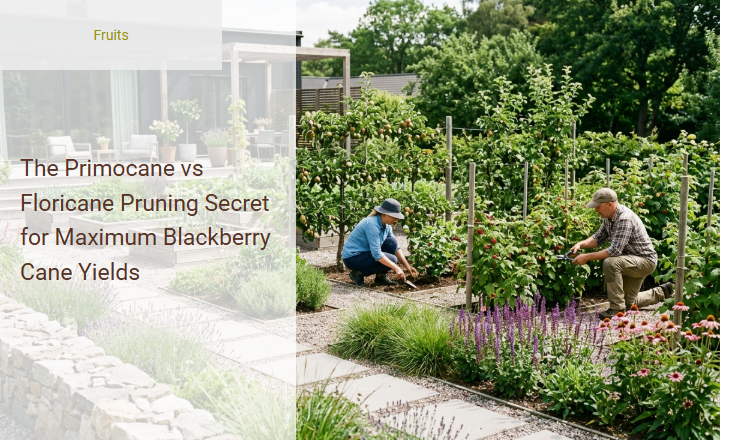
Many home orchardists face the frustrating reality of tangled, unruly blackberry patches that produce only a sparse handful of fruit each summer. It is incredibly discouraging to invest hours into tedious garden maintenance, only to receive disappointing yields in return.
To resolve this issue, we must first establish a foundation in the unique biennial lifecycle of the blackberry plant. Correctly identifying and managing the different cane types is the essential bridge to unlocking maximum canopy efficiency and doubling your seasonal harvest.
However, successful management requires a vital educational caveat: pruning strategies are not universal. For instance, the aggressive mowing techniques used for primocane-fruiting varieties like Prime-Ark Freedom will completely decimate the yields of traditional floricane-only cultivars like Triple Crown.
Below, we will demystify the botanical differences between these canes, outline a precise seasonal pruning calendar, and share professional cutting techniques to guarantee your most bountiful harvest yet.
Read also: Trellis vs Stake for Blackberry Canes
Demystifying Blackberry Growth for Ultimate Harvests
Growing blackberries in the home garden can transition from a tangled, unproductive chore to a highly rewarding experience once you master the plant's unique growth habit. The secret to unlocking heavy yields lies in understanding the difference between two distinct types of wood: primocanes and floricanes. These terms refer to the age and developmental stage of the canes, which dictate whether a branch will produce leaves or sweet, juicy berries. Mastering this botanical distinction is the single most important step to maximizing your garden's output.
At their botanical core, blackberries are perennial plants with biennial canes. This means that while the root system lives for many years, the individual canes above the ground have a strict two-year lifespan. By learning how these canes function, you can guide your plants to channel their energy into abundant fruit production rather than wild, unruly foliage.
Primocanes vs. Floricanes: The Two-Year Lifecycle Explained
To successfully manage a blackberry patch, you must understand the two-year lifecycle of its canes. During any given growing season, a healthy blackberry bush will simultaneously host canes in different stages of development. This coexistence ensures that you get a harvest every year, even though individual canes die after fruiting.
The biological distinction between the two types of growth is straightforward:
- Primocanes: These are the first-year canes. They emerge directly from the crown in spring, characterized by rapid vegetative growth. On standard blackberry varieties, primocanes do not produce flowers or fruit, focusing all their energy on photosynthesis and structural development.
- Floricanes: These are the second-year canes. After overwintering, the previous year's primocanes undergo physiological changes and become floricanes. In spring, they produce lateral branches, bloom with white or pink flowers, and bear the summer harvest.
Because both vegetative primocanes and fruiting floricanes grow side-by-side on the same plant, pruning requires a targeted approach. Removing the wrong cane can accidentally eliminate next year's entire harvest.
How to Instantly Identify Primocanes and Floricanes in the Garden
Before you make a single pruning cut, you must be able to visually distinguish between first-year and second-year growth. Fortunately, nature provides clear clues to help you identify which cane is which.
- Inspect the Bark Color and Texture: Primocanes feature bright green, fleshy stems that are smooth and highly flexible. Floricanes, having survived a winter, have woody, brown, or reddish-brown bark that is stiff and sometimes peeling.
- Observe the Leaf Structure: Primocanes typically produce leaves with five leaflets arranged in a palm-like pattern. Floricanes, on the other hand, generally display smaller leaves with only three leaflets along their lateral fruiting branches.
- Look for Flowers and Berries: This is the easiest visual cue during the late spring and summer. Only floricanes will carry blossoms, green developing fruit, or ripe berries. Primocanes will consist entirely of lush, green leaves without any signs of flowering.
The Primocane Pruning Protocol: Tipping for Branching
To dramatically increase your blackberry yield, you must intervene during the primocane's first year of growth. When left to grow naturally, a primocane will shoot straight up like a long, single whip. This results in a tall, top-heavy cane with very few fruiting sites for the following year.
The solution is a technique known as tipping. This involves pinching or cutting off the top few inches of the primocane when it reaches a manageable height, usually around three to four feet. Removing the apical dominance forces the cane to redirect its growth hormones outward, prompting the rapid development of multiple lateral branches.
Tipping redirects the plant's energy from vertical height into lateral branch development, effectively doubling or tripling the potential fruiting wood for the next season.
By encouraging a bushy structure with numerous side branches, you create a larger surface area for next spring's blossoms. This simple summer intervention is the primary method growers use to boost fruit density on every single cane.
The Floricane Clean-Up: Post-Harvest Pruning Secret
Once the summer harvest comes to an end, the floricanes have completed their biological mission. These canes will never produce fruit again and will naturally begin to wither, brown, and die. Leaving these spent canes on the plant is a common mistake that invites disease and reduces overall crop quality.
The post-harvest pruning secret is to remove every single floricane completely to the ground immediately after the final berry is picked. Use sharp shears to cut these old stems at soil level. Removing spent floricanes is crucial for the health of your blackberry patch, as it eliminates breeding grounds for common pests and fungal pathogens.
Additionally, clearing out the old, woody growth opens up the center of the plant. This allows vital sunlight and fresh air to reach the newly emerging primocanes, which are currently preparing for next year's harvest. Improved air circulation keeps the foliage dry, significantly reducing the risk of destructive mildew and rot.
Your Month-by-Month Blackberry Pruning Calendar
Managing your blackberry patch requires timely action throughout the year. Different varieties require slightly different care, especially when comparing traditional summer-bearing types to primocane-fruiting (everbearing) varieties.
Winter (Late Dormancy)
- For floricane-fruiting varieties: Prune back the lateral branches that grew from the previous summer's tipping to about 12 to 18 inches. Remove any dead, diseased, or weak canes.
- For primocane-fruiting varieties: If you want a single late-summer crop, cut all canes down to ground level. If you want a double crop, treat them like floricane-fruiting varieties.
Spring (Early Growth)
- Monitor new growth emerging from the crown.
- Thin out weak, crowded new shoots to ensure the strongest canes have enough space to thrive.
Summer (Active Growing and Harvest)
- Perform tipping on new primocanes as they reach three to four feet in height to encourage branching.
- Immediately after harvest, prune all spent, brown floricanes down to the ground.
Autumn (Post-Harvest Maintenance)
- Tidy up the patch by securing remaining primocanes to your trellis system to protect them from winter wind damage.
- Apply fresh mulch around the base of the plants to insulate the roots.
Sharp Tools and Clean Cuts: Preventing Cane Disease
The physical act of pruning creates open wounds on your blackberry plants, which can serve as entry points for destructive pathogens. To protect your berry patch from devastating infections like cane blight and spur blight, you must prioritize tool hygiene and proper cutting technique. Always use high-quality bypass pruners and loppers rather than anvil-style pruners, which can crush the delicate stems instead of slicing through them cleanly.
Before you begin, and between working on different plants, sanitize your blades with rubbing alcohol or a diluted bleach solution. When making your cuts, always angle the blade at 45 degrees, about a quarter of an inch above a healthy bud pointing outward. This specific angle prevents rainwater from pooling on the fresh cut, allowing the wound to dry quickly and heal without inviting fungal spores to take root.
Trellising Secrets that Maximize Airflow and Light
A well-designed support system is essential for managing the chaotic growth of blackberry canes. Implementing a structural trellis, such as a T-trellis or a V-trellis, allows you to physically organize and separate first-year primocanes from second-year floricanes. This separation makes pruning and harvesting significantly easier, as you will not have to hunt through a tangled mess of thorny or trailing branches to find your ripe berries.
Using a V-trellis, for example, allows you to pull the fruiting floricanes outward to the sides while keeping the new primocanes growing straight up the center. This strategic arrangement ensures that every leaf and developing berry receives maximum sun exposure, which is critical for sugar development and fruit ripening. Furthermore, elevating the canes off the damp ground greatly improves air circulation throughout the canopy, dramatically lowering the humidity levels that favor fungal diseases.
Five Critical Pruning Mistakes to Avoid This Season
Even experienced gardeners can make errors when managing blackberries. Avoiding these five common pruning mistakes will help keep your plants healthy and highly productive:
- Cutting the wrong canes: Accidentally removing young, green primocanes in late summer will destroy your crop for the following year. Solution: Always double-check bark color and leaf count before cutting.
- Leaving long stubs: Cutting canes several inches above the ground leaves dead wood that easily rots and harbors pests. Solution: Make cuts flush with the crown or at soil level.
- Neglecting tool sanitation: Pruning with dirty blades can quickly spread disease from one infected plant to your entire patch. Solution: Wipe your tools with isopropyl alcohol between every plant.
- Pruning at the wrong time: Late fall pruning can stimulate tender new growth that will easily freeze and die in winter. Solution: Stick to the late winter or mid-summer pruning schedules.
- Allowing excessive cane density: Letting too many canes grow close together reduces sunlight penetration and berry size. Solution: Thin your plants so that only 4 to 6 strong canes remain per foot of row.
The Golden Rule of Blackberry Pruning for Abundant Yields
Successful blackberry cultivation does not require secret green thumbs; it simply demands a basic understanding of the plant's natural biennial lifecycle. By consistently separating vegetative primocanes from productive floricanes, tipping young growth to encourage branching, and clearing away spent wood post-harvest, you establish a highly efficient cycle of growth. This structured approach ensures your berry patch remains energetic, disease-free, and highly productive year after year.
Commit to this annual maintenance routine, keep your tools sharp, and give your plants the structural support they need. Your discipline will be rewarded every summer with heavy branches bowing under the weight of large, sweet, and incredibly juicy blackberries directly from your backyard.
Summary
Maximizing blackberry yields relies on understanding the distinct lifecycles of primocanes and floricanes. Primocanes are first-year green canes that focus primarily on vegetative growth, while floricanes are second-year woody canes that produce the main summer crop before dying. The secret to unlocking maximum yields lies in strategic, timely pruning based on these cane types.
To boost berry production, gardeners should tip primocanes in the summer to encourage lateral branching, which drastically increases the number of future fruiting sites. Conversely, spent floricanes must be pruned down to the ground immediately after harvest to improve air circulation, prevent disease, and redirect the plant's energy toward vigorous new growth. Mastering this cyclical pruning technique ensures a healthier plant and a bountiful blackberry harvest year after year.
Leave a comment