
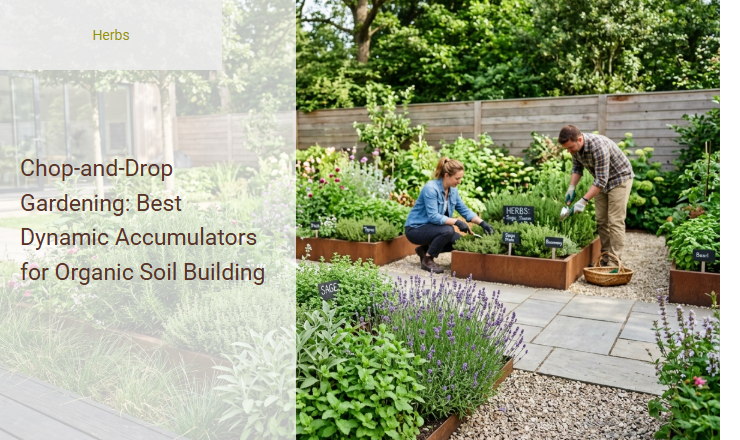
Maintaining nutrient-rich garden soil often feels like an expensive, uphill battle, requiring constant purchases of bagged fertilizers and endless physical labor. While traditional amendments certainly have their place, relying solely on external inputs overlooks the highly efficient, closed-loop systems found in natural ecosystems.
By adopting the "chop-and-drop" method, you can unlock free, self-sustaining fertility directly within your existing landscape. However, success requires a strategic approach: not all biomass is created equal, and plants accumulate nutrients at wildly different rates. Deep-rooting dynamic accumulators, such as Russian Comfrey and Stinging Nettle, serve as living mineral pumps, mining vital elements like potassium and nitrogen from the subsoil and depositing them onto the surface.
This guide will break down the science of dynamic accumulation, profile the most effective plants for organic soil building, and provide practical management strategies to systematically upgrade your soil biology.
Read also: Yarrow vs Tansy for Compost Activation
Introduction to Chop-and-Drop Gardening
In a natural forest, no one fertilizes the ground or clears away fallen leaves. Nature builds fertile soil through a continuous cycle of growth, decay, and regeneration. Chop-and-drop gardening is a permaculture technique that directly mimics this highly efficient natural forest floor process. Instead of removing prunings, weeds, or cover crops from your garden, you simply chop them down and drop them directly onto the soil surface as a living mulch.
By utilizing this method, you create a self-sustaining system that continuously feeds the soil food web. The organic matter breaks down slowly, releasing essential nutrients back into the earth while protecting the soil from erosion and moisture loss. This elegant practice eliminates the need for synthetic fertilizers and intensive composting, making organic soil building a natural, hands-off byproduct of routine garden maintenance.
Understanding Dynamic Accumulators
To maximize the power of chop-and-drop, permaculturists rely heavily on a specific group of plants known as dynamic accumulators. These plants are biological miners. Through their deeply penetrating root systems, they tap into the subsoil layers far beneath the reach of standard garden crops, extracting vital minerals and trace elements that would otherwise remain locked away.
As these deep roots absorb nutrients, they transport them upward, concentrating the minerals directly within their leafy foliage. When you chop these plants and drop them onto the surface, they undergo rapid decomposition. This process releases the accumulated nutrients back into the topsoil in a highly bioavailable form, creating a rich layer of fertile organic material. Dynamic accumulators perform several critical roles in the garden ecosystem:
- Mining subsoil nutrients from deep geological layers and bringing them to the surface.
- Breaking up compacted soil strata with powerful taproots, which improves aeration.
- Accelerating the cycling of trace minerals like calcium, potassium, magnesium, and iron into the topsoil.
Russian Comfrey: The King of Accumulators
When it comes to organic nutrient accumulation, Russian Comfrey (Symphytum x uplandicum) reigns supreme. This hardy perennial features a massive, carrot-like taproot that can easily penetrate the earth up to ten feet deep. This deep-mining capability allows the plant to absorb massive quantities of nutrients, particularly potassium and nitrogen, which are stored in its lush, heavy foliage.
Because Russian comfrey produces an abundance of leafy biomass and does not produce viable seeds, it is the premier chop-and-drop specimen. To get the most out of your comfrey patch, follow these best practices:
- Cut the plant back to about two inches above the ground level using sharp shears or a scythe.
- Perform harvests up to four times a year once the plant is fully established in spring and summer.
- Lay the leaves directly around heavy-feeding crops, particularly tomatoes, potatoes, and fruit trees, which thrive on potassium.
Stinging Nettle: The Nitrogen and Iron Booster
Often dismissed as a painful weed, Stinging Nettle (Urtica dioica) is actually an invaluable asset to any permaculture system. It functions as an exceptional dynamic accumulator of nitrogen, iron, calcium, and magnesium. Incorporating nettle into your mulch layer provides a rapid boost of nutrients that stimulates vigorous vegetative growth in surrounding plants.
Because of its stinging hairs, harvesting and chopping nettle requires specific handling to ensure a safe and pain-free experience. Keep these tips in mind during your harvest:
- Wear heavy leather gloves and long-sleeved clothing to protect your skin from the formic acid in the stinging hairs.
- Harvest the plant before it goes to seed to prevent unwanted spreading throughout your growing areas.
- Chop the stalks into small pieces to accelerate decomposition and quickly neutralize the stinging mechanism as the plant wilts.
Dandelion: The Soil-Loosening Nutrient Miner
The common Dandelion (Taraxacum officinale) is a resilient plant that plays a vital role in soil restoration. While many gardeners struggle to eradicate it, smart permaculturists recognize its power as a miner of calcium, iron, and copper. Its strong, vertical taproot is highly efficient at drilling through compacted, heavy clay soils, opening up pathways for water, air, and the roots of other plants.
Utilizing dandelions in a chop-and-drop system helps recycle deep-lying minerals back to the surface layer. To manage them effectively, apply these strategies:
- Slice the foliage at the soil surface, leaving the taproot intact to continue its soil-loosening work and regenerate new leaves.
- Chop the leaves early in spring before the bright yellow flowers transform into fluffy seed heads.
- Place the nutrient-rich greens directly around shallow-rooted vegetables that require calcium for healthy cellular development.
Yarrow: The Copper and Sulfur Specialist
With its delicate, feathery foliage and umbrella-like flower clusters, Yarrow (Achillea millefolium) is a powerhouse plant that serves multiple purposes. As a dynamic accumulator, yarrow specializes in pulling up copper, sulfur, and potassium from the deep subsoil. These elements are essential for plant disease resistance and robust metabolic functioning.
In addition to its soil-building qualities, growing yarrow introduces numerous ecological benefits to your garden. When integrating yarrow into your ecosystem, observe these advantages:
- Attract beneficial insects such as ladybugs, hoverflies, and parasitic wasps that provide naturalized pest control.
- Produce fine, easily decomposable biomass that breaks down rapidly when dropped, feeding soil microbes almost instantly.
- Enhance companion plantings by growing yarrow nearby to improve the overall health and vigor of neighboring crops.
Broadleaf Plantain: The Mineral-Rich Ground Cover
Often found thriving in high-traffic pathways and compacted driveways, Broadleaf Plantain (Plantago major) is an incredibly tough plant. It thrives where other plants fail, using its fibrous yet deep root system to accumulate calcium, magnesium, and sulfur from highly disturbed or compacted soils. This makes it an ideal pioneer species for regenerating poor ground.
Instead of weeding this valuable plant out, you can harvest its nutrient-dense leaves to feed your garden beds. Here is how broadleaf plantain supports your soil:
- Concentrates essential minerals that help correct structural deficiencies in poor, over-farmed soils.
- Acts as a protective ground cover, preventing soil baking and wind erosion before you chop it.
- Decomposes into a rich humus, improving the water-holding capacity of sandy or degraded dirt.
Borage: The Silicon and Potassium Producer
An exceptional annual herb, Borage (Borago officinalis) is highly valued for its rapid growth and heavy biomass production. Borage is a potent accumulator of silicon and potassium. The silicon it gathers strengthens plant cell walls, rendering neighboring crops more resistant to pests and fungal pathogens, while potassium supports robust flowering and fruiting.
Borage contributes to a beautiful, highly functional garden layout. It provides unique benefits both during its life and after it is chopped:
- Generates massive amounts of soft, watery biomass that melts into the soil quickly when dropped.
- Produces beautiful blue edible flowers that draw in honeybees and other vital pollinators by the hundreds.
- Self-sows reliably, providing you with a continuous, effortless supply of fresh green mulch year after year.
Step-by-Step Chop-and-Drop Implementation
Implementing the chop-and-drop technique is straightforward and requires minimal tools. By strategically layering your dynamic accumulators, you can construct a nutrient-rich, moisture-retaining green mulch blanket directly around your target plants, such as hungry fruit trees and vegetable crops.
- Identify and Harvest: Locate your established dynamic accumulators. Using sharp hand pruners, shears, or a scythe, cut the foliage back. Leave enough of the plant base intact so it can quickly regenerate new growth for future harvests.
- Chop the Material: Slice the harvested leaves and stems into smaller, manageable pieces, roughly two to four inches in length. Chopping the biomass increases the surface area, which dramatically speeds up the decomposition process and prevents the discarded material from rooting.
- Layer Around Target Plants: Spread the chopped material in a uniform ring around your fruit trees or between vegetable rows. Ensure the mulch layer is about two to three inches deep to suppress weeds and retain soil moisture effectively.
- Keep Clear of Stems and Trunks: Pull the chopped mulch back slightly from the main stems of your vegetables or the trunks of your fruit trees. Maintaining a small gap prevents moisture build-up against the bark, which could encourage rot or fungal infections.
- Allow Natural Decomposition: Leave the green mulch undisturbed. Soil microorganisms, earthworms, and fungi will quickly begin breaking down the leaves, pulling the newly released minerals down into the root zone of your garden crops.
Long-Term Soil Transformation and Maintenance
Committing to a chop-and-drop routine initiates a profound, compounding transformation within your garden ecosystem. Over time, the continuous addition of nutrient-dense organic matter fundamentally alters the physical structure of the earth. Hard, compacted soils loosen and become spongy, while sandy soils develop the body required to hold onto vital moisture and nutrients. This steady supply of organic mulch acts as a protective shield, drastically reducing evaporation rates and keeping the root zone cool during hot summer months.
Beneath the surface, this practice fuels a massive explosion in microbial life. Earthworms, beneficial fungi, and bacteria thrive on the decaying material, weaving a complex web of life that naturally aerates the soil and unlocks minerals for your plants. As these organisms process the biomass, they produce stable humus, cementing the long-term fertility of your land. By working alongside nature and utilizing deep-rooting plants, you build a resilient, self-feeding garden that grows increasingly fertile with each passing season.
Summary
Chop-and-drop gardening is a highly effective permaculture technique designed to naturally enrich soil and build organic matter. Instead of hauling garden waste away, gardeners chop nutrient-rich plants and leave them on the soil surface to act as a nourishing green mulch. To maximize this practice, utilizing dynamic accumulators-plants with deep taproots that mine valuable minerals from deep underground-is essential.
Species such as comfrey, stinging nettle, dandelion, and yarrow act as biological pumps, storing concentrated nutrients in their foliage. When chopped, they quickly decompose, releasing vital elements like nitrogen, potassium, and calcium back into the topsoil. This process improves soil structure, retains moisture, suppresses weeds, and boosts beneficial microbial life. By strategically planting and harvesting these dynamic accumulators, gardeners can create a self-sustaining, closed-loop system that reduces the need for external fertilizers and fosters long-term soil health.
Leave a comment