
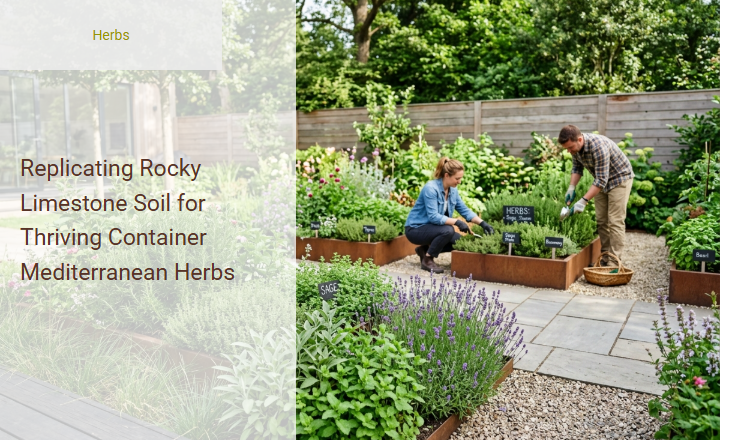
Many home gardeners face the frustrating cycle of watching their potted Mediterranean herbs wither, yellow, or succumb to root rot despite meticulous watering. To solve this common struggle, we must first look to the native geography of these resilient plants, which evolved not in rich, moisture-retaining compost, but in the lean, arid cliffsides of southern Europe.
Replicating this rugged habitat grants your container garden a vital physiological advantage, unlocking the intense aromatic oils and compact, robust growth these cultivars are prized for. However, success requires more than just tossing gravel into a pot; mimicking this environment is a precise science of balancing rapid drainage with a specific alkaline pH. Classic woody perennials like rosemary, lavender, and thyme serve as prime examples of species that will only reach their full potential when grown in these mineral-rich conditions.
In this guide, we will outline the exact soil formulas, aggregate ratios, and alkaline amendments required to successfully recreate this thriving limestone microenvironment in any container.
Read also: Rosemary vs Lavender for Xeriscaping
Introduction: The Native Crags of Mediterranean Herbs
High above the azure waters of the Mediterranean, wild herbs cling to steep, sun-baked cliffs. In these unforgiving environments, rosemary, thyme, and oregano thrive not despite the harsh conditions, but because of them. They root deeply into fractured, calcareous limestone soils that offer almost no organic nutrients and hold very little water. To survive the intense heat and dry winds, these plants produce dense concentrations of aromatic compounds. Mimicking this rugged, rocky habitat in container gardening is the absolute key to unlocking the rich essential oils that give Mediterranean herbs their signature intense flavors and medicinal properties.
The Chemistry of Limestone: Why pH and Calcium Matter
The secret behind the robust health of wild Mediterranean flora lies in the chemical composition of their native ground. Limestone-rich terrain imparts a distinct alkaline profile, typically keeping soil pH levels between 7.0 and 8.0. In this sweet, non-acidic environment, herbs can access vital minerals in proportions that prevent weak, watery growth.
Calcium acts as a crucial cellular building block. When herbs absorb sufficient calcium, their cell walls grow thick and rigid. This structural integrity not only makes the plants more resilient against pests and diseases but also concentrates their volatile oils. An alkaline pH limits the uptake of excess heavy metals while optimizing the availability of magnesium and calcium, ensuring that every leaf of oregano or sprig of rosemary packs a potent, flavorful punch.
Physics of the Pot: Achieving Sharp Drainage
In the wild, water never pools around the root systems of mountain herbs. Rain falls on sloped, gravelly terrain and immediately cascades downward, leaving behind only a thin film of moisture on the rocks. This physical dynamic is known as sharp drainage. Traditional potting soils act like sponges, holding onto water for days and suffocating the sensitive roots of rosemary and thyme, which quickly leads to root rot.
To replicate the physical structure of mountain crags, container soil must be highly porous. Gravity must be able to pull water through the entire pot within seconds of watering. By creating a matrix of large pore spaces, we ensure that the roots receive the critical oxygen they crave, while retaining just the minimal, essential moisture required to sustain life between dry spells.
Choosing the Right Vessel for Aeration
Creating the perfect soil mix is only half the battle; the container itself must support the dry, airy environment that Mediterranean herbs prefer. Plastic or glazed ceramic pots trap moisture inside, forcing the roots to sit in stagnant humidity. To maximize aeration and replicate the porous nature of cliffside rocks, you must choose the right vessel.
- Unglazed clay and terracotta pots are highly breathable, allowing air to circulate freely to the roots.
- The porous walls of terracotta actively wick excess water away from the soil, preventing soggy pockets.
- Terracotta absorbs heat from the sun, warming the root zone to simulate hot Mediterranean hillsides.
The Foundation: Selecting a Lean Base Mix
The Danger of Heavy Garden Soils
Many novice gardeners make the mistake of using standard backyard soil or heavy potting mixes for their container herbs. These soils are packed with clay, silt, and massive amounts of organic matter designed to retain moisture. For Mediterranean plants, this is a death sentence, as the dense structure collapses and smothers their fine, fibrous roots.
Choosing a Light and Lean Medium
Instead, your potting recipe must start with a lean, low-nutrient organic potting soil or high-quality coco coir. Coco coir is an excellent choice because it provides a lightweight structure that does not compact over time. This base should serve merely as an anchor for the roots, rather than a dense reservoir of nutrients and water.
Replicating the "Rocky" Texture: Aggregates and Grits
The Mountain Slope Formula
To truly mimic the skeletal soils of the Mediterranean hillsides, you must aggressively amend your lean base with coarse aggregates. These non-porous and semi-porous materials create the physical gaps needed for immediate drainage and root aeration.
- Horticultural Sand: Use coarse, sharp sand rather than fine play sand, which can pack down like concrete.
- Chicken Grit or Crushed Granite: This heavy, coarse aggregate adds weight to the pot and provides excellent channel pathways for water.
- Pumice or Perlite: These lightweight volcanic rocks hold tiny amounts of moisture in their microscopic pores while keeping the overall mix airy.
The ideal ratio for a highly authentic mountain mix consists of one part lean base potting soil to one part coarse aggregate mix. Combining equal portions of coarse sand, grit, and pumice ensures that your herbs feel right at home on their simulated rocky ledge.
The Limestone Secret: Adding Calcium and Raising pH
Balancing the Acidic Base
Most commercial potting mixes and coco coir bases are naturally acidic or neutral, sitting around a pH of 5.5 to 6.5. Since Mediterranean herbs crave an alkaline environment, we must intentionally adjust the chemistry of our container mix to mimic calcareous crags.
Safe Mineral Additives
To safely raise the pH and introduce essential calcium, you can incorporate agricultural lime or dolomitic limestone into your soil mix. Dolomitic limestone is particularly beneficial as it also provides magnesium. Alternatively, finely crushed oyster shells offer a slow-release source of calcium that breaks down gradually over several seasons. Integrating these alkaline agents ensures the roots can absorb nutrients efficiently while stimulating the synthesis of highly aromatic essential oils.
Step-by-Step Assembly of Your Mediterranean Potting Mix
- Gather your ingredients: Measure out equal parts of your lean potting base and your coarse aggregate blend (composed of horticultural sand, grit, and pumice).
- Add the mineral components: Measure one tablespoon of agricultural lime or dolomitic limestone for every gallon of potting mix.
- Combine dry materials: Pour the base soil, coarse aggregates, and limestone powder into a large mixing tub or bucket.
- Blend thoroughly: Stir the ingredients together until the aggregates are evenly distributed, ensuring there are no dense clumps of soil left behind.
- Check the texture: Squeeze a handful of the moistened mix; it should feel gritty and crumbly, falling apart instantly when you open your hand.
Watering and Feeding in a Fast-Draining Medium
Because your rocky container mix is designed to shed water rapidly, your watering habits must change accordingly. Ditch the calendar-based watering routines and adopt the soak and dry method. Pour water onto the pot until it runs freely out of the drainage holes at the bottom, then wait to water again until the soil is completely dry throughout the root zone.
Nutrient management must be similarly sparse. Wild herbs are adapted to starved soils; over-fertilizing leads to rapid, leggy growth that dilutes their aromatic oils. Avoid heavy synthetic fertilizers completely. At most, a single light application of organic compost tea or kelp meal in the early spring is all these rugged plants need to flourish.
Troubleshooting: Maintaining Alkaline Structure Over Time
Monitoring pH and Salt Accumulation
Over time, frequent watering can leach away the calcium and lime amendments, causing the soil pH to slowly drift back toward acidity. Furthermore, tap water can leave behind mineral salts that build up in the confined space of a pot, damaging sensitive root tips.
Long-Term Soil Care
To keep your potting mix in peak condition, monitor the pH annually using a simple soil testing kit. Top-dressing the container each spring with a fresh tablespoon of crushed oyster shells or agricultural lime will easily maintain the ideal alkaline environment. Flush the pots with pure, collected rainwater occasionally to wash away any accumulated tap salts, ensuring your Mediterranean herb garden remains vibrant, healthy, and incredibly fragrant for years to come.
Summary
Growing vibrant Mediterranean herbs like rosemary, lavender, thyme, and oregano in containers requires replicating their native, rocky limestone habitats. Standard commercial potting soils are typically too rich, acidic, and moisture-retentive for these drought-tolerant species, often leading to root rot and weak growth. To mimic their ideal natural environment, gardeners should formulate a custom potting mix that emphasizes exceptional drainage and mineral structure. This is achieved by combining coarse sand, pea gravel, or pumice with minimal organic matter.
Crucially, incorporating agricultural lime or crushed oyster shells raises the soil pH to a slightly alkaline level and supplies essential calcium. By replicating these harsh, mineral-rich conditions in pots, urban gardeners can ensure their container-grown herbs thrive with the intense fragrance, robust flavor, and longevity of their wild hillside counterparts.
Leave a comment