
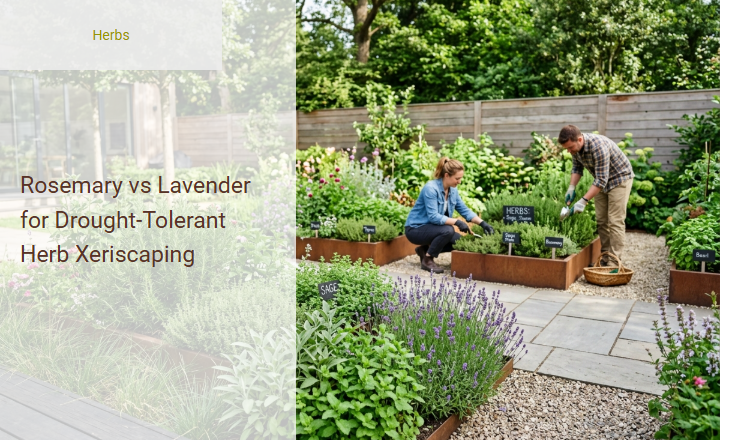
Homeowners and landscape architects often struggle to maintain vibrant, aromatic gardens under the pressure of escalating water restrictions and scorching summer heatwaves. As municipal water authorities increasingly mandate conservation, xeriscaping has transitioned from a niche ecological trend into a structural design necessity.
Integrating Mediterranean herbs into these low-water layouts grants properties a dual benefit: a dramatic reduction in irrigation dependency alongside a highly sensory, pollinator-friendly aesthetic. However, successful installation stipulates that designers recognize "drought-tolerant" is not a uniform classification; performance hinges entirely on matching species to precise microclimates.
For example, while robust rosemary cultivars like 'Tuscan Blue' excel in coastal winds and heavier soils, English lavender varieties such as 'Munstead' require exceptionally sharp-draining, sandy beds to avoid root rot. This comparative analysis evaluates both genera across key parameters-soil adaptation, climate resilience, and maintenance schedules-to help you select the optimal herb for your sustainable landscape.
Introduction: The Battle of Mediterranean Giants in Xeriscaping
As climate patterns shift and freshwater resources become increasingly precious, gardeners worldwide are pivoting toward sustainable landscaping. The practice of xeriscaping-designing landscapes that require little to no supplemental irrigation-has transitioned from a niche environmental trend to a mainstream horticultural standard. At the forefront of this ecological movement are two beloved shrubs of Mediterranean origin: Rosemary and Lavender. Renowned for their resilience, sensory appeal, and rugged elegance, these plants have evolved over millennia to thrive in dry, sun-baked environments.
Selecting the ideal low-water champion requires looking beyond their surface beauty. While both herbs share geographical roots and a love for the sun, they possess distinct biological characteristics, moisture tolerances, and landscape roles. This comprehensive comparison will evaluate their botanical profiles, water efficiency, soil requirements, aesthetic contributions, and maintenance needs. By analyzing these critical elements, you can make an informed choice that ensures your sustainable garden thrives for years to come.
Botanical Profiles: Understanding Rosemary and Lavender
Rosemary (Salvia rosmarinus)
Rosemary, scientifically classified as Salvia rosmarinus (and formerly known as Rosmarinus officinalis), is a woody, perennial evergreen shrub belonging to the mint family, Lamiaceae. Native to the dry cliffs and coastal regions of the Mediterranean Basin, its common name derives from the Latin ros marinus, meaning "dew of the sea." Rosemary features needle-like, leathery leaves with a deep green upper surface and a powdery white underside. Its growth habit varies significantly from prostrate, ground-hugging cultivars to robust, upright shrubs that can reach up to six feet in height.
Lavender (Lavandula)
Lavender encompasses the genus Lavandula, also a prominent member of the Lamiaceae family. Native to Cape Verde, the Canary Islands, southern Europe, northern and eastern Africa, the Mediterranean, and southwest Asia, this genus contains dozens of species, with English Lavender (Lavandula angustifolia) and French Lavender (Lavandula dentata) being the most popular in cultivation. Lavender is characterized by its linear, gray-green foliage and distinctive upright spike inflorescences. Unlike the dense, coarse foliage of rosemary, lavender presents a softer, mounded, and more delicate structural appearance.
Water Efficiency: Which Herb Survives on Less?
In a water-wise landscape, understanding the precise irrigation threshold of your plants is paramount. Both rosemary and lavender are highly adapted to prolonged dry spells, utilizing specialized foliage structures to minimize water loss through transpiration. Rosemary's thick, needle-like leaves feature a waxy cuticle that seals in moisture, while lavender's fine, silver-gray hairs reflect solar radiation and trap a boundary layer of humid air around the leaf surface.
When comparing their absolute drought limits, rosemary possesses a slight advantage in surviving extreme neglect due to its deeper, more expansive root system. Lavender is equally drought-tolerant once established but is highly sensitive to fluctuating soil moisture levels during its initial rooting phase. The established watering requirements for both herbs demonstrate their outstanding efficiency:
- Rosemary Established Watering Interval: Once every 14 to 21 days during dry spells; relies entirely on natural rainfall in many temperate zones.
- Lavender Established Watering Interval: Once every 10 to 14 days in hot summer months; prefers dry spells between waterings to encourage deep rooting.
- Drought Tolerance Ranking: Rosemary is rated as exceptionally high (capable of surviving on minimal rainfall), while Lavender is rated as very high (requires perfect drainage to endure dry periods successfully).
- Establishment Phase: Both plants require moderate weekly watering during their first growing season to develop a resilient root architecture.
Soil, Sun, and Drainage Requirements
The secret to success with Mediterranean herbs lies not in rich, fertile soils, but in mimicking the lean, rocky conditions of their native habitats. Both plants demand a soil pH ranging from neutral to slightly alkaline (6.5 to 8.0) and thrive in sandy, gritty, or gravelly loam. Organic richness should be avoided, as overly fertile soils promote weak, leggy growth and diminish the concentration of essential oils that give these herbs their signature fragrances. Full sun exposure-defined as at least six to eight hours of direct, unfiltered sunlight daily-is absolutely mandatory for both species.
CRITICAL WARNING: The single greatest threat to both rosemary and lavender is excessive moisture retention. Heavy clay soils that trap water around the root zone impede oxygen intake, triggering rapid fungal infection. In poorly drained soils, Pythium and Phytophthora root rot can decimate a mature plant within a matter of weeks. If your garden features heavy clay, you must amend the planting site with coarse sand, pea gravel, or expand your plantings into raised beds and mounds to ensure rapid drainage.
Aesthetic Differences: Visual Appeal in Xeriscaping
Integrating these plants into your landscape design requires an eye for texture, color, and structural balance. Rosemary brings a bold, architectural presence to the garden. Its deep green, dense foliage provides excellent year-round structure, making it ideal for low hedges, border backdrops, or cascading over retaining walls when using prostrate varieties. Rosemary's flowers, ranging from pale blue to white and deep violet, appear in early spring and often rebloom in autumn, offering a subtle, prolonged splash of color.
Lavender, conversely, delivers a softer, more romantic aesthetic. Its silver-gray foliage introduces a cool color palette that contrasts beautifully with darker green garden elements. During its mid-to-late summer blooming window, lavender transforms the landscape with sea-of-purple spikes that sway gently in the breeze, creating a sense of movement that rosemary's stiff branches cannot replicate.

Growth Rate, Lifespan, and Maintenance
While both plants are categorized as woody perennials, they exhibit different growth rates and lifespans. Rosemary is a faster-growing shrub that can quickly dominate a garden space if left unchecked. A healthy rosemary plant can live for 15 to 20 years, developing thick, gnarled trunks that lend an ancient, bonsai-like character to the garden. Lavender has a faster initial growth rate but a significantly shorter lifespan, typically requiring replacement after 10 to 12 years as the plant becomes overly woody, split, and unproductive.
Proper pruning is essential to prevent both herbs from developing bare, woody centers that no longer produce foliage. Follow this systematic approach to maintain their shape and vitality:
- Prune in early spring: Wait until new growth appears before making any major cuts, ensuring the plant has recovered from winter dormancy.
- Remove the top third: Cut back the soft, green stems by roughly one-third of their length to encourage dense, bushy lateral branching.
- Avoid the woody interior: Never cut back into the old, dark, leafless wood, as these older branches lack active buds and will not regenerate new growth.
- Deadhead spent blooms: For lavender, shear the flower stems down to the foliage immediately after blooming to prompt a potential secondary flush and maintain a tidy shape.
Aromatherapy and Culinary Utility
Beyond their structural and ecological value, these Mediterranean powerhouses yield exceptional harvest utility. Rosemary is a cornerstone of culinary gardens, containing high concentrations of rosmarinic acid and essential oils that withstand cooking heat, making it perfect for seasoning meats, roasted vegetables, and breads. Lavender excels in sensory gardens, prized for its calming, therapeutic linalool compounds used in aromatherapy, perfumery, and medicinal preparations. It also serves as an outstanding magnet for bees, butterflies, and native pollinators.
| Feature / Utility | Rosemary (Salvia rosmarinus) | Lavender (Lavandula) |
|---|---|---|
| Culinary Value | High; leaves are used fresh or dried in savory dishes, oils, and marinades. | Moderate; culinary varieties (like 'Munstead') are used in baking, teas, and syrups. |
| Aromatherapy Profile | Invigorating, pine-like, woodsy fragrance; boosts mental clarity. | Floral, sweet, soothing fragrance; reduces stress and promotes sleep. |
| Pollinator Attraction | Excellent; draws honeybees and early-season pollinators in spring. | Superior; acts as a major nectar source for diverse bumblebees and butterflies. |
Companion Planting: What Thrives Beside Them?
Designing an effective xeriscape relies on grouping plants with identical cultural needs, a practice known as hydrozoning. Placing high-water annuals next to Mediterranean herbs will result in either waterlogged herbs or dehydrated annuals. Both rosemary and lavender pair seamlessly with other drought-hardy perennials, culinary herbs, and native ornamental grasses that thrive in dry, lean soils and blazing sunshine.
Excellent companions for your water-wise design include:
- Drought-Tolerant Herbs: Thyme, Oregano, Sage, and Marjoram thrive in the exact same soil chemistry and irrigation zones.
- Mediterranean Perennials: Yarrow (Achillea), Russian Sage (Salvia yangii), and Coneflower (Echinacea) provide vibrant color contrasts while mimicking Mediterranean climate zones. Learn more about these varieties on the USDA Plants Database.
- Ornamental Grasses: Blue Fescue (Festuca glauca) and Little Bluestem (Schizachyrium scoparium) offer contrasting linear textures and low-water needs. Discover local native grass recommendations via the Lady Bird Johnson Wildflower Center.
Climate Hardiness and Regional Suitability
Understanding your local climate dynamics is essential before selecting between these two species. While both herbs love heat, they differ in their response to winter cold, frost, and atmospheric humidity. High humidity can be particularly challenging for these plants, as it prevents dew from drying quickly on the leaves, paving the way for powdery mildew and other foliar diseases.
Rosemary is generally hardy in USDA Zones 7 through 11. In colder regions, it must be grown in containers and brought indoors for the winter. Lavender exhibits a broader range of cold hardiness; English Lavender (L. angustifolia) can withstand temperatures down to Zone 5, making it a better option for northern landscapes. Conversely, French and Spanish lavenders prefer the mild, frost-free winters of Zones 8 through 10.
The Verdict: Choosing the Right Herb for Your Garden
Deciding between rosemary and lavender hinges on your specific landscape goals, regional climate, and aesthetic preferences. Both plants represent the pinnacle of water-wise gardening, offering exceptional drought tolerance, sensory rewards, and pollinator-friendly blooms. Rather than choosing just one, many gardeners combine both to create a layered, sensory landscape that balances the structural boldness of rosemary with the soft elegance of lavender.
To finalize your planting strategy, consider this straightforward decision matrix:
- Choose Rosemary if you require a long-lived, evergreen structure, need a windbreak or low hedge, cook frequently, have extremely rocky soil, and live in USDA Zone 7 or warmer.
- Choose Lavender if you prioritize a soft color palette, desire intense floral fragrance for aromatherapy, live in a colder climate (down to Zone 5), and want to maximize pollinator activity.
By aligning your choice with your site's natural sunlight, soil drainage, and local climate, you will establish a resilient, self-sustaining garden that showcases the finest attributes of Mediterranean flora.
| Xeriscaping Feature | Rosemary (Salvia rosmarinus) | Lavender (Lavandula spp.) |
|---|---|---|
| Water & Drought Tolerance | Extreme. Deep root system survives prolonged dry spells; highly resilient. | High. Prefers dry conditions but highly sensitive to overwatering and root rot. |
| Soil & Drainage | Adaptable. Tolerates poor, sandy, rocky, or light clay soils; pH 6.0–8.5. | Strict. Demands gritty, low-nutrient, rapidly draining soil; pH 6.5–8.0. |
| Climate & Hardiness | USDA Zones 7–11. Highly tolerant of intense heat, wind, and salt spray. | USDA Zones 5–9. Superior cold tolerance; struggles in high humidity. |
| Landscape Utility | Versatile. Available in upright structural shrubs (up to 6ft) or prostrate groundcovers. | Uniform. Compact, mounded habit (1–3ft); ideal for borders and accent grouping. |
| Maintenance & Lifespan | Very low. Long-lived (15+ years); requires minimal, light pruning. | Moderate. Shorter-lived (5–10 years); requires precise annual pruning to prevent woodiness. |
Leave a comment