
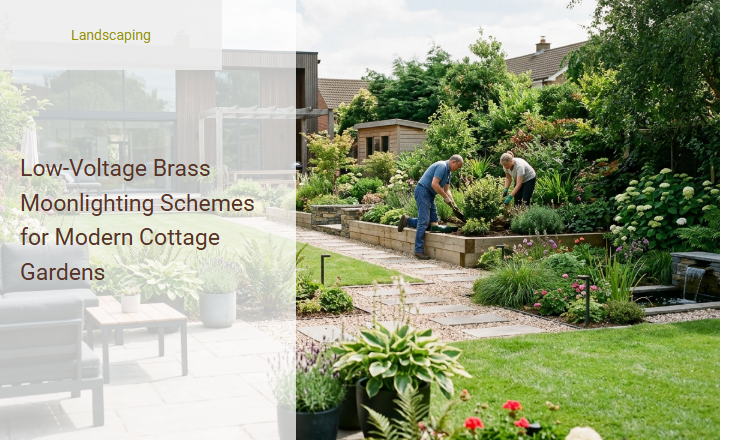
Many homeowners struggle to preserve the whimsical charm of a modern cottage garden after dark, often finding that standard outdoor lighting either leaves dense plantings in pitch blackness or washes them out with a harsh, clinical glare. To bridge this gap, successful landscape design must treat evening illumination not as an afterthought, but as an organic extension of the garden's natural architecture.
Adopting a low-voltage brass moonlighting scheme grants your outdoor space an enchanting, diffused radiance that extends its usability into the midnight hours. Successfully executing this technique, however, stipulates a keen understanding of canopy density and precise fixture concealment. For example, suspending a patinated brass downlight within the upper boughs of a mature river birch projects soft, dappled shadows onto the delicate hostas and foxgloves below, mimicking natural moonlight.
Below, we outline the core design principles, fixture specifications, and installation techniques required to master this elegant lighting system in your own landscape.
Read also: Solar vs Low-Voltage for Outdoor Lighting
The Enchantment of Cottage Moonlighting
There is a quiet magic that settles over a cottage garden at twilight. As the vibrant colors of the day soften into pastel shadows, the right landscape lighting can suspend time. Moonlighting is an artistic technique designed to capture this specific magic, casting a gentle, downward glow from high within the tree canopy. By positioning high-quality, low-voltage brass fixtures pointing downward through leaves and branches, you create a romantic, dappled light effect that mimics a natural full moon filtering through the night sky, transforming your outdoor space into an ethereal sanctuary.
Why Low-Voltage Brass is the Premier Choice
When selecting fixtures for an outdoor lighting system, material integrity is paramount. Solid brass stands as the premier option for low-voltage systems due to its unparalleled structural and aesthetic properties.
- Natural Patina Process: Unlike painted aluminum, brass oxidizes naturally over time, transitioning from a warm golden hue to an earthy, rich bronze and verdigris that blends seamlessly into the organic landscape.
- Unmatched Durability: Solid brass does not corrode or peel, making it impervious to the damp, acidic soils and moisture typical of dense cottage garden beds.
- Energy Efficiency: Low-voltage brass fixtures utilize advanced LED technology, delivering exceptional lumen output with a fraction of the energy consumption required by line-voltage systems.
Selecting Your Canopy: The Best Trees for Moonlighting
The Graceful Birch
Birch trees offer a delicate, airy canopy with fine foliage. Mounting brass fixtures high in their branches casts a soft, whispering shadow pattern on lawns below, perfect for subtle, elegant illumination.
The Broad-Leafed Maple
Maples feature wider leaves and a more structural branch pattern. This dense canopy blocks and shapes the light, producing larger, dramatic pools of shadow that contrast beautifully with illuminated pathways.
The Majestic Mature Oak
With their immense height and thick, spreading limbs, mature oaks are the ultimate canvas for moonlighting. They allow for exceptionally high mounting points, producing the most expansive and authentic moonlight dispersion possible.
Mastering Height and Angles for Realistic Shadows
Achieving a convincing moonlight effect requires careful technical execution. If fixtures are placed too low or angled incorrectly, the illusion is shattered by harsh, direct beams.
- Mount at 20 to 30 Feet: Placing your solid brass fixtures high in the tree canopy ensures the light source is far enough away to disperse naturally before reaching the ground.
- Aim at a 45-Degree Angle: Angling the light downward at approximately 45 degrees, rather than pointing it straight down, mimics the natural slant of moonlight and creates elongated, realistic shadows.
- Avoid Hotspots: Proper distance and angular placement prevent concentrated, overly bright patches of light on single branches, maintaining a balanced wash of light.
Choosing the Perfect Color Temperature
The color of light dramatically shapes the mood of a nocturnal garden. While warm tones invite intimacy, cooler tones capture the crisp clarity of the night sky.
"The secret to authentic moonlighting lies in mirroring the cool, silvery hues of the night sky, which naturally rest between the 4000K and 5000K spectrum." The Landscape Lighting Institute
While warm 2700K tones are ideal for creating cozy, inviting nooks near seating areas or fire pits, cool-toned 4000K to 5000K LEDs are essential for moonlighting. This cooler temperature accurately replicates natural moonbeams, turning ordinary green leaves into shimmering silver elements.
Integrating Light with Lush Cottage Plantings
Delphiniums and Tall Perennials
Positioning downward-facing brass fixtures so their light filters through the towering spires of delphiniums casts dramatic, elongated vertical shadows across stone walkways.
Swaying Lavender and Ornamental Grasses
As evening breezes rustle through wispy ornamental grasses and soft lavender bushes, the overhead moonlighting captures this motion, projecting dynamic, dancing shadows that bring the garden floor to life.
Defeating Glare with Brass Shrouds and Baffles
The illusion of moonlight relies entirely on hiding the source of the illumination. If a guest looks up and is blinded by a bare LED bulb, the romantic atmosphere is instantly lost. To preserve this mystery, high-quality brass fixtures must utilize integrated glare shields and long shrouds that block direct lines of sight to the lamp. Incorporating hex-cell louvers or baffles further refines the beam, ensuring that only the soft, scattered light escapes into the garden while the light source itself remains completely invisible.
Blending Canopy Light with Ground-Level Paths
A professional lighting design requires balance across multiple vertical planes. Relying solely on overhead moonlighting can leave the lower levels of the garden feeling disconnected, while over-illuminating paths can wash out the delicate shadows cast from above.
The goal is a seamless transition. By layering soft, low-voltage brass path lights along walking surfaces, you anchor the design. The gentle upward glow from the pathways meets the cascading light from the canopy, creating a unified, multi-dimensional portrait of light and shadow.
Smart Controls for an Effortless Moonrise
Modern low-voltage brass transformers make managing your cottage garden lighting entirely effortless by integrating with advanced control systems.
- Astronomical clocks calculate the exact sunset and sunrise times based on your geographical location, adjusting automatically throughout the seasons.
- Smart timers allow you to program custom lighting scenes, ensuring your moonlighting system activates exactly as twilight fades.
- Dimming controllers provide the flexibility to lower light levels later in the evening, transitioning the garden from active entertaining to a quiet midnight slumber.
Long-Term Care for Living Brass Patina
Solid brass is a living material that ages beautifully, developing a rich patina that harmonizes with your cottage garden. To ensure your lighting system continues to perform flawlessly year after year, minimal yet regular maintenance is required. Keep the glass lenses clean of pollen, dust, and water spots to maintain the crispness of your cool-toned light. Additionally, because trees are growing organisms, it is vital to inspect the mounting hardware annually. Loosening the tree-mount screws slightly prevents the brass fixtures from becoming choked by growing bark, preserving both the health of your canopy and your breathtaking moonlight display.
Summary
"Low-Voltage Brass Moonlighting Schemes for Modern Cottage Gardens" explores the art of elevating landscape design through strategic, elevated illumination. Moonlighting-the technique of positioning fixtures high within mature tree canopies to cast a soft, downward glow-recreates the romantic, dappled ambiance of natural moonlight, casting delicate shadows of foliage onto pathways and lawns below.
By utilizing low-voltage systems, homeowners achieve an energy-efficient, safe, and easily adjustable lighting design that minimizes light pollution. The choice of solid brass fixtures is crucial to this scheme; they offer unparalleled durability against the elements and naturally develop a graceful patina over time, seamlessly blending into the lush, organic textures of a cottage garden. Ultimately, this approach bridges the gap between classic horticultural charm and modern lighting technology, creating an enchanting, functional nocturnal retreat.
Leave a comment