
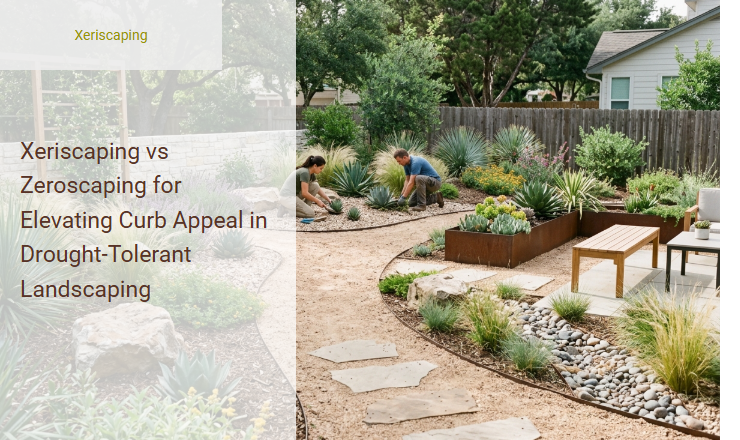
Maintaining a lush, green lawn is increasingly becoming an uphill battle for homeowners facing rising water rates and strict municipal irrigation restrictions. In response to these challenges, modern residential design is shifting toward sustainable, region-specific landscaping that harmonizes with local climates. Embracing this environmental shift not only slashes monthly utility bills but also dramatically elevates curb appeal through striking, architectural aesthetics.
However, successful low-water design requires clarifying a common misconception: drought-tolerant does not mean a lifeless, zero-maintenance space. True ecological design utilizes intentional, living elements-such as architectural native agave paired with textured decomposed granite-to create vibrant, multi-dimensional landscapes. This article will compare the critical differences between xeriscaping and zeroscaping, analyzing their distinct methodologies, aesthetic impacts, and maintenance requirements to help you choose the ideal investment strategy for your property.
Introduction: The Battle for Sustainable First Impressions
As climate volatility intensifies and water conservation becomes a civic necessity, homeowners are reimagining the traditional green lawn. The shift toward water-conscious landscaping is no longer just an eco-friendly statement; it is a vital strategy for long-term sustainability and economic resilience. Yet, when pursuing high-impact curb appeal, property owners often find themselves at a design crossroads. The core debate centers on two distinct approaches: xeriscaping, which thrives on lush, water-smart botany, and zeroscaping, which embraces minimalist, non-living materials. Choosing between these philosophies shapes not only your water bill but also how your home integrates into the neighborhood landscape.
Understanding Xeriscaping: More Than Just Cactus
Often misunderstood as a barren desert aesthetic filled exclusively with prickly cacti, xeriscaping is a scientifically guided method of land design. Derived from the Greek word xeros, meaning dry, this approach utilizes native, drought-tolerant plants, organic mulches, and efficient irrigation to design vibrant, layered, and water-efficient gardens. The goal is to build a self-sustaining ecosystem that mimics local nature while minimizing supplemental watering.
- Soil Analysis and Improvement: Amending the soil with organic matter to optimize water retention and drainage based on plant needs.
- Appropriate Plant Selection: Emphasizing native and regional plants that have adapted to survive on local rainfall levels.
- Practical Turf Areas: Limiting high-water grass lawns to functional zones rather than using them as default filler.
- Efficient Irrigation: Utilizing drip irrigation and smart controllers to apply water directly to the roots without evaporation loss.
- Use of Mulches: Layering wood chips or organic material to cool the soil, suppress weeds, and retain deep moisture.
Demystifying Zeroscaping: The Ultimate Low-Water Minimalist Approach
Zeroscaping represents a radical departure from traditional gardening by stripping away almost all living vegetation. It relies heavily on inorganic, non-living elements to create a clean, maintenance-free environment. Rather than cultivating drought-resistant plants, this approach utilizes gravel, decorative river rocks, crushed granite, pavers, and concrete slabs to cover the terrain, resulting in an ultra-low-water footprint.
Zeroscaping is a hardscape-dominant landscaping strategy where the use of living plants is actively avoided or restricted to near zero, utilizing gravel, stone, and structural materials to form a stark, minimalist visual field.
Curb Appeal Comparison: Lush Visuals vs. Stark Modernism
The visual impact of these two landscaping styles could not be more distinct. Xeriscaping offers a dynamic, living tapestry of textures, shifting colors, and movement. By integrating various heights, flowering perennials, and soft ornamental grasses, xeriscaped front yards feel inviting, organic, and harmonious with the surrounding environment. It elevates curb appeal by softening architectural lines and celebrating natural diversity throughout the changing seasons.
On the other hand, zeroscaping commands attention through stark modernism, geometric precision, and high contrast. The clean lines of concrete pavers juxtaposed with dark basalt gravel or white river pebbles create a dramatic, sculptural aesthetic. While highly striking in contemporary architectural settings, its starkness can sometimes feel sterile if not carefully balanced with artistic design elements, occasionally clashing with traditional suburban neighborhoods.
Environmental Impact: Biodiversity vs. Heat Islands
The ecological footprint of your landscaping choice extends far beyond water conservation. Xeriscaping functions as a living habitat. By planting native flora, you provide essential food and shelter for local pollinators, birds, and beneficial insects. This promotes urban biodiversity and helps cool the local microclimate through transpiration. The organic root systems also keep soil porous, allowing stormwater to filter naturally back into the underground aquifers while nourishing the earth's microbiome.
Conversely, zeroscaping can carry unintended ecological consequences. Large expanses of exposed gravel, river rock, and concrete have a high thermal mass, which contributes significantly to the heat island effect by absorbing solar radiation during the day and radiating it back into the atmosphere at night. Without organic plant matter, soil health declines, turning the ground beneath the stones sterile and impervious, which can accelerate soil erosion and runoff during sudden rainstorms due to reduced water absorption and lack of root stabilization.
Financials and Upkeep: Installation Costs and Long-Term Maintenance
Evaluating the financial commitment of xeriscaping versus zeroscaping requires looking at both immediate upfront expenditures and recurring maintenance tasks. While both eliminate high water bills, their material costs, labor demands, and physical maintenance tasks differ dramatically.
| Cost & Maintenance Factor | Xeriscaping | Zeroscaping |
|---|---|---|
| Initial Installation Cost | Moderate to High (Soil preparation, plants, drip systems) | Moderate to Very High (Bulk stone, grading, hardscape masonry) |
| Watering Requirements | Low (Periodic drip irrigation during dry spells) | None to Negligible (Zero routine irrigation) |
| Weeding Efforts | Low (Mulch and dense plantings naturally crowd out weeds) | Moderate (Windblown seeds germinate easily in gravel beds) |
| Long-Term Upkeep | Seasonal pruning, dividing plants, occasional mulch replenishment | Power-washing stone, leaf blowing debris, stone replenishment |
Pro Tips for Maximizing Xeriscaping Curb Appeal
Achieving a show-stopping xeriscaped yard requires thoughtful planning to ensure the space looks intentionally designed rather than wild or overgrown. Incorporating professional design principles will elevate your home's exterior aesthetic and maximize visual interest.
- Design with Tiered Plantings: Arrange plants by height, placing taller ornamental grasses and shrubs at the back, medium-height flowering perennials in the middle, and low-growing ground covers along paths.
- Establish Strong Focal Points: Position large architectural specimens, such as a multi-trunk desert willow or a majestic agave, to draw the eye and anchor the landscape design.
- Contrast Mulch Textures and Colors: Use contrasting mulches-such as dark bark in planting beds bordered by light pea gravel pathways-to define spaces and add graphic interest.
- Plan for Seasonal Color Transitions: Select plants with staggered bloom times so your garden transitions beautifully from spring flowers to rich autumn textures and structural winter silhouettes.
Turning Zeroscaping into High-End Hardscaping
To prevent a zeroscaped yard from looking like an abandoned, gravel-filled lot, homeowners must approach the design with an eye for high-end modern art. The secret lies in creating depth, structure, and contrast through architectural hardscaping rather than relying on plants for interest.
Start by incorporating massive, character-rich architectural boulders as natural sculptures, partially burying them to make them look established. Use clean, geometric pathway designs crafted from oversized concrete pavers or poured concrete slabs to direct the eye and create movement. Elevate the visual narrative at night with strategically placed outdoor lighting, such as uplighting on key hardscape features or soft path lights. Finally, embrace geometric patterns by segregating different stone sizes and colors using clean metal edging to create a high-contrast, modern mosaic.
Real Estate Reality: Which Style Drives Home Value?
When it comes to return on investment (ROI), the real estate market shows a clear preference. Home buyers generally favor landscapes that offer some connection to nature. While xeriscaping maintains a high ROI by preserving greenery and color without the burden of high water bills, zeroscaping can sometimes be polarizing, occasionally being perceived as cold or unfinished by prospective buyers. Furthermore, strict Homeowners Associations (HOAs) frequently have guidelines regulating the minimum percentage of living plants required in front yards, which can limit zeroscaping potential.
"Modern buyers look for sustainability and low maintenance, but they still crave visual warmth. A beautifully executed xeriscape almost always commands a premium, whereas an overly sterile zeriscape can reduce perceived property value by alienating buyers who want a welcoming neighborhood feel."
Conclusion: Choosing the Right Landscape for Your Home
Deciding between xeriscaping and zeroscaping requires balancing environmental values, aesthetic desires, and the unique architecture of your home. Xeriscaping offers a soft, biodiverse, and seasonally dynamic environment that thrives with minimal water, while zeroscaping offers an ultra-low-maintenance, starkly modern, and highly structured landscape.
To make the best choice for your property, evaluate your goals using this framework:
Choose Xeriscaping if you enjoy gardening, want to support local wildlife, aim to boost curb appeal with lush and vibrant plant life, and live in a neighborhood with strict green-space HOA regulations.
Choose Zeroscaping if you want absolute minimal physical maintenance, prefer a sharp contemporary or industrial architectural aesthetic, and live in an extremely arid climate where any irrigation is impractical.
| Aesthetic Aspect | Xeriscaping | Zeroscaping |
|---|---|---|
| Visual Character | Lush, colorful, and biodiverse. Mimics natural, drought-tolerant ecosystems. | Stark, minimalist, and sterile. Focuses on non-living elements. |
| Vegetation & Color | High variety. Rich textures and vibrant colors from native wildflowers, succulents, and shrubs. | Minimal to none. Monochromatic palette limited to occasional cacti or sparse ornamental grass. |
| Dominant Materials | Organic mulch, soil, native plants, and strategic stone accents. | Gravel, river rock, boulders, concrete, and synthetic turf. |
| Curb Appeal | Warm and inviting. High market appeal due to structured, intentional garden design. | Polarizing. Can look modern and clean, but often perceived as barren or unfinished. |
Leave a comment