
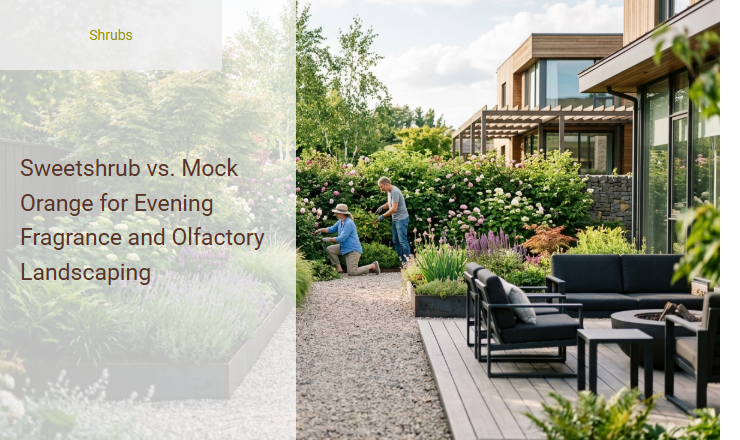
Many homeowners design beautiful gardens that look stunning by day, yet fail to deliver sensory appeal when the sun goes down, leaving evening patios feeling sterile and uninviting. Before selecting plants, one must understand how evening air currents and humidity dictate the movement of floral volatile compounds. Strategic olfactory landscaping grants you a lingering, natural aromatherapy experience that elevates your outdoor living space long after dark.
However, it is important to note that fragrance performance is highly dependent on microclimates; soil moisture and ambient temperature will dictate how these scents project. For instance, the spicy, strawberry-banana notes of Sweetshrub (Calycanthus floridus) behave differently in the night air compared to the intense, citrus-forward perfume of Mock Orange (Philadelphus coronarius).
In this analysis, we will compare these two deciduous giants across growth habits, soil preferences, and seasonal scent profiles to help you curate the ultimate evening sensory retreat.
Designing the Night Garden: An Introduction to Olfactory Landscaping
As daylight fades and the visual world retreats into shadow, a hidden dimension of the garden comes alive. Olfactory landscaping is the art of designing outdoor spaces with a primary focus on scent, creating sensory sanctuaries that peak when the sun goes down. At dusk, the cooling air holds onto rich aromas, transforming a simple backyard into an evocative, immersive retreat. Evening fragrance does more than just drift on the breeze; it anchors memories, defines pathways, and guides us through the twilight hours.
In this realm of nocturnal scent, two spectacular deciduous shrubs stand out as legendary contenders for the crown of the evening garden. On one side, we have the intriguing, deep-toned Calycanthus floridus, commonly known as Sweetshrub. On the other side reigns the classic, snow-white champion, Philadelphus, widely celebrated as Mock Orange. Both offer extraordinary olfactory experiences, yet their characters are entirely distinct. This twilight showdown explores their unique characteristics, fragrance profiles, and landscape potential to help you select the ideal aromatic centerpiece for your night garden.
Profiling the Sweetshrub (Calycanthus floridus)
Sweetshrub, also known as Carolina allspice, is a dense, rounded deciduous shrub native to the southeastern United States. It is highly valued for its exceptional cold hardiness and adaptability, thriving in a wide range of soil types. Its growth habit is typically bushy and upright, reaching heights and widths of six to twelve feet, making it an excellent choice for privacy screens, shrub borders, or standalone specimen plants.
Historical Significance and Native Roots of Sweetshrub
This native North American treasure has a rich history that stretches back centuries. Historically, Native Americans and early European settlers utilized its fragrant bark, leaves, and flowers for medicinal purposes, spices, and natural perfumes. The distinctive, strap-like maroon flowers bloom from mid-spring into July, adding a subtle, dark beauty to the landscape. Its botanical features include:
- Native North American origin, primarily found in rich woodlands and along stream banks.
- Distinctive, deep maroon to brownish-red flowers with unique, leathery petals.
- Lustrous, opposite green leaves that turn a warm, golden yellow in the autumn.
- A robust, multi-stemmed growth habit that responds beautifully to pruning and shaping.
Profiling the Mock Orange (Philadelphus)
Mock Orange is a beloved, vigorous deciduous shrub belonging to the hydrangea family. Renowned for its spectacular late spring display, this plant produces an abundance of elegant, pure white blossoms that resemble orange citrus flowers. Its arching branches and dark green foliage provide a stunning backdrop for these delicate blooms, which literally cover the shrub for several weeks, creating a snow-drift effect in the landscape.
The Cottage Garden Appeal and Growth of Mock Orange
With its romantic, informal appearance, Mock Orange is a staple of the classic cottage garden. It exhibits a rapid, upright, and fountain-like growth pattern, often reaching heights of eight to ten feet. It is highly adaptable and requires minimal maintenance once established, making it a reliable favorite for generations of gardeners. Key features of this elegant shrub include:
- Elegant, four-petaled white blossoms with prominent, showy golden-yellow stamens.
- Classic cottage garden aesthetic that brings old-world charm to modern landscapes.
- Vigorous, fast-growing habit with arching branches that create a soft, natural silhouette.
- Exceptional hardiness and tolerance for urban environments, clay soils, and light shade.
The Scent Profile of Sweetshrub: Spicy, Fruity, and Complex
The fragrance of the Sweetshrub is an olfactory puzzle, a delightful and mysterious blend that defies simple categorization. Unlike plants that offer a single, straightforward scent, Calycanthus floridus presents a multi-layered, evolving aromatic experience. Its blossoms emit a sweet, heavy perfume that carries distinct notes of ripe strawberries, cantaloupe melon, and tropical pineapple, all balanced by a warm, underlying current of spicy clove and cinnamon.
"The scent of the Sweetshrub is a nostalgic journey, blending the sweet candy notes of childhood summer fruits with the rich, exotic spices of an ancient market."
To truly appreciate the complex nature of this plant, one must interact with it directly. While the flowers naturally release their fruity perfume into the warm air, bruising the leaves, stems, or bark unlocks an entirely different aromatic profile. When crushed, the foliage and wood release a sharp, clean, and highly aromatic scent reminiscent of fresh camphor and spicy allspice, ensuring that this shrub offers sensory interest even when the blooming season has passed.
The Scent Profile of Mock Orange: Sweet, Citrusy, and Intense
In contrast to the spicy complexity of the Sweetshrub, the Mock Orange offers an intense, unapologetic sweetness that defines the transition from spring to summer. The fragrance is remarkably powerful, characterized by a sweet, citrus-infused aroma that closely mirrors true orange blossoms, coupled with the rich, narcotic undertones of wild jasmine. It is a clean, bright, yet deeply intoxicating scent that can easily perfume an entire suburban yard on a quiet evening.
"Mock Orange does not merely whisper its presence; it announces itself with a decadent, sweet-citrus breeze that commands the evening air."
This intense scent release is the precise reason why Mock Orange has remained a staple of traditional twilight gardens for centuries. As the afternoon heat dissipates, the white blossoms seem to glow in the fading light, releasing their concentrated fragrance just as homeowners step outside to enjoy the cooler evening temperatures, creating a perfect sensory escape.
Evening Performance: Scent Release and Dispersion at Dusk
As dusk settles over the landscape, a fascinating physical transformation alters how these fragrances travel. The dropping temperatures and rising humidity of the evening act as natural amplifiers for plant volatiles. Sweetshrub excels in still, heavy air, where its complex, fruity-spicy notes settle low to the ground, creating a rich, dense blanket of scent that lingers close to the shrub itself. Its heavier fragrance molecules do not travel as far, but they persist with remarkable density in enclosed or sheltered garden spaces.
Conversely, Mock Orange is a master of aerial dispersion. Its lighter, highly volatile citrus and jasmine molecules are easily picked up by the gentlest twilight breezes. As the warm earth cools and creates rising thermal currents, the scent of Mock Orange climbs and drifts over vast distances, wafting over fences and through open windows. While Sweetshrub offers an intimate, localized sensory experience, Mock Orange provides a broad, sweeping aromatic embrace that defines the entire night garden atmosphere.
Cultivation and Optimal Placement for Scent Maximization
To unlock the full aromatic potential of these magnificent shrubs, proper cultivation and strategic placement within your landscape design are essential. Both plants are relatively easy to grow, but positioning them where evening air currents naturally move will dramatically enhance your sensory enjoyment.
Optimal Conditions and Placement for Sweetshrub
Sweetshrub thrives in full sun to partial shade and prefers moist, well-drained, organic-rich soil. To maximize its intimate, heavy scent, plant it in sheltered outdoor living areas. Excellent spots include immediately alongside a sunken patio, nestled next to a garden bench, or bordering a frequently used walkway where passing guests will naturally brush against its foliage and release its warm, spicy oils.
Optimal Conditions and Placement for Mock Orange
Mock Orange performs best in full sun, though it tolerates light shade, and requires moist, well-draining soil to prevent root rot. Because its fragrance is highly volatile and travels easily, place Mock Orange upwind of your primary outdoor seating areas or directly beneath bedroom windows. The gentle evening breeze will carry its sweet, citrusy perfume directly into your home, filling indoor spaces with natural fragrance during late spring nights.
Design Synergy: Companion Planting for the Moonlight Garden
Creating a truly cohesive night garden requires visual elements that catch the pale light of the moon, paired with plants that enhance the overall sensory journey. By pairing our featured shrubs with selected companion plants, you can establish a stunning, luminous landscape that shines long after sunset.
To achieve this visual and aromatic harmony, consider integrating companions that feature reflective, silver-toned foliage or pale, night-blooming blossoms. These plants will act as luminous focal points under the night sky while offering complementary fragrances that mingle beautifully with Sweetshrub and Mock Orange. Excellent choices include:
- Artemisia 'Powis Castle' and Stachys byzantina (Lamb's Ear), which offer soft, silver foliage that reflects moonlight beautifully.
- Nicotiana alata (Flowering Tobacco), presenting white, star-shaped flowers that open at dusk and release a sweet, jasmine-like scent.
- Oenothera caespitosa (Tufted Evening Primrose), a low-growing perennial with large, luminous white flowers that open in the evening.
- Ipomoea alba (Moonflower), a vigorous vine with giant, pure white blossoms that unfurl rapidly at sunset, adding dramatic night-blooming charm.
Side-by-Side Evaluation: Sweetshrub vs. Mock Orange
| Feature | Sweetshrub (Calycanthus floridus) | Mock Orange (Philadelphus) |
|---|---|---|
| Bloom Time | Mid-spring to mid-summer (extended bloom period) | Late spring to early summer (short, intense burst) |
| USDA Hardiness Zones | Zones 4 to 9 | Zones 4 to 8 (depending on variety) |
| Shade Tolerance | High (thrives in partial shade to full sun) | Moderate (prefers full sun for best flowering) |
| Scent Profile | Spicy, complex notes of strawberry, melon, and pineapple | Sweet, intense, citrusy orange-blossom and jasmine |
| Scent Dispersion | Localized, heavy, settles in still pockets | Far-reaching, highly volatile, drifts on breezes |
| Flower Color | Deep maroon, chocolate-brown, or dark burgundy | Pure, brilliant snow-white |
The Twilight Verdict: Choosing Your Perfect Scented Shrub
Selecting the right fragrant centerpiece depends on your personal aesthetic preferences, your existing yard layout, and the specific sensory atmosphere you wish to create. Both shrubs offer distinct advantages that can elevate your outdoor living spaces when dusk arrives.
To help you decide which plant deserves a prominent spot in your landscape, consider the following decision guide:
- Choose Sweetshrub if you have a shaded garden, enjoy complex, fruit-and-spice aromas, and want a shrub with an extended blooming season that offers year-round aromatic interest through its leaves and bark.
- Choose Mock Orange if you want to make a dramatic visual statement with brilliant white blossoms, desire a powerful, classic citrus perfume that travels long distances, and have a sunny spot near windows or walkways.
- Consider planting both in different areas of your landscape to enjoy a diverse, sequential fragrance experience that starts with the sweet, bright notes of Mock Orange in late spring and transitions to the warm, spicy depths of Sweetshrub through the hot summer months.
| Evening Attribute | Sweetshrub (Calycanthus) | Mock Orange (Philadelphus) |
|---|---|---|
| Scent Profile | Warm, complex, and fruity (notes of strawberry, pineapple, and spiced wine). | Intense, sweet citrus (notes of orange blossom and jasmine). |
| Evening Scent Delivery | Steady; relies on residual daytime heat to carry the scent into dusk. | Dynamic peak; heavily accelerates volatile release at dusk to attract nocturnal pollinators. |
| Night Garden Visibility | Low; dark reddish-brown blooms blend into the shadows. | High; luminous white flowers glow under moonlight (classic moon garden choice). |
| Seasonal Scent Window | Prolonged; sporadic blooms emit scent from late spring through mid-summer. | Brief but intense; concentrated 2 to 3 week fragrance burst in late spring. |
Leave a comment