
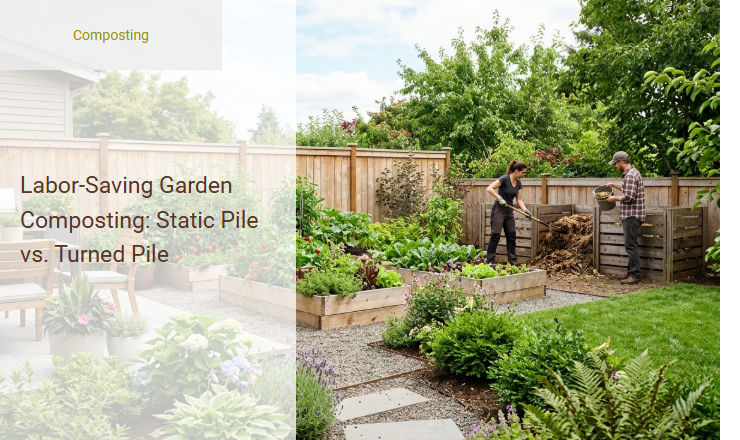
For many passionate gardeners, the physical toll of traditional composting is a persistent deterrent. Shoveling and turning heavy, compacted mounds of organic matter under the summer sun often leads to chronic back strain and exhaustion. Yet, achieving vibrant, nutrient-dense soil requires a steady supply of rich organic humus.
Fortunately, you can cultivate high-quality "black gold" without the grueling physical labor. The key lies in understanding basic decomposition science: even passive systems thrive when balanced correctly with inputs like dry autumn leaves, straw, and nitrogen-rich kitchen scraps. However, managing your expectations regarding processing timelines and decomposition speed is essential before choosing a methodology.
This article compares passive static piles against active turned systems, analyzing the labor requirements, material processing times, and overall efficiency of each approach to help you optimize your backyard soil strategy.
Introduction: The Backyard Composting Dilemma
Every gardener dreams of yielding dark, nutrient-rich soil that breathes life into plants. However, the reality of achieving this "black gold" often involves sweat, heavy lifting, and relentless manual labor. Maintaining a thriving compost pile can feel like an unpaid part-time job, leaving many to wonder if there is an easier way to nourish their gardens.
This debate centers around two main approaches: static composting (passive) and turned composting (active). Choosing between these methods is a fundamental decision, framing a choice between sacrificing time or investing physical effort.
Understanding the Static Pile: Nature's Slow Cooker
Static composting is the practice of piling organic waste and letting natural decomposition occur with minimal human interference. Instead of actively mixing the materials, you simply layer your greens and browns and let fungi, earthworms, and native insects do the work at their own pace.
This approach holds immense appeal for those with busy schedules or physical limitations. It is a highly efficient "set-and-forget" system that works in the background of your life. Key benefits of this method include:
- Zero lifting: No need to shovel or rotate heavy organic matter.
- Low maintenance: Once the pile is built, your work is effectively finished.
- Critter-friendly: Slow decomposition preserves a stable habitat for beneficial soil microbes.
The Turned Pile: Fast-Track Soil Nutrition
Turned composting is an active method where the gardener regularly rotates and mixes the organic materials. By manually turning the pile, you introduce oxygen deep into its core, which feeds aerobic bacteria. These bacteria thrive on oxygen, rapidly breaking down raw organic matter and generating substantial heat in the process.
While this method produces incredibly rich compost in a fraction of the time, it demands a significant, ongoing physical commitment. Gardeners choosing this path must prepare for the following realities:
- Aeration labor: Shoveling and turning the compost heap every few days.
- Moisture monitoring: Ensuring the aerated pile stays as damp as a wrung-out sponge.
- High energy input: Active management is required to keep the aerobic bacteria working at their peak.
Labor Analysis: Physical Effort vs. Passive Waiting
To choose the right method, you must weigh your physical stamina against your willingness to wait. While active composting requires consistent muscle power, passive composting demands immense patience. Below is a direct comparison of the physical tasks associated with each technique.
| Composting Task | Static Pile (Passive) | Turned Pile (Active) |
|---|---|---|
| Initial Setup Effort | Low (Layer materials once) | Moderate (Sizing materials precisely) |
| Turning Frequency | None (Left untouched) | High (1 to 3 times per week) |
| Lifting & Shoveling | Minimal (Only during harvest) | High (Heavy, ongoing labor) |
Decomposition Timeline: Patience vs. Urgency
The rate at which your waste transforms into usable soil depends entirely on your chosen method. Static piles rely on cool, slow-acting anaerobic and mesophilic organisms. Because these organisms work slowly, a static pile can take up to a year-or even longer-to yield finished compost.
Conversely, turned piles harness the power of thermophilic bacteria. These heat-loving microbes feast on easily accessible oxygen and nutrients, creating a metabolic bonfire. As a result of this high-speed activity, a diligently turned pile can produce finished compost in a matter of four to six weeks, making it the ideal choice for those facing urgent planting deadlines.
Weed Seeds and Pathogens: The Temperature Factor
The temperature inside your compost pile does more than just dictate the speed of decomposition; it also determines the safety and cleanliness of the final product. Active turning keeps temperatures high, whereas passive piles remain relatively cold.
"To reliably destroy weed seeds, plant pathogens, and insect larvae, a compost pile must sustain internal temperatures of 131 to 160 degrees Fahrenheit for several consecutive days." - Agricultural Extension Service
Because static piles do not reach these high temperatures, cold composting allows persistent weed seeds and plant diseases to survive. If you toss invasive weeds or diseased tomato plants into a static pile, they may survive to infect your garden next season. Active composting solves this problem by using intense heat to pasteurize the material.
Space and Equipment Requirements
Your physical backyard layout and available gardening tools will play a major role in determining which method is feasible. Active and passive systems have vastly different spatial footprints.
- Static Setup: Needs only a single, tucked-away bin or a simple wire cylinder placed in an unused corner of the yard.
- Turned Setup: Demands multiple side-by-side bins (a three-bin system) or ample open space to physically roll, flip, and shovel the pile from one spot to another.
- Essential Tools: A static pile requires almost no tools, whereas a turned pile requires a sturdy pitchfork, compost thermometer, and sometimes a mechanical tumbler.
Troubleshooting: Odors, Pests, and Moisture
No compost system is completely immune to imbalances. Knowing how to quickly address problems like foul smells and pests will keep your backyard pleasant and your neighbors happy.
Handling Odor Issues
If a static pile starts to smell like rotten eggs, it has likely become compacted and anaerobic. You can fix this by poking deep holes in the pile with a broom handle to let air in. For a turned pile, bad smells mean too much moisture; simply turn in some dry leaves or shredded cardboard to absorb the excess water.
Deterring Pests and Animals
Pests are often drawn to exposed food scraps. In a static pile, always bury fresh kitchen waste deep beneath a thick layer of dry leaves or straw. In a turned system, the regular physical disturbance and high heat naturally discourage pests from nesting inside the pile.
The Lazy Gardener's Compromise: Semi-Turned Composting
If you find yourself torn between the physical exhaustion of active turning and the excruciatingly slow wait of static piles, there is a middle ground. Semi-turned composting offers a smart, low-effort compromise that keeps your back healthy while still speeding up the natural process.
By choosing to turn your pile only once or twice during its entire cycle, you introduce a vital burst of fresh oxygen without committing to a weekly workout. Alternatively, inserting perforated PVC aeration tubes into the center of a static pile allows oxygen to flow naturally into the core, giving you the passive benefits of a static bin with some of the speed of an active system.
Final Verdict: Which Composting Method Fits Your Garden?
Choosing between active and passive composting comes down to balancing your personal physical capabilities, your schedule, and how quickly you need your finished product. There is no wrong answer, only the method that aligns with your current lifestyle.
| Labor Metric | Static Pile (Passive/Aerated) | Turned Pile (Active/Windrow) |
|---|---|---|
| Operational Demand | Minimal; material remains undisturbed from setup to maturity. | High; requires frequent, scheduled physical turning of material. |
| Labor Distribution | Front-loaded; labor is concentrated only during initial pile construction. | Continuous; labor hours accumulate steadily throughout the composting cycle. |
| Equipment Operation | Low; automated blowers/pipes replace manual intervention. | High; requires active operators for tractors, loaders, or windrow turners. |
| Monitoring & Oversight | Low; suited for remote/automated temperature and moisture tracking. | Moderate-High; requires manual checks to trigger physical turning events. |
| Estimated Labor Saving | 50% – 75% reduction in total labor hours. | 0% (Baseline labor-intensive standard). |
Leave a comment