
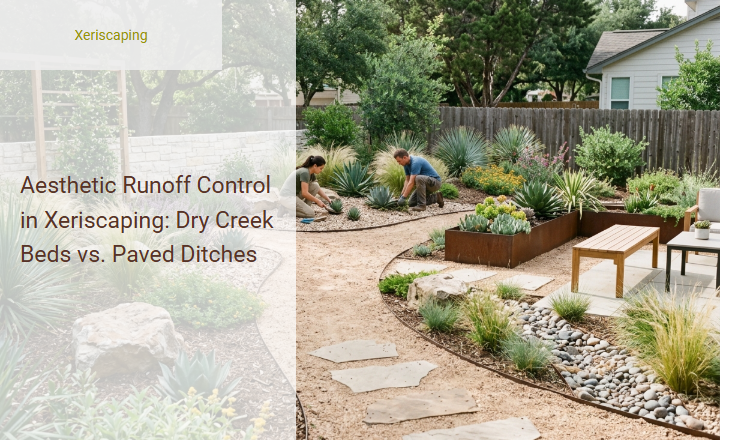
Homeowners and landscape architects in arid regions often struggle with managing sudden, heavy seasonal downpours. Traditional drainage solutions successfully mitigate flooding, but they frequently disrupt the natural, drought-tolerant aesthetic of a carefully curated xeriscape.
Before selecting a runoff solution, one must first evaluate the site's topography and local civil engineering requirements. Balancing hydraulic functionality with residential beauty remains a delicate challenge. Fortunately, choosing the right drainage design grants property owners a dual benefit: robust erosion control and elevated curb appeal. However, we must stipulate that hydrological performance is always contingent on local soil permeability, slope gradient, and peak rainfall volume.
For example, incorporating rounded river rocks into a meandering dry creek bed offers a vastly different structural and visual profile than installing rigid concrete swales or asphalt paved ditches. Below, we compare these two distinct approaches, analyzing their installation costs, maintenance requirements, and aesthetic integration to help you choose the optimal runoff control method for your landscape.
Introduction: The Challenge of Stormwater in Arid Landscapes
Modern xeriscaping has revolutionized how we view arid landscaping, shifting the focus toward drought-tolerant flora and resource conservation. However, when sudden desert downpours strike, these beautifully curated dry environments face a severe functional threat. Managing heavy stormwater runoff without compromising the organic beauty of a low-water garden is a complex task. Designers must find a delicate balance, ensuring that high-volume water flow is safely redirected while maintaining the natural, minimalist aesthetic of the space. Mastering this balance is the key to creating a resilient, beautiful, and sustainable landscape.
The Role of Runoff Management in Sustainable Gardening
Protecting Soil and Plant Health
In drought-tolerant gardens, controlling the movement of water is essential for preserving the landscape's structural integrity. Unmanaged runoff can quickly erode fragile topsoil, washing away valuable nutrients and exposing plant roots. By directing stormwater mindfully, gardeners can prevent soil compaction and erosion, ensuring that native plants receive the appropriate amount of hydration without becoming waterlogged or uprooted during intense rain events.
Dry Creek Beds: Harmonizing Design and Drainage
The Anatomy of a Natural Drainage Feature
A dry creek bed is an engineered swale designed to mimic the natural look of a dried-up riverbed. Rather than relying on rigid pipes, this solution channels stormwater using an artistic arrangement of stone and rock. This approach guides runoff safely through the yard while seamlessly blending into the surrounding desert flora.
- Smooth river rocks form the base of the channel, allowing water to flow naturally.
- Fine gravel fills the spaces between larger stones, filtering debris and stabilizing the bed.
- Large boulders are placed along the edges to anchor the design and mimic natural river banks.
Paved Ditches: Engineered Efficiency for High-Volume Flow
Industrial Water Diversion Channels
Paved concrete ditches and masonry channels are highly engineered, utilitarian structures designed for maximum drainage efficiency. Constructed from poured concrete or laid stone masonry, these channels feature smooth, non-porous surfaces that minimize friction. This design allows them to redirect massive volumes of fast-moving stormwater away from residential foundations and vulnerable slopes, making them indispensable for municipal infrastructure and high-risk flood zones.
Visual Appeal: Organic Flow vs. Rigid Geometry
Aesthetic Differences in Landscape Drainage
The visual impact of your drainage choice plays a massive role in the overall ambiance of your xeriscaped yard. Dry creek beds offer a rustic, naturalistic aesthetic that blends effortlessly with drought-tolerant plantings, using varied stone textures to create a sense of organic movement. In contrast, paved concrete ditches introduce harsh, industrial lines and rigid geometry, creating a highly functional but visually stark contrast to the surrounding natural elements.

Environmental Impact: Infiltration vs. Displacement
Ecological Consequences of Drainage Choices
From an ecological perspective, how we manage runoff determines whether stormwater is treated as a resource or a waste product. Dry creek beds promote natural infiltration, allowing water to slowly seep into the soil and recharge local groundwater tables while naturally filtering out impurities. Paved ditches, conversely, accelerate water displacement, carrying unfiltered pollutants directly into local waterways at high speeds, which can worsen downstream flooding and erosion.
"Permeable landscape features are vital for sustainable urban water management, turning destructive runoff into beneficial soil moisture." - Green Infrastructure Institute
Maintenance and Longevity: Debris, Weeds, and Cracks
Comparing Long-Term Upkeep Requirements
Both natural stone beds and paved concrete channels require ongoing maintenance to ensure optimal performance over time. While stone systems are prone to organic buildup, concrete systems suffer from structural degradation due to environmental exposure.
| Drainage System | Primary Maintenance Issues | Long-Term Durability |
|---|---|---|
| Dry Creek Beds | Weed growth, sediment accumulation, and leaf debris buildup. | Highly durable; stones can be repositioned easily if shifting occurs. |
| Paved Concrete Ditches | Concrete cracking, soil undermining, and structural erosion. | Subject to cracking and shifting; requires patching or complete repouring. |
Cost Analysis: Upfront Installation vs. Long-Term Value
Financial Considerations for Homeowners
When evaluating drainage options, homeowners must weigh immediate installation expenses against future property returns. Paved concrete ditches often require significant upfront investments in heavy machinery and skilled concrete finishing labor. Hand-laid stone creek beds can also be labor-intensive, but the materials are highly customizable and often easier to install in phases. In terms of long-term financial yield, natural stone features dramatically enhance curb appeal, adding measurable market value to a xeriscaped home. Conversely, industrial concrete channels can deter potential buyers, acting as a visual detractor that reduces overall landscape value. Choosing stone is an investment in both beauty and equity.
Design Guide: Choosing the Right System for Your Slope
Key Decision Factors for Your Property
To determine the most effective drainage solution for your specific landscape, you must carefully evaluate several geographical and regulatory factors.
- Analyze your backyard slope gradient: steep hillsides experiencing rapid water movement may require concrete reinforcement, whereas gentle slopes are ideal for permeable dry creek beds.
- Assess local rainfall intensity: regions prone to sudden, severe cloudbursts require higher capacity channels compared to areas with light, seasonal showers.
- Consult neighborhood HOA regulations: many modern associations ban industrial-looking concrete ditches in favor of organic, natural stone designs that preserve neighborhood aesthetics.
Conclusion: Merging Functional Drainage with Natural Artistry
Selecting the ideal runoff management system is a pivotal decision that defines both the utility and the visual harmony of your outdoor space. While paved concrete channels offer unmatched hydraulic speed for severe situations, dry creek beds provide a sustainable, porous alternative that beautifully integrates with the natural world. By blending function with organic aesthetics, you can transform a necessary utility into a stunning focal point of your garden design.
| Aesthetic Criteria | Dry Creek Beds | Paved Ditches |
|---|---|---|
| Visual Integration | Mimics natural stream beds; blends seamlessly into residential and rustic landscapes. | Industrial, utilitarian appearance; creates harsh, artificial dividing lines in terrain. |
| Material & Texture | Diverse textures via multi-sized river rocks, cobble, gravel, and boulders. | Monolithic, flat texture of poured concrete, asphalt, or rigid pavers. |
| Design Flexibility | High; easily curves to follow contours, allowing integrated pocket plantings. | Low; restricted to linear, highly engineered geometries and fixed widths. |
| Aging & Weathering | Improves with age; organic debris and moss enhance the naturalized aesthetic. | Degrades visually; prone to cracking, staining, spalling, and unsightly weed growth in joints. |
| Perceived Value | Acts as a premium landscaping feature; increases curb appeal. | Perceived as civil infrastructure; detracts from property aesthetics. |
Leave a comment