
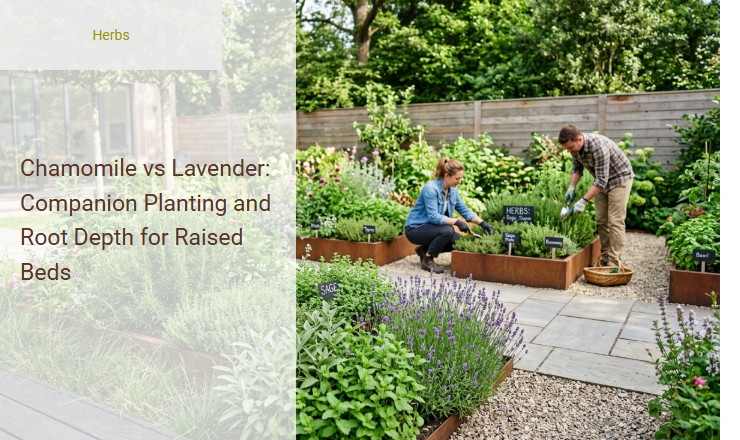
Many home gardeners struggle to maximize their limited raised bed space, often watching helplessly as closely planted herbs crowd each other out or fail to thrive. Successful intensive cultivation requires a deep understanding of below-ground soil dynamics and resource allocation rather than just surface aesthetics. Mastering these spatial relationships grants you a thriving, self-sustaining aromatic ecosystem that yields abundant harvests with minimal intervention.
However, achieving this balance requires the stipulation that these two popular herbs possess starkly different physiological needs and environmental preferences. For instance, Roman chamomile relies on a shallow, fibrous root network that spreads horizontally, whereas English lavender demands deep, well-draining soil clearance to accommodate its woody taproot system.
In this guide, we will analyze their respective root depths, evaluate their compatibility as companion plants, and outline a step-by-step layout strategy to optimize your raised beds for both species.
Introduction to Chamomile and Lavender in Raised Beds
Among the most beloved choices for home herb gardens, Chamomile and Lavender stand out for their aromatic foliage, beautiful blossoms, and therapeutic qualities. Both herbs have captured the imagination of gardeners worldwide, offering sensory delight and attracting beneficial pollinators. However, successful cultivation in a controlled raised bed environment requires a deeper understanding of their physiological differences, particularly their root systems and ecological preferences.
When planning a raised bed, understanding the root depth and companion planting dynamics of these two herbs is essential. While they might look stunning side-by-side, their subterranean structures and moisture preferences tell a very different story. Designing a raised bed that accommodates these distinct profiles ensures your herbs thrive rather than compete.
Chamomile Root Depth and Soil Profile
Roman vs. German Chamomile Roots
Chamomile varieties exhibit distinct growth habits and root structures. German chamomile (Matricaria chamomilla) is an annual plant with a fibrous, shallow root system that spreads widely to capture surface moisture. Roman chamomile (Chamaemelum nobile) is a perennial groundcover with creeping stems that root as they spread, forming dense mats of shallow, interconnected roots.
Root Depth and Soil Preferences
In a raised bed, chamomile roots generally occupy the upper layer of the soil profile, rarely extending beyond 6 to 8 inches deep. Because of this shallow root depth, chamomile requires specific soil conditions to thrive:
- A high-quality, loamy soil mix that retains moderate moisture.
- Excellent drainage to prevent the shallow roots from rotting.
- A rich organic matter content to support its rapid seasonal growth.
Lavender Root Depth and Drainage Needs
The Woody Root Architecture of Lavender
Unlike shallow-rooted annuals, lavender (Lavandula) develops a robust, extensive, and woody root system. Over time, a single lavender plant establishes a strong woody taproot that can extend deep into the ground, supplemented by a network of tough fibrous roots. This architecture is designed to anchor the heavy woody shrub and search for water deep underground during droughts.
Why Depth and Fast Drainage Matter
Because of its extensive root structure, lavender demands deep raised beds to prevent its roots from becoming stunted or waterlogged. Proper physical and chemical soil properties are essential for its survival:
- Root Depth Requirements: Lavender needs at least 12 to 18 inches of soil depth to expand its woody roots naturally.
- Soil Composition: It thrives in sandy, gritty, or gravelly soil profiles that mimic its native Mediterranean habitat.
- Drainage Necessity: The roots must dry out rapidly between waterings; saturated soil suffocates the roots, leading quickly to root rot.
Root Depth Comparison: Spatial Dynamics in Raised Beds
When restricted to the finite volume of a raised garden bed, the spatial dynamics between different root types become highly apparent. Chamomile behaves as a surface feeder, utilizing the top layer of soil, whereas lavender explores the lower strata of the bed. Understanding this vertical stratification is key to planning your layout.
| Herb Variety | Root Type | Average Root Depth | Soil Zone Occupied |
|---|---|---|---|
| Chamomile | Shallow Fibrous | 6 to 8 inches | Upper Topsoil Layer |
| Lavender | Deep Taproot / Woody | 12 to 18+ inches | Deep Subsoil Layer |
While their different root depths mean they do not directly compete for physical space vertically, their differing demands for moisture within those distinct layers present a major challenge when planted in immediate proximity.
Chamomile Companion Planting: Best Neighbors
The "Plant Doctor" of the Herb Garden
Chamomile is widely celebrated in companion planting as a natural "plant doctor." Its presence in a raised bed is believed to improve the vigor, health, and even the flavor of neighboring plants. By releasing beneficial chemical compounds into the soil and attracting predatory insects, chamomile acts as an organic protector and growth enhancer.
Top Companions for Chamomile
If you are planning your raised bed layout, consider placing chamomile near these compatible plants:
- Brassicas: Cabbage, broccoli, and kale benefit from chamomile's ability to deter pests.
- Onions and Garlic: Chamomile can enhance the flavor of alliums while sharing similar moderate moisture needs.
- Mint: When grown in controlled containers within the bed, mint and chamomile thrive in similar soil profiles.
For more detailed planning on companion planting schemes, you can explore specialized herb gardening guides to maximize your garden yield.
Lavender Companion Planting: Ideal Partners
Mediterranean Herb Alliances
Lavender thrives when paired with companions that share its specific environmental preferences. Because it demands excellent drainage, alkaline soil, and very little supplemental watering, its ideal neighbors are other woody herbs native to the dry hills of the Mediterranean.
Best Companions for Lavender
When designing your raised bed, plant lavender alongside these hardy, drought-tolerant partners:
- Rosemary: Shares the exact same need for sandy soil, infrequent watering, and intense sunlight.
- Thyme: A low-growing herb that acts as a living mulch without trapping harmful moisture around lavender's root crown.
- Sage: Requires identical lean soil and thrives under hot, dry conditions next to lavender shrubs.
Can You Plant Chamomile and Lavender Together?
While both plants love bright sunshine and look gorgeous together, planting chamomile and lavender directly side-by-side in a raised bed is generally not recommended. Their root systems are designed for completely different water and soil dynamics, making direct cohabitation highly challenging for any gardener.
“To grow chamomile and lavender side-by-side is to force a marriage of wet and dry. One will inevitably suffer from the water needs of the other.”
Chamomile relies on consistent, moderate moisture in the upper soil profile to maintain its delicate, sweet-scented foliage. If you underwater it to satisfy the lavender, the chamomile will dry up, wilt, and die. Conversely, if you water the zone enough to keep the chamomile happy, the lavender roots will sit in damp soil, succumb to root rot, and perish. Despite sharing a love for full sun, their conflicting moisture requirements make them poor direct neighbors.
Soil, Sun, and Water Requirements Compared
To better understand why these two herbs require different management practices, we must compare their core cultural requirements. The table below outlines the distinct preferences of chamomile and lavender.
| Requirement | Chamomile Preference | Lavender Preference |
|---|---|---|
| Sunlight | Full sun to partial shade | Full sun (6+ hours daily) |
| Soil Type | Fertile, rich loam | Lean, sandy, or gravelly loam |
| Soil pH | Neutral to slightly acidic (5.6 - 7.5) | Alkaline (6.7 - 8.0) |
| Watering | Regular, moderate moisture | Infrequent, highly drought-tolerant |
Designing a Raised Bed Layout for Chamomile and Lavender
Zoning Strategies for Diverse Herb Needs
If you want to grow both chamomile and lavender in the same raised bed, you must employ strategic zoning techniques. By physically separating their microclimates within the same structure, you can cater to the dry-loving roots of lavender and the moisture-loving roots of chamomile simultaneously.
- Create a Sloped Elevation: Place lavender on the highest, most sloped side of the raised bed. This ensures that excess water drains rapidly away from its woody roots down to the lower sections.
- Position Chamomile in the Depressions: Plant chamomile in the lower, flatter zones of the bed where gravity naturally pulls and retains moisture.
- Install Under-Soil Barriers: Place a physical root barrier, such as plastic sheeting or heavy-duty pond liner, vertically in the soil to divide the bed into two distinct moisture zones.
- Use Targeted Irrigation: Avoid overhead sprinklers. Use drip emitters to deliver precise water amounts directly to the base of the chamomile while leaving the lavender zone mostly dry.
Key Takeaways for Raised Bed Herb Gardening
Successful raised bed herb gardening relies on matching plants with similar physical and environmental profiles. Managing root structures and water requirements effectively prevents the most common pitfalls of home gardening.
- Respect Root Depth: Always provide at least 12 to 18 inches of soil depth for woody perennials like lavender, while shallow herbs like chamomile can thrive in the upper 8 inches.
- Group by Hydration Needs: Never plant wet-loving and dry-loving herbs in immediate proximity without physical zoning barriers.
- Implement Companion Planting: Pair chamomile with heavy feeders like brassicas, and lavender with Mediterranean companions like rosemary and thyme.
- Ensure Excellent Drainage: Use sandy mixes for dry zones and rich, organic loams for moisture-retaining zones to keep all root systems healthy.
| Feature | Chamomile | Lavender |
|---|---|---|
| Growth Habit | Low-growing, spreading groundcover (Roman) or upright annual (German). Non-woody. | Upright, woody perennial shrub. Requires more vertical and horizontal space. |
| Soil & Water | Prefers fertile, moisture-retentive but well-draining soil. Requires regular watering. | Thrives in poor, sandy, highly-drained alkaline soil. Extremely drought-tolerant once established. |
| Raised Bed Role | Excellent living mulch, edge-spiller, and companion plant that dynamic-accumulates nutrients. | Best as a permanent structural focal point or border plant. Needs deep root drainage. |
| Lifespan | Annual or short-lived perennial; easily self-seeds in the bed. | Long-lived perennial; requires yearly pruning to prevent woodiness. |
| Sun Requirements | Full sun to partial afternoon shade (prevents scorching in hot climates). | Intense, full sun (minimum 6–8 hours daily). Tolerates high heat. |
Leave a comment