
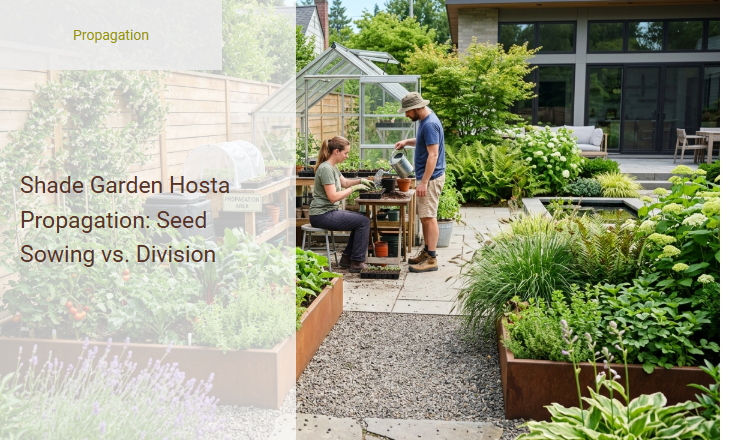
Expanding a lush shade garden can feel like an expensive, slow-going endeavor, leaving gardeners frustrated by the high cost of buying dozens of mature plants to fill empty, shadowed borders. Before choosing how to multiply your collection, it is vital to first understand the foundational role these foliage giants play as the structural backbone of woodland landscapes. Mastering hosta propagation not only saves hundreds of dollars but also grants you total control over your garden's evolving texture and design.
However, successful propagation requires a key stipulation: not all hostas behave the same way. While dividing a massive 'Empress Wu' yields an instant, genetically identical clone, sowing seeds from species like Hosta sieboldiana offers exciting genetic variety but requires years of patience and will not replicate variegated parent traits.
This article provides a comprehensive comparison between seed sowing and root division, evaluating the timelines, difficulty levels, and long-term results of each method to help you efficiently scale your shade sanctuary.
Introduction to Hosta Propagation: Seeds vs. Division
Hostas are the undisputed royalty of the shade garden, bringing lush foliage, varied textures, and reliable structure to dimmer landscape corners. To expand your collection of these resilient perennials, understanding the art of propagation is key. Gardeners typically choose between two main methods: sowing seeds and dividing mature clumps. Sowing seeds appeals to those seeking adventure, experimentation, and a vast quantity of plants at a low cost. Conversely, dividing mature hostas is the preferred route for gardeners who want to quickly duplicate their favorite cultivars while maintaining exact genetic traits. Both paths offer unique rewards for enhancing your woodland retreat.
The Mechanics of Sowing Hosta Seeds
The Biology of Hosta Reproduction
Hosta seeds develop in elongated pods that form along the flowering scapes after pollination occurs. Once these pods dry and turn brown, usually in late autumn, they split open to reveal small, flat, black seeds. Collecting these seeds is a delicate process, as they must be harvested before wind or rain disperses them naturally.
Genetic Diversity and Viability
Hosta seeds generally possess a high rate of viability if stored in cool, dry conditions, but they do not remain viable indefinitely. The most fascinating aspect of growing hostas from seed is genetic variability. Because hostas cross-pollinate easily, the offspring will rarely look identical to the parent plant. Sowing seeds is a journey into the unknown, where each seedling represents a completely unique hybrid with its own potential leaf shape, color variation, and growth habit.
Step-by-Step Guide to Seed Sowing
Starting hostas from seed indoors requires patience and attention to detail. Follow this structured timeline to successfully nurture your seeds into viable garden-ready plants.
- Prepare a sterile, well-draining seed-starting mix in shallow trays. Moisten the soil thoroughly before sowing.
- Sow the black seeds on the soil surface, pressing them gently so they make good contact, and cover them with a very thin layer of vermiculite or fine soil.
- Cover the trays with a plastic dome to maintain high moisture levels and place them under bright, indirect fluorescent or LED grow lights for 14 to 16 hours a day.
- Maintain a consistent temperature of around 65 to 70 degrees Fahrenheit. Seedlings should emerge within two to three weeks.
- Once the seedlings develop their second set of true leaves, transplant them carefully into individual small pots containing nutrient-rich potting soil.
Challenges and Rewards of Seed Propagation
While growing hostas from seed is a fulfilling endeavor, it is important to weigh the practical challenges against the potential botanical rewards before starting your trays.
- Long Timeline: It can take anywhere from three to five years for a seed-grown hosta to show its mature size, leaf texture, and true color patterns.
- Unpredictable Results: Many seedlings will end up as plain green or blue plants, meaning you must grow many specimens to find a truly remarkable one.
- The Thrill of Hybridizing: There is a unique excitement in breeding a completely new variety that has never existed in any other garden.
- Cost-Effective Abundance: Sowing seeds allows you to produce dozens of plants simultaneously for the price of a single packet of seed or for free from your own garden.
The Fundamentals of Hosta Division
Hosta division is a vegetative propagation method that involves physically separating a mature plant clump into multiple individual sections, each with its own root system and growing eyes. This technique relies on cloning, meaning every new plant is genetically identical to the original specimen. When you divide a hosta, you preserve the exact variegation, leaf puckering, and growth habit of the parent plant. This predictability makes division the absolute preferred method for multiplying named cultivars like 'Halcyon', 'Guacamole', or 'Empress Wu', ensuring your new additions look exactly as intended.
Timing Your Hosta Division for Success
To ensure a swift recovery and minimize transplant shock, timing your divisions to coincide with the plant's natural growth cycles is crucial. The most favorable period is early spring, specifically around , just as the sharp "eyes" or leaf spears begin to push through the soil. At this stage, the weather is cool and damp, and the root system is actively growing, which helps the new divisions establish quickly before the summer heat arrives.
An alternative window occurs in early autumn, around , when the summer heat begins to break. Dividing at this time allows the hosta roots several weeks to settle into the warm soil and store energy before the winter dormancy sets in.
Step-by-Step Guide to Dividing Hostas
Dividing mature hostas is straightforward if you use the right technique to protect the crowns and delicate root systems.
- Water the target hosta thoroughly the day before you plan to divide it to ensure the tissues are hydrated and the soil is loose.
- Dig a wide circle around the mature clump with a sharp spade, angling inward to lift the entire root ball out of the ground.
- Wash away excess soil from the roots with a gentle stream of water so you can clearly see the individual crowns and root structures.
- Carefully pry the crowns apart using your hands, or use a clean, sharp knife to slice through the tough crown tissue, ensuring each division has at least one eye and a healthy cluster of roots.
- Replant the new divisions immediately at the same depth as the original plant, firming the soil gently around the roots.
Nurturing Your New Propagations
Caring for Seedlings and Young Plants
Delicate seedlings transition to the outdoor environment slowly. They require consistent moisture and protection from the harsh elements during their first season.
- Keep the soil damp but never waterlogged to prevent root rot.
- Provide deep shade, as direct sunlight will easily scorch the thin leaves of young hostas.
Aftercare for Newly Divided Hostas
Mature divisions have a head start, but their disrupted root systems still demand focused care to establish properly in their new locations.
- Water deeply twice a week to encourage roots to grow deep into the soil profile.
- Apply a two-inch layer of organic mulch around the base of the plants to retain soil moisture and regulate temperatures.
Direct Comparison: Seed Sowing vs. Division
| Metric | Seed Sowing | Division |
|---|---|---|
| Difficulty | Moderate to High | Low |
| Cost | Very Low | Free (using existing plants) |
| Time to Maturity | 3 to 5 Years | 1 to 2 Seasons |
| Genetic Consistency | Highly Variable (New Hybrids) | Identical Clone of Parent |
Choosing the Best Method for Your Shade Garden
Your choice between sowing seeds and dividing mature clumps hinges on your gardening objectives and temperament. If you possess a high degree of patience and find joy in the unpredictable nature of plant breeding, starting hostas from seed is a deeply gratifying path. It allows you to cultivate a vast collection and potentially discover a spectacular new variety that is uniquely yours.
If you prefer immediate visual impact and want to guarantee that your new plants match the gorgeous colors of your existing landscape cultivars, dividing your mature hostas is the superior choice. This approach saves time and yields robust, garden-ready specimens within a single season. By selecting the method that aligns with your personal budget, timeline, and landscape goals, you can successfully fill your shaded borders with healthy, thriving hostas.
| Feature | Seed Sowing | Division |
|---|---|---|
| Genetic Outcome | Genetically variable; rarely identical to parent plant. | Clones; 100% identical to the parent cultivar. |
| Time to Maturity | 3 to 5 years for mature size and coloration. | 1 to 2 seasons for full landscape impact. |
| Yield Quantity | High volume; dozens of plants from a single seed pod. | Low volume; typically 2 to 5 plants per mature clump. |
| Success Rate | Moderate; vulnerable to damping-off and drying out. | Very high; utilizes pre-established root systems. |
| Optimal Timing | Late winter (indoors) or early spring. | Early spring (as eyes emerge) or late summer. |
| Primary Purpose | Hybridization and discovering new hosta varieties. | Multiplying known cultivars and managing plant size. |
Leave a comment