
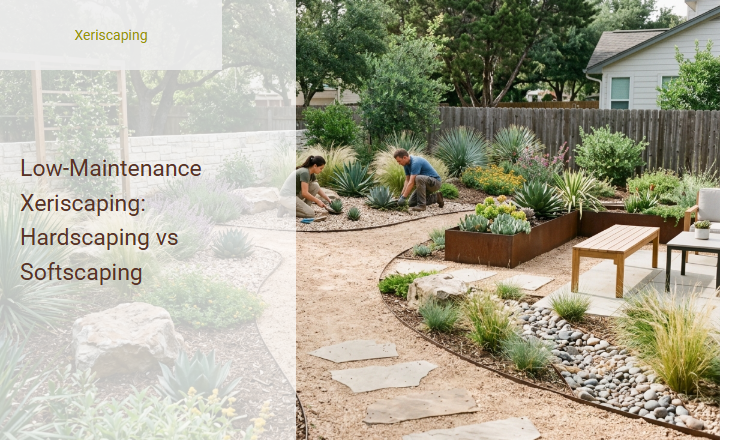
Maintaining a pristine, emerald-green lawn has become an exhausting chore, characterized by skyrocketing water bills, relentless weekend mowing, and constant weeding. In an era of increasing regional droughts and strict municipal water regulations, this traditional approach to residential landscaping is no longer ecologically or financially viable.
Adopting xeriscaping principles offers a modern, sustainable alternative that slashes your environmental footprint while granting you a beautiful, worry-free yard. Yet, a common misconception is that drought-tolerant design requires no upkeep at all; in reality, "low-maintenance" still requires deliberate planning and initial curation.
A truly successful system strategically pairs permanent hardscape features, such as decomposed granite pathways and river rock beds, with resilient softscape elements like native agave and drought-resistant lavender. Below, we analyze the distinct roles of hardscaping and softscaping in xeriscaping, helping you achieve the perfect, low-effort balance for your property.
Introduction to Xeriscaping
As water resources become increasingly scarce, homeowners are shifting away from thirsty, traditional turf grass toward more sustainable alternatives. Xeriscaping is a systematic approach to landscaping designed specifically for water conservation. Originating in arid regions, this practice has evolved into a mainstream movement focused on creating beautiful, resilient outdoor environments. The core of this methodology lies in balancing two primary components: hardscaping, which represents the non-living structural features, and softscaping, which encompasses the living botanical elements. Navigating the integration of these two styles forms the foundation of modern sustainable yard design.
Understanding Hardscaping in Xeriscapes
In xeriscaping, hardscaping serves as the foundational skeleton of the landscape. It refers to all the non-living, solid design features integrated into an outdoor space. Rather than relying on water-guzzling ground covers, hardscaping utilizes inert materials to provide structure, usability, and visual texture. These elements require virtually no water and can withstand harsh climatic conditions indefinitely.
- Gravel and River Rock: Used as ground covers to suppress weeds, prevent erosion, and create distinct pathways.
- Pavers and Flagstones: Ideal for building durable patios, walkways, and seating areas that require zero irrigation.
- Retaining Walls: Constructed from stone or concrete blocks to manage slopes, prevent soil erosion, and create terraced planting zones.
- Decks and Pergolas: Wooden or composite structures that expand living space and provide shade without increasing water demand.
Defining Softscaping for Arid Climates
While hardscaping provides structure, softscaping infuses life, color, and movement into a water-wise yard. In the context of xeriscaping, softscaping refers to the living, organic elements specifically selected for their ability to thrive with minimal supplemental irrigation. These botanical choices are highly adapted to the local climate and soil conditions, forming a self-sustaining ecosystem over time.
- Native Plants: Local wildflowers, shrubs, and grasses that are naturally adapted to regional rainfall patterns.
- Succulents and Cacti: Drought-tolerant plants designed to store water within their fleshy leaves or stems.
- Organic Mulch: A layer of bark or wood chips that insulates the soil, retains moisture, and suppresses weed growth.
- Ornamental Grasses: Deep-rooted grasses that add texture, wind movement, and visual height with minimal water needs.
The Low-Maintenance Benefits of Hardscaping
Hardscaping is a cornerstone of xeriscaping because of its unmatched ability to reduce yard upkeep. By substituting traditional grass lawns with structural elements, you eliminate some of the most demanding chores.
Zero Water Consumption
The most immediate benefit of hardscaping is the complete elimination of watering requirements for paved, gravel, or wooden areas. Unlike turf grass, stone paths and concrete patios remain pristine without a single drop of water.
Exceptional Durability and Longevity
Constructed from robust materials like natural stone, brick, and concrete, hardscape features resist extreme weather conditions. They do not die, fade from drought, or suffer from common lawn pests, ensuring decades of reliable service.
Superior Weed Control
Layering geotextile weed fabrics under gravel or paver joints significantly reduces weed germination. This minimizes the time spent pulling weeds or applying chemical herbicides to keep your pathways clean.
Long-Term Maintenance Convenience
Instead of weekly mowing, fertilizing, and aeration, hardscaped surfaces require only occasional sweeping or pressure washing. This frees up precious weekend hours for homeowners to relax and enjoy their outdoor space.
Eco-Friendly Advantages of Low-Water Softscaping
Integrating climate-appropriate plants into your landscape goes beyond mere aesthetics; it plays a vital role in supporting the local environment. Thoughtfully selected living elements provide ecological services that stone and concrete simply cannot replicate.
Biodiversity Support
Native plants and drought-tolerant flowers attract a diverse array of local pollinators, including bees, butterflies, and hummingbirds. This helps rebuild fragmented urban ecosystems and supports local wildlife populations.
Soil Health Preservation
The root systems of softscape plants hold the soil matrix together, preventing erosion caused by wind and heavy downpours. Furthermore, as organic mulch slowly decomposes, it feeds essential microorganisms and enriches the soil structure.
Natural Cooling Properties
Through a natural process called transpiration, plants release moisture into the air, which cools the surrounding microclimate. Unlike hard materials that trap heat, softscapes mitigate the hot, oppressive atmosphere of summer days.
Hardscaping vs. Softscaping Cost Analysis
When planning your sustainable yard conversion, understanding the financial dynamics of hardscaping versus softscaping is critical. Each approach has a distinct cost profile regarding upfront investment and long-term upkeep expenses.
| Factor | Hardscaping Elements | Softscaping Elements |
|---|---|---|
| Upfront Material Cost | High (pavers, natural stones, wood decking) | Low to Moderate (seeds, small plants, soil, mulch) |
| Installation Labor | High (requires professional grading, base prep, heavy lifting) | Moderate (can be completed as a DIY project over time) |
| Water Requirements | Zero (absolutely no irrigation needed) | Very Low (minimal watering needed after establishment) |
| Maintenance Expense | Very Low (sealing or sweeping every few years) | Low (annual pruning, seasonal mulching) |
| Lifespan / Durability | Permanent (lasts decades with minor shifting) | Variable (plants grow, mature, and eventually need replacing) |
Environmental Impact and Water Conservation
Designing a sustainable landscape requires careful consideration of how materials affect the ecosystem. While both hardscaping and softscaping reduce water consumption compared to a traditional lawn, they interact with the local environment in vastly different ways.
Excessive hardscaping can lead to the "urban heat island effect," where dark, dense materials absorb solar radiation and radiate heat back into the surroundings long after the sun goes down. Conversely, softscaping actively combats this phenomenon while contributing to carbon sequestration, locking carbon dioxide within the plant tissues and the soil.
According to water conservation studies, converting a traditional grass lawn to a balanced xeriscape can reduce outdoor residential water use by 50% to 75%, saving thousands of gallons of drinking water per household annually.
Achieving the Perfect Xeriscape Balance
The key to a visually stunning and highly functional yard is finding the sweet spot between hard and soft elements. An over-hardscaped yard can feel stark, sterile, and uncomfortably hot, while an over-softscaped yard might lack definition, structure, and functional living areas.
Define Functional Zones
Use structural elements like pavers or decking to establish clear patios and walkways. This secures a clean, stable area for dining and foot traffic, while framing the botanical areas beautifully.
Use Soft Elements to Soften Hard Borders
Plant delicate, spilling ornamental grasses or low-growing succulents along the edges of stone walls and gravel paths. This breaks up harsh geometric lines with organic textures and movement.
Incorporate Contrasting Colors
Contrast dark, rich organic mulches or bright green succulents against light-colored river rock or sandstone pavers. This contrast ensures that the landscape remains visually dynamic and attractive throughout every season.
Practical Steps to Design Your Low-Maintenance Yard
Transitioning from a high-maintenance green lawn to a balanced, sustainable xeriscape is a highly rewarding endeavor. Following a systematic planning process ensures a smooth transformation that will save water and work for years to come.
- Assess and Plan: Analyze your yard's sun exposure, soil type, and drainage patterns, then map out where you want functional hardscapes versus planted softscapes.
- Remove the Turf: Clear out the existing lawn using eco-friendly methods like sheet mulching or physical sod removal to prepare a clean slate.
- Install Hardscaping First: Lay down any heavy elements like retaining walls, patios, walkways, and irrigation lines before introducing soil amendments and plants.
- Amend the Soil: Improve your planting beds with organic compost to boost drainage and nutrient availability for your new low-water plants.
- Plant and Mulch: Position your chosen native plants and succulents in the ground, and immediately cover the open soil with a thick layer of organic mulch or decorative gravel to lock in moisture.
The Future of Sustainable Landscaping
Adopting xeriscaping represents a major leap forward in how we manage residential property in an era of changing climates. By shifting our perspective from water-dependent aesthetics to resilient, natural designs, we preserve vital water resources while creating low-stress sanctuaries.
Investing in a balanced xeriscape not only reduces municipal water bills and slashes weekend maintenance tasks but also elevates property value through striking, modern curb appeal. Making the transition today ensures a greener, more sustainable tomorrow for our local communities.
| Metric | Hardscaping (Non-Living) | Softscaping (Living) |
|---|---|---|
| Core Elements | Patios, pavers, stone, gravel, decks, retaining walls. | Plants, turf, shrubs, trees, mulch, soil. |
| Maintenance Tasks | Occasional sweeping, power washing, weed-barrier checks. | Regular watering, weeding, pruning, mowing, fertilizing. |
| Water Dependency | Zero. Eliminates irrigation needs. | High to moderate (lowered via xeriscaping/native plants). |
| Financial Profile | High upfront cost; negligible long-term upkeep expenses. | Low upfront cost; recurring costs for water, tools, replacements. |
| Lifespan | Decades; highly durable and weather-resistant. | Variable; susceptible to pests, disease, and seasonal death. |
Leave a comment