
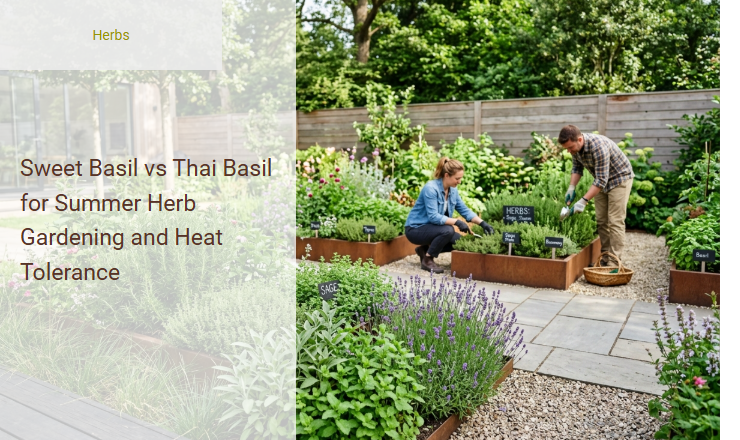
Many home gardeners watch in frustration as their lush culinary herbs wilt and bolt under the oppressive glare of mid-summer heat. While cultivating a vibrant, productive kitchen garden is the ultimate warm-weather aspiration, standard herbs often struggle when temperatures consistently climb.
Selecting the ideal cultivar grants you a resilient, high-yielding harvest that thrives even during July heatwaves. However, maximizing this potential requires acknowledging a vital botanical stipulation: different basil varieties possess distinct genetic tolerances and structural adaptations to thermal stress. For instance, while classic Sweet Genovese basil often scorches and goes to seed prematurely in intense heat, robust Thai basil varieties, such as 'Siam Queen', leverage sturdier stems and narrow leaves to withstand arid conditions.
This comparative guide will analyze the critical physiological differences between Sweet and Thai basil, evaluate their respective heat thresholds, and outline actionable cultivation strategies to ensure your summer herb garden remains highly productive all season long.
Introduction: The Ultimate Summer Basil Showdown
Nothing defines the vibrant energy of summer gardening quite like the aroma of fresh herbs basking in the sun. Among the absolute favorites of the warm-season garden, basil reigns supreme, offering lush foliage and incomparable aromas. As the heat rises, gardeners often find themselves choosing between two heavyweights of the herb world: Sweet Basil and Thai Basil. This head-to-head comparison explores how these two popular varieties perform when the summer heat intensifies, helping you decide which specimen deserves a coveted spot in your sunny garden beds.
Botanical Profiles: Understanding the Contenders
Sweet Basil (Ocimum basilicum)
Sweet Basil is characterized by its large, delicate, and slightly cupped leaves that boast a bright, glossy green hue. The stems are relatively tender, fleshy, and light green, while the small, delicate flowers emerge in white or pale lavender spikes. Originating in India and the Mediterranean, this plant has been bred for centuries to emphasize leaf size and tender texture.
Thai Basil (Ocimum basilicum var. thyrsiflora)
Thai Basil stands out with its dramatic physical contrast, featuring narrow, spear-like leaves with lightly serrated edges. Its sturdy, square-shaped stems are a deep, striking purple, which matches the dark violet flower bracts that bloom in tight, conical clusters. Native to Southeast Asia, this variety is physically adapted to withstand intense tropical climates.
Heat Tolerance: Which Basil Beats the Summer Scorch?
When summer temperatures soar past 90°F, the differences in resilience between these two herbs become readily apparent. Thai Basil possesses a superior genetic adaptation to extreme heat and high humidity, maintaining its structural integrity and leaf turgor even during intense heat waves. Its sturdy purple stems assist in maintaining hydration, allowing the plant to display incredible thermal resilience in tropical and subtropical zones. Sweet Basil, while a sun-lover, is far more susceptible to heat-induced stress. During a severe heat wave, its tender, moisture-rich leaves can quickly wilt, and the plant may prematurely bolt in an effort to reproduce before the heat overcomes it.
Sun Exposure: Sunshine Requirements for Maximum Growth
Both basil varieties require a substantial amount of daily sunlight to fuel their rapid summer growth, with a baseline requirement of six to eight hours of direct sun. However, their management differs slightly as the mid-summer sun reaches its peak intensity. Thai Basil thrives under relentless, unfiltered full sun, utilizing the intense light to concentrate its essential oils. Sweet Basil also loves the sun but benefits significantly from light afternoon shade in regions experiencing extreme desert heat. Providing filtered light during the hottest hours of the day prevents the delicate, pale green leaves of Sweet Basil from scorching or developing sun scald.
Watering and Soil: Sustaining Basil Through Dry Spells
To sustain these leafy herbs through dry summer spells, you must maintain a consistent watering routine and utilize rich, well-draining soil. Both varieties prefer soil that is consistently moist but never waterlogged, as soggy conditions can quickly lead to root rot. To protect Sweet Basil, you must keep the top two inches of soil evenly moist, watering deeply at the base of the plant to support its shallow root system. Thai Basil is slightly more forgiving of brief dry spells, but to maximize leaf production, you should ensure excellent soil drainage while applying a thick layer of organic mulch to retain moisture and keep soil temperatures cool during prolonged dry spells.
Growth Habits and Pruning: Managing Summer Growth Spurts
Sweet Basil's Growth and Pruning
Sweet Basil exhibits a rounded, bushy growth habit, reaching heights of 18 to 24 inches. To manage its rapid summer growth and prevent early bolting, prune the plant every two weeks by pinching the central stem just above a leaf node. This encourages lateral branching, resulting in a bushier plant with a continuous supply of tender leaves.
Thai Basil's Growth and Pruning
Thai Basil grows in a more upright, compact, and shrub-like form, often reaching up to 20 inches in height. Because it produces flowers much more readily than Sweet Basil, pruning requires vigilant removal of the purple flower spikes. Pinching back these buds as soon as they appear redirects the plant's energy away from seed production and toward foliage growth, keeping the stems from turning woody.
Pest and Disease Resistance in Hot, Humid Climates
Summer gardens often bring unwanted challenges in the form of pests and fungal pathogens. In warm, humid climates, Sweet Basil is notoriously susceptible to downy mildew, caused by the oomycete Peronospora belbahrii, which manifests as yellowing leaves with grey, fuzzy spores underneath. Thai Basil demonstrates a much higher natural resistance to downy mildew, making it a safer choice for humid coastal areas. When it comes to pests like aphids, spider mites, and whiteflies, both plants are targets, but the tougher, oil-rich leaves of Thai Basil make it slightly less appealing to chewing pests than the soft, sweet leaves of its Mediterranean counterpart.
Flavor Profiles: Sweet and Mild vs. Bold and Spicy
The intense summer heat plays a direct role in elevating the concentration of essential oils within the leaves of both herbs. Sweet Basil offers a mild, sweet flavor characterized by notes of anise, clove, and a subtle peppery finish. Thai Basil provides a bold, savory, and highly aromatic profile dominated by strong licorice, star anise, and spicy clove undertones that hold up exceptionally well under high cooking temperatures.
| Basil Variety | Primary Flavor Notes | Key Chemical Compounds | Best Culinary Applications |
|---|---|---|---|
| Sweet Basil | Sweet, mild, clove-like, peppery anise | Linalool, Eugenol | Pesto, Caprese salad, marinara sauces, fresh garnishes |
| Thai Basil | Bold licorice, sharp star anise, spicy clove | Anethole, Methyl chavicol | Thai green curry, pho, stir-fries, spicy noodle dishes |
Harvesting and Preservation: Locking in Summer Flavors
The ideal time to harvest basil is in the early morning when the cool air preserves the essential oils at their highest concentration. Always harvest by cutting the stems just above a set of two leaves, which encourages new stems to grow. To preserve Sweet Basil, freezing the leaves in olive oil or processing them immediately into pesto is the most effective method, as drying causes the leaves to lose their signature sweet flavor and turn brown. Thai Basil, with its sturdier structure and higher oil content, dried surprisingly well and can also be frozen in airtight bags or steeped in vinegar and oils to capture its spicy licorice essence for winter use.
The Verdict: Choosing the Right Basil for Your Summer Garden
Your choice between these two exceptional herbs depends on your local climate conditions and your kitchen aspirations. If you experience moderate summer heat, love classic Italian cuisine, and can provide a bit of afternoon shade, Sweet Basil is an absolute necessity for your garden. If you live in a region with scorching summer temperatures, high humidity, or want to explore vibrant Southeast Asian recipes, Thai Basil is the clear champion due to its sheer durability and heat tolerance. Select the variety that aligns with your regional climate and culinary goals to ensure a bountiful, fragrant harvest all summer long.
| Heat Metric | Sweet Basil | Thai Basil |
|---|---|---|
| Tolerance Level | Moderate; struggles in extreme heat. | High; thrives in intense heat and humidity. |
| Optimal Range | 70°F – 85°F (21°C – 29°C) | 80°F – 95°F+ (27°C – 35°C+) |
| Stress Response | Wilts easily, bolts (flowers) quickly, flavor turns bitter. | Resists wilting, delays bolting, retains pungent flavor. |
Leave a comment