
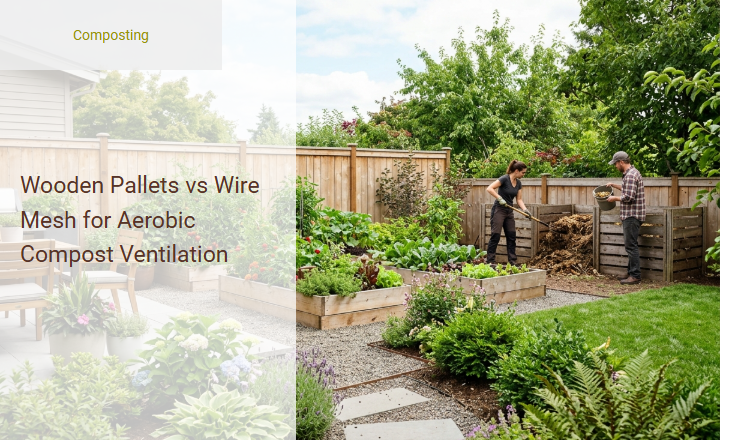
Achieving the perfect balance of passive airflow in a compost pile is a notoriously frustrating challenge, often resulting in foul, anaerobic odors, soggy patches, and stalled decomposition. Before choosing your bin materials, it is crucial to recognize that aerobic microbes require continuous, unobstructed oxygen circulation to efficiently break down organic matter. Selecting the optimal aeration base grants you significantly faster, nutrient-rich yields while virtually eliminating the labor-intensive chore of manual pile turning.
However, success is highly dependent on your specific operational scale; for instance, while heavy-duty heat-treated wooden pallets excel at supporting high-volume, static piles, flexible steel wire mesh provides unmatched multi-directional ventilation for compact, modular bins. This comprehensive comparison evaluates wooden pallets versus wire mesh across durability, airflow efficiency, thermal retention, and cost, helping you design a high-performance composting system tailored to your backyard or farm.
Introduction to Aerobic Composting and Ventilation
Aerobic composting is a natural biological process where microorganisms break down organic materials in the presence of oxygen. To keep these beneficial microbes active, passive ventilation is crucial. Without a continuous supply of fresh air, the composting pile can quickly turn anaerobic, producing unpleasant odors and slowing decomposition to a crawl. Effective ventilation ensures that oxygen reaches the center of the pile while maintaining the necessary heat retention required to destroy weed seeds and pathogens.
To manage this balance of airflow and containment, DIY composters frequently turn to two primary containment options: wooden pallets and wire mesh. Both materials offer distinct structural advantages for holding organic waste while promoting the essential gaseous exchange needed for a healthy, high-temperature compost pile.
The Mechanics of Wooden Pallets in Compost Bin Design
Structural Stability and Volume Containment
Wooden pallets are naturally heavy-duty structures built to withstand significant weight. When joined together to form a three-sided or four-sided bin, they provide exceptional structural stability. This robust framework allows gardeners to pile up large volumes of heavy organic matter, such as wet leaves, soil, and kitchen scraps, without worrying about the walls bowing or collapsing under the pressure.
Natural Slat Spacing for Passive Airflow
The physical design of a wooden pallet inherently supports passive aeration. The pre-designed gaps between the wooden slats act as natural vents. As heat rises from the core of the decomposing organic pile, it draws cool, oxygen-rich air through these side slats. This process creates a chimney effect that continuously feeds the microbes at the center without allowing too much heat to escape, balancing insulation and aeration perfectly.
Advantages and Limitations of Wooden Pallet Ventilation
Using wooden pallets to construct a compost bin brings several notable advantages, but it also presents specific limitations that gardeners must navigate to ensure safety and efficiency.
Key Advantages:
- Cost-Effectiveness: Wooden pallets are often sourced for free from local businesses, making them incredibly budget-friendly.
- Excellent Insulation: The thick wood slats retain microbial heat much better than thin barriers, keeping the pile active during cooler seasons.
Key Limitations:
- Limited Airflow in Corners: Because the corners of pallet bins are blocked by thick wooden blocks, oxygen flow can become restricted in these tight spots, leading to localized anaerobic zones.
- Susceptibility to Wood Rot: Constant contact with moisture and active fungi will cause the untreated wood of the pallets to decay over time.
- Chemical Treatments: Some pallets are treated with Methyl Bromide (marked MB), a toxic pesticide, which is unsafe for organic composting. Composters must strictly look for pallets marked Heat Treated (HT) instead.
The Role of Wire Mesh in High-Airflow Composting
Maximizing the Surface-to-Opening Ratio
Wire mesh, such as galvanized hardware cloth or classic chicken wire, represents the peak of high-airflow composting structures. Unlike solid barriers, wire mesh is composed mostly of open space. This incredibly high surface-area-to-opening ratio ensures that almost the entire outer boundary of the compost pile is directly exposed to the surrounding atmosphere.
Unrestricted Oxygen Penetration
Because there are no solid wooden barriers to block the wind, fresh air can penetrate the pile from any direction. Oxygen moves easily into the outermost layers of the organic matter, encouraging rapid aerobic decomposition. This continuous supply of oxygen keeps the aerobic bacteria highly active, allowing them to break down carbon and nitrogen sources at an accelerated rate throughout the entire composting cycle.
Benefits and Drawbacks of Wire Mesh Structures
While wire mesh excels at maximizing airflow, it is important to weigh its high-performance ventilation against its physical and thermal limitations.
Key Advantages:
- Maximum Aeration: Unmatched passive oxygen flow keeps the pile thoroughly aerated without frequent maintenance.
- Lightweight Design: Wire mesh bins are incredibly easy to move, disassemble, or relocate compared to heavy wooden structures.
- Ease of Turning: Many wire mesh bins can simply be lifted upward, leaving the compost pile standing, which makes turning and mixing the material incredibly straightforward.
Key Drawbacks:
- Severe Heat Loss in Winter: The open structure allows heat to escape rapidly, which can cause the composting process to halt entirely during freezing winter temperatures.
- Susceptibility to Sagging: Over time, the heavy weight of shifting organic materials can cause the flexible wire to bow, sag, or lose its cylindrical shape.
- Lack of Pest Protection: The wide openings of basic chicken wire offer very little protection against rodents or other pests attracted to kitchen scraps.
Head-to-Head: Airflow and Aeration Efficiency
When comparing the two materials directly, wire mesh holds a clear advantage in raw oxygen delivery. Because it features a nearly entirely open perimeter, it delivers oxygen to the outer layers of the pile far more efficiently than wooden pallets. This high-flow environment reduces the turning frequency required to keep the pile smelling fresh and decomposing quickly.
However, the structural differences alter how the core of each pile behaves. Wooden pallets restrict airflow slightly but redirect it into a natural chimney effect. This restricted airflow actually works to the pallet bin's advantage by keeping the core temperature high, which accelerates the decomposition of tougher materials. In contrast, while wire mesh maximizes oxygen at the borders, its core can dry out quickly, requiring more frequent watering and occasional turning to bring dry outer materials into the damp center.
Durability, Longevity, and Environmental Resilience
A compost bin must survive constant exposure to high moisture, acidic organic acids, microbial heat, and harsh weather. Galvanized wire mesh typically provides superior longevity compared to standard wooden pallets. The zinc coating on galvanized hardware cloth prevents rust and decay, allowing the structure to endure for many years without degrading, even when constantly damp.
Wooden pallets, being an organic material, are naturally prone to decay. The very microbes that break down your compost will eventually begin to digest the wood of the pallets. While heat-treated hardwoods can last for three to five seasons, softwoods will rot and weaken much faster under constant moisture exposure. To prolong the lifespan of a wooden pallet bin, gardeners must often line the interior or prepare to replace individual pallets every few years.
Cost, Sourcing, and Ease of Construction
Building a compost bin is a great weekend project, but the resource investment varies dramatically depending on whether you choose wooden pallets or wire mesh.
Here is a step-by-step breakdown of how these two materials compare in terms of sourcing, cost, and physical construction labor:
- Sourcing: Wooden pallets are highly abundant and can often be collected for free from shipping yards, construction sites, or local retail shops. Wire mesh, especially heavy-duty galvanized hardware cloth, usually must be purchased brand new from a hardware store.
- Initial Cost: A pallet bin can cost literally nothing if you use reclaimed screws or zip-ties. A quality wire mesh bin requires an upfront financial investment for the rolls of mesh, support stakes, and heavy-duty wire cutters.
- Construction Effort: Building a pallet bin requires moderate physical strength to transport, position, and fasten heavy wooden frames together. Conversely, assembling a wire mesh bin requires less brute strength but calls for careful measuring, cutting, and shaping of stiff wire, which can sometimes result in sharp edges.
Selection Guide: Matching Materials to Composting Styles
Choosing the right material depends heavily on your local environment, backyard layout, and gardening goals. Use the following comparison matrix to determine which composting style fits your needs best.
| Feature | Wooden Pallets | Wire Mesh |
|---|---|---|
| Climate suitability | Excellent for cold, windy, or dry climates due to high heat and moisture retention. | Best for warm, humid, or wet climates where excess moisture needs to evaporate. |
| Space and aesthetics | Requires a larger footprint; has a rustic, solid, and neat backyard appearance. | Ideal for small yards; has a low visual profile and is easily tucked away. |
| Compost volume | Excellent for high volumes of heavy garden waste and large piles. | Best for moderate to small volumes of light yard waste and leaves. |
Optimizing Your Choice for Successful Aerobic Composting
Both wooden pallets and wire mesh bring unique strengths to the backyard composter. Pallets excel at retaining heat, holding massive volumes, and providing a sturdy, insulated structure. Wire mesh shines when it comes to maximizing airflow, offering lightweight portability, and enabling effortless turning. Choosing between them does not have to be an all-or-nothing decision.
A highly effective approach is to combine both materials into a single, optimized design. You can use three wooden pallets to construct the back and side walls of your bin, providing unbeatable structural support and insulation. Then, install a removable front panel made of galvanized wire mesh. This hybrid design allows you to easily monitor your compost, enjoy maximum ventilation from the front, and keep the pile perfectly insulated and contained on all other sides for optimal aerobic decomposition.
| Feature | Wooden Pallets | Wire Mesh |
|---|---|---|
| Cost & Sourcing | Low initial cost; easily sourced or repurposed. | Higher upfront cost; long-term investment. |
| Durability & Lifespan | Short lifespan; prone to rotting, splintering, and pest infestation. | Extremely durable; resistant to rust, pests, decay, and fire. |
| Ventilation & Visibility | Restricted airflow; blocks visual inventory checks. | Excellent 360° airflow; high visibility of stored contents. |
| Hygiene & Maintenance | Hard to sanitize; absorbs moisture, odors, and bacteria. | Easy to wash and sanitize; non-porous material. |
| Space Efficiency | Bulky; difficult to collapse or fold flat for storage. | Often collapsible/nestable; saves warehouse space when empty. |
Leave a comment