
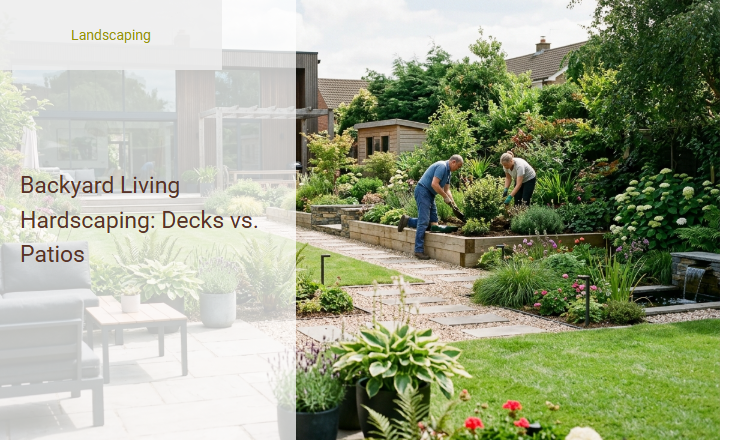
Choosing between a deck and a patio can feel overwhelming. Homeowners often struggle to balance aesthetic desires, long-term maintenance, and upfront costs when planning their outdoor transformation.
Before diving into design plans, it is essential to first analyze how your local climate and soil conditions impact hardscape longevity. Selecting the right structure grants you a seamless transition to the outdoors, instantly boosting both your property's market value and your daily quality of life. However, we must establish a key stipulation: your yard's unique topography will ultimately dictate feasibility. For instance, a steeply sloped yard naturally favors an elevated pressure-treated wood deck, whereas flat terrain is ideal for a low-profile stone paver patio.
To guide your decision, this article breaks down the essential differences between these two options, comparing installation costs, lifespan, and maintenance requirements to help you choose the perfect fit for your home.
Choosing Your Outdoor Oasis: Decks vs. Patios
Imagine stepping outside on a warm summer evening, drink in hand, to a beautifully designed outdoor sanctuary right in your backyard. As homeowners increasingly seek to extend their living areas beyond four walls, backyard hardscaping has surged in popularity. Creating a functional, attractive outdoor space not only enhances your daily life but also adds significant value to your property.
When planning your backyard transformation, you will inevitably face the classic debate: should you build a deck or install a patio? Both options offer unique aesthetic appeal and functional benefits, yet they serve very different structural purposes. Making the right choice requires understanding how each option aligns with your property, budget, and lifestyle goals.
Understanding Decks: Elevated Living Spaces
A backyard deck is an elevated, open-air platform typically constructed adjacent to the main house. Because they are raised off the ground, decks require structural support systems like posts, beams, and joists. This elevation allows them to extend your indoor living spaces level with your home's main floor, providing a seamless transition from inside to outside.
Decks are highly customizable and can be built using a variety of materials depending on your aesthetic preferences and budget:
- Natural Wood: Classic options like cedar, redwood, and pressure-treated pine offer timeless warmth and natural beauty.
- Composite Materials: Engineered products made of wood fibers and recycled plastics provide high durability and look like real wood.
- PVC and Vinyl: Entirely synthetic options that resist moisture and insects exceptionally well.
One of the greatest advantages of a deck is the unique vantage point it offers. Elevating your outdoor area allows you to capture scenic views, look over your entire backyard, and create a dramatic architectural feature for your home.
Understanding Patios: Grounded Elegance
A patio is a ground-level outdoor space installed directly onto the earth. Unlike decks, patios do not require safety railings or complex support posts, making them feel like a natural extension of the soil. They are highly versatile structures that can be designed in almost any shape or size, anchoring your outdoor living space directly to the terrain.
The materials used to construct patios are known for their earthy appeal and long-term durability:
- Concrete Pavers: Available in numerous shapes and colors, they offer a highly customizable and uniform look.
- Poured or Stamped Concrete: A highly cost-effective option that can be textured to mimic stone or brick.
- Natural Stone: High-end materials like slate, flagstone, or travertine that provide a unique, organic aesthetic.
- Brick: Classic and durable, offering a traditional warmth that complements historical homes.
Because they sit flat against the earth, patios blend seamlessly with the surrounding landscape. They allow for easy integration of gardens, pathways, and lawns, creating a cohesive flow between your structural living space and the natural world.
Upfront Costs and Long-Term Investment
When budgeting for your backyard project, understanding both the initial installation costs and the long-term value is essential. Patios generally cost less to install upfront than decks, primarily because they require less engineering, framing, and safety hardware. Decks, particularly those built on slopes or using premium composite materials, involve higher labor costs and structural permits.
| Feature | Deck (Wood / Composite) | Patio (Pavers / Stone) |
|---|---|---|
| Average Initial Cost | Moderate to High | Low to Moderate |
| Labor Complexity | High (framing, permitting) | Moderate (excavation, grading) |
| Material Cost Range | Varies widely by material type | Highly economical to premium stone |
| Long-Term Value Added | Excellent for elevated homes | Exceptional durability adds steady value |
While a patio may offer lower upfront entry costs, a high-quality deck can add significant architectural interest to homes with walk-out basements or steep yards. Your choice should balance your immediate budget with the long-term enjoyment and structural needs of your property.
Maintenance and Upkeep: Wood vs. Stone
Every outdoor structure requires some level of upkeep to stay beautiful and safe throughout the seasons. The type of maintenance you are willing to perform is a major factor when deciding between wood and stone surfaces.
The High Maintenance of Wood Decks
Wooden decks demand regular attention to prevent decay, rot, and splintering. Homeowners must wash, sand, and apply fresh sealant or stain every few years. Neglecting this maintenance can lead to structural compromise and an unsightly appearance, meaning you must be prepared to invest time or money into continuous preservation.
The Low Maintenance of Stone and Paver Patios
Patios are highly resilient and require far less hands-on care. Regular maintenance typically involves sweeping away debris, occasional power washing, and clearing out occasional weeds that sprout between joints. Polymeric sand can be applied to joint gaps to prevent weed growth and shifting, offering a set-and-forget peace of mind that appeals to busy homeowners.
Topography and Terrain: How Your Yard Dictates the Choice
Your property's physical characteristics often make the deck versus patio decision for you. If your yard features dramatic slopes, uneven soil, or a walk-out basement, building a deck is almost always the superior structural option. Decks can be built to any height, leveling out a steep drop-off and turning unusable vertical space into a functional entertainment zone.
"A sloped yard makes a traditional patio highly expensive due to the massive earth-moving and retaining walls required. In contrast, a deck easily steps over uneven terrain using sturdy piers."
Conversely, flat properties are perfect candidates for patios. Installing a patio on a flat surface requires minimal grading and excavation, making the installation process swift and straightforward. Trying to build a high deck on a flat, low-to-the-ground yard can look awkward and may create moisture trapping underneath, whereas a ground-level patio looks perfectly at home.
Lifespan and Durability Over Time
How well your outdoor space holds up against the elements dictates its true value. Patios constructed from natural stone, concrete, or brick are exceptionally durable. They are impervious to wood-boring pests, cannot rot, and are highly fire-resistant. A well-installed patio can easily last thirty to fifty years with minimal structural degradation, enduring severe weather changes with grace.
Decks have a shorter lifespan, though material choices play a huge role. Natural wood decks usually last between fifteen and twenty-five years, depending on wood species and climate exposure. Over time, wood is susceptible to splitting, warping, moisture rot, and termite damage. If you choose high-end composite decking, you can extend that lifespan to twenty-five to thirty years or more, enjoying superior resistance to fading and pests without the degradation issues of natural timber.
Lifestyle and Functionality: How Do You Use Your Space?
How you plan to spend your time outdoors should heavily influence your final design choice. Your daily habits, entertainment style, and desired amenities will naturally point you toward one structure over the other.
Embracing the Elevated Deck Lifestyle
Decks excel at providing clean, elevated platforms for dining and relaxing. Because they are level with your home's main living areas, they make serving meals and transitioning from the kitchen incredibly easy. They are perfect for:
- Hosting outdoor dinner parties with scenic, high-angle views of your neighborhood.
- Creating a sunbathing retreat free from ground-level moisture and pests.
- Adding visual architectural interest to multi-story homes.
Enjoying Grounded Patio Activities
Patios are unmatched when it comes to supporting heavy outdoor features. Since they sit directly on the ground, weight limits are not an issue. Patios are the ideal choice for:
- Installing heavy stone fire pits or cozy outdoor fireplaces.
- Building fully equipped outdoor kitchens with heavy stone counters and appliances.
- Supporting the immense weight of a fully loaded hot tub or spa.
Return on Investment (ROI) and Resale Value
Adding outdoor living space is one of the smartest ways to boost your home's market appeal. Prospective homebuyers highly value functional backyard areas, viewing them as additional square footage. Historically, wooden decks have offered some of the highest returns, often yielding an ROI of sixty-five to seventy-five percent at resale because of the immediate visual impact and perceived luxury of elevated wood framing.
Patios also hold strong appeal, typically returning around fifty-five to sixty-five percent of their installation cost. However, they make up for a slightly lower ROI percentage with their incredible longevity. Buyers recognize that a stone or paver patio requires zero immediate maintenance, making it highly attractive to those seeking a low-maintenance lifestyle. Whichever you choose, you are adding undeniable market value and buyer appeal to your property.
Making the Final Decision for Your Backyard
Choosing between a deck and a patio requires balancing your budget, yard terrain, maintenance commitment, and intended lifestyle. A deck is the clear winner for sloped yards, multi-level homes, and those who prioritize elevated views and seamless indoor-outdoor flow. It represents a classic investment that instantly upgrades your home's exterior profile.
On the other hand, a patio is the perfect match for flat properties, homeowners seeking a low-maintenance retreat, and anyone wishing to incorporate heavy features like fire pits, hot tubs, or heavy outdoor kitchens. By matching your home's unique geography with your personal entertainment goals, you will create a stunning outdoor oasis that your family will cherish for decades to come.
| Feature | Decks | Patios |
|---|---|---|
| Elevation & Terrain | Elevated structure; ideal for sloped or uneven yards. | Ground-level; requires flat, level ground. |
| Materials | Wood (pressure-treated, cedar, redwood) or composite. | Concrete, pavers, flagstone, brick, or gravel. |
| Average Cost | Higher ($30 – $75 per sq. ft. installed). | Lower ($5 – $35 per sq. ft. installed). |
| Lifespan & Maintenance | 10–25 years; requires periodic washing, staining, or sealing. | 25+ years; low maintenance (occasional weeding and sealing). |
| Permits & HOA | Often requires building permits and structural inspections. | Rarely requires permits unless changing land drainage. |
| ROI (Resale Value) | Higher estimated return (60% – 75%). | Moderate estimated return (50% – 60%). |
Leave a comment