
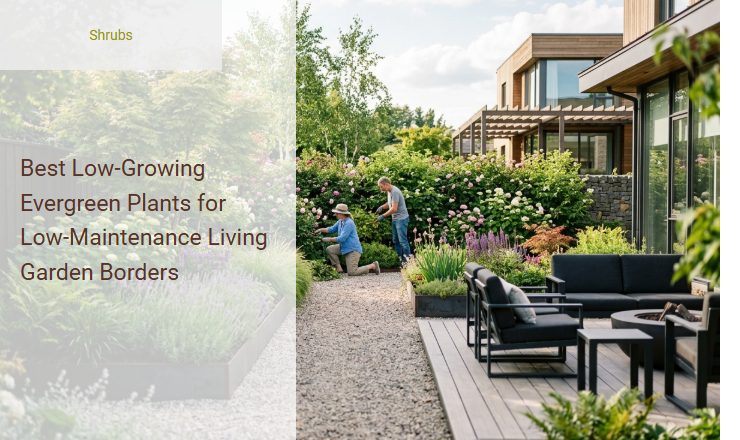
Many homeowners find themselves trapped in a relentless cycle of weeding, shearing, and replanting just to keep their garden borders looking presentable. Traditionally, defining these garden boundaries has relied on high-effort annuals or aggressive shrubs that quickly outgrow their welcome. Transitioning to strategic, low-growing evergreens grants you a permanent, living frame that delivers year-round structure and rich color with a fraction of the effort.
To manage expectations, a crucial stipulation must be made: "low-maintenance" does not mean "zero-maintenance." These specimens still require proper soil preparation and consistent initial watering to successfully establish. Once settled, however, hardy selections like Juniperus horizontalis (Creeping Juniper) and dwarf Boxwood varieties prove that long-term durability does not require sacrificing aesthetic appeal.
In this guide, we will break down the premier low-growing evergreen species, evaluating their soil compatibility, sunlight needs, and spacing requirements to help you design a beautiful, self-sustaining garden border.
Read also: Boxwood vs Japanese Holly for Low Hedges
The Appeal of Low-Growing Evergreen Borders
Creating a beautiful garden requires a balance of form, color, and structure that persists through every season. Low-growing evergreen borders offer the perfect solution for defining garden spaces, cleanly outlining pathways and flower beds while keeping maintenance to a minimum. Unlike deciduous plants that leave gaps in the winter, these resilient borders provide a permanent green framework that holds the landscape together year-round.
Why Choose Evergreens for Your Border Design
Integrating evergreens into your border design brings both practical advantages and aesthetic value to your outdoor space. These hardy plants act as living barriers and functional groundcovers that improve the health and appearance of your garden.
- Natural weed suppression through dense, light-blocking foliage.
- Effective soil erosion control on slopes and bed edges.
- Continuous color that bridges the seasonal gaps when other plants go dormant.
Creeping Thyme: The Fragrant and Resilient Groundcover
Aromatic and Durable Ground Shield
This low-profile plant is an exceptional choice for pathways and border edges. Creeping Thyme releases a soothing herbal fragrance when stepped on, while its high drought tolerance ensures it thrives in dry, sunny conditions. During the summer, it produces a stunning display of tiny purple flowers that attract pollinators.
Dwarf Boxwood: Classic Structure and Tailored Edges
Symmetrical and Low-Maintenance Structure
For gardeners seeking a clean, formal aesthetic, this plant is unmatched. Dwarf Boxwood features a slow, compact growth habit that makes it incredibly easy to shape into tight, neat edges. It maintains its deep green color throughout the coldest months, providing a structured boundary for your garden beds.
Evergreen Candytuft: Year-Round Foliage with Spring Brilliance
Brilliant White Springtime Show
Providing a striking contrast in any landscape, this sub-shrub offers year-round visual interest. Evergreen Candytuft features dark green, leathery leaves that remain vibrant through the winter, followed by a dramatic explosion of white blossoms in the spring that smothers the foliage.
Dwarf Mondo Grass: Textural Modernism for Paths and Borders
Contemporary Low-Profile Texture
Modern landscapes benefit greatly from the clean lines of this grass-like plant. Dwarf Mondo Grass forms dense, turf-like tufts of dark, strap-like leaves that require no mowing. It is ideal for modern borders, rock gardens, or planting between stepping stones.
Creeping Phlox: A Vibrant Carpet of Color
A Cascading Spring Carpet
This vigorous grower is perfect for softening hard edges and draping over stone borders. Creeping Phlox retains its needle-like evergreen foliage all year, but it truly shines in spring when it produces a dense, solid blanket of pastel flowers.
Selecting the Right Site: Soil and Sun Requirements
Before planting, it is crucial to match your chosen evergreen border plants with the appropriate environmental conditions. Assessing sun exposure and ensuring well-draining soil are the most critical steps to prevent root rot and ensure the long-term health of your borders.
Planting Distance and Spacing for a Seamless Look
Achieving a continuous, solid border requires careful calculation of planting distances. Proper spacing ensures the plants fill in quickly to form a seamless edge without overcrowding each other.
- Measure the mature spread of your chosen evergreen species.
- Space the plants slightly closer than their mature width for a faster-filling border.
- Stagger the plants in a shallow zigzag pattern to create a denser, more natural look.
Simple Maintenance Tips for Pristine Borders
While low-growing evergreens are highly resilient, a small amount of routine care will keep them looking immaculate. Implement these basic practices to maintain sharp edges and healthy foliage throughout the seasons.
- Prune or shear light-growth Boxwoods and Candytuft after their primary blooming or growth spurts.
- Apply a thin layer of organic mulch to conserve moisture and suppress weeds.
- Provide deep watering during periods of extreme winter dry spells to prevent windburn.
Summary
Creating a beautiful, low-maintenance garden border is easily achieved by selecting the right low-growing evergreen plants. These hardy species offer year-round color, texture, and structure to your landscape without requiring constant pruning or seasonal replanting. Ideal for defining garden pathways, framing flowerbeds, and suppressing weeds, top choices include creeping thyme, dwarf conifers, liriopes, and low-growing boxwoods.
These versatile plants establish a dense, living carpet that retains its lush foliage even during the harsh winter months. By incorporating drought-tolerant and slow-growing evergreens, homeowners can significantly reduce watering, mulching, and trimming chores. Whether you are looking to prevent soil erosion on a slope or simply want a clean, manicured edge, these resilient evergreen ground covers provide an effortless, cost-effective solution for a vibrant and structurally sound garden layout throughout all four seasons.
Leave a comment