
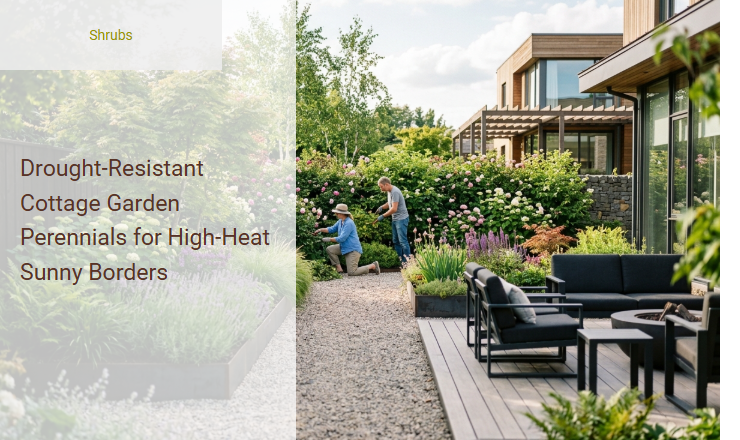
Maintaining a lush, romantic garden under the baking summer sun often feels like a losing battle, leaving passionate horticulturists with wilted stems and parched, dusty borders. Traditionally, the classic cottage aesthetic relies on a moisture-rich, temperate climate, making it seem incompatible with increasingly hot, dry regions. Fortunately, pivoting to heat-tolerant species grants you an overflowing, vibrant landscape without the burden of skyrocketing water bills.
To succeed, we must establish a key horticultural stipulation: even the toughest species require consistent moisture during their first growing season to develop deep, resilient root systems. Once established, robust perennials like aromatic Lavandula (Lavender) and golden Achillea (Yarrow) serve as proof that drought tolerance does not require sacrificing soft textures or rich color palettes.
Below, we outline the premier low-water perennials for high-heat borders, detailing their specific soil requirements, companion planting strategies, and seasonal maintenance schedules to ensure a thriving, water-wise sanctuary.
Read also: Potentilla vs Mock Orange for Sunny Borders
Redefining the Cottage Garden for High Heat
The traditional English cottage garden is a beloved horticultural icon, celebrated for its dense, romantic sprawl of moisture-loving delphiniums, lush roses, and damp woodland pathways. However, as shifting climates bring hotter, drier summers, maintaining these water-thirsty landscapes has become increasingly impractical and environmentally taxing. Gardeners face the modern necessity of transitioning to high-heat, drought-resistant landscaping without sacrificing the whimsical charm of a bygone era.
Fortunately, embracing a climate-resilient approach does not mean resigning your yard to a barren, desert-like expanse. By selecting tough, water-wise alternatives, you can recreate the classic, overflowing abundance of a traditional cottage border. A romantic aesthetic is entirely achievable through smart plant selection and ecological design, proving that beauty and sustainability can thrive hand-in-hand under the blazing sun.
Laying the Foundation: Soil Preparation for Dry Borders
Successful drought-tolerant gardening begins beneath the surface. While traditional gardens thrive on highly amended, moisture-retaining loam, dry-climate perennials require a fundamentally different foundation. The most critical factor for these plants is deep drainage. In heavy, clay-rich soils, standing water during wet winters can quickly rot the roots of Mediterranean and prairie species, causing them to perish before the summer heat even arrives.
To prepare your soil, avoid the temptation to dump massive amounts of rich organic compost into the planting beds. Excessive organic matter holds onto water like a sponge and provides too many nutrients, which causes drought-tolerant plants to grow weak, floppy, and short-lived. Instead, use organic matter very sparingly, or skip it altogether in favor of mixing in coarse grit or decomposed granite to open up the soil structure. This encourages the plants to send their roots deep into the earth in search of subterranean moisture, establishing a highly resilient root system that can withstand prolonged dry spells.
Achillea Millefolium (Yarrow): The Color-Block Workhorse
A Palette of Sunshine and Pastel
Achillea millefolium, commonly known as Yarrow, is an indispensable staple for the modern, heat-tolerant cottage garden. This hardy perennial features highly ornamental, feathery foliage that emits a pleasant herbal aroma when brushed against. Above this soft, fern-like green cushion rise sturdy stems topped with large, flat-topped flower clusters that bloom in shades of yellow, terracotta, pink, and deep red throughout the summer months.
Yarrow is uniquely adapted to thrive in poor, sandy, or gravelly soils where other plants would wither. It demands minimal attention once established and offers outstanding ecological benefits:
- Provides flat landing pads perfect for native bees, butterflies, and hoverflies.
- Resists damage from pests and grazing herbivores due to its aromatic oils.
- Maintains its structural integrity and color even during prolonged heatwaves.
Echinacea Purpurea (Coneflower): Structural Boldness
Standing Tall in the Summer Heat
Echinacea purpurea, or the Purple Coneflower, brings much-needed architectural form to the dry cottage border. Boasting rigid, hairy stems that rarely require staking, this North American prairie native stands strong against high winds and intense afternoon sun. Its iconic daisy-like flowers feature reflexed, drooping petals that encircle a prominent, prickly central cone, creating a striking silhouette in the mid-to-late summer garden.

These robust perennials are highly drought-tolerant once their taproots burrow deep into the soil. Their structural boldness makes them excellent companion plants for softer, airy grasses and mounding herbs, ensuring the garden retains its visual impact even during the hottest weeks of August.
Salvia Yangii (Russian Sage): Airy Lavender Drifts
An Illusion of Coolness in the Heat
Formerly classified as Perovskia atriplicifolia, Salvia yangii, or Russian Sage, is a stellar background plant that brings a sense of breezy motion and coolness to sun-drenched gardens. This woody perennial is defined by its striking silvery-white stems and finely-cut, grey-green foliage that releases a clean, sage-like scent. From mid-summer through autumn, it is draped in a haze of tiny, tubular, lavender-blue flower spikes.
These airy drifts of color act as a visual cooling agent, mimicking the misty look of traditional English lavender but with far greater tolerance for intense humidity, extreme cold, and poor soils. Russian Sage requires virtually no supplemental watering once established, making it a cornerstone for water-conscious landscapes.
Hylotelephium Spectabile (Stonecrop): Fleshy Foliage and Late-Season Bloom
The Succulent Savior of Autumn
While many cottage plants begin to tire by late summer, Hylotelephium spectabile, widely known as Stonecrop or tall Sedum, is just preparing for its grand finale. These outstanding succulent perennials feature thick, fleshy, light-green leaves that act as built-in reservoirs, storing water efficiently to sail through intense midsummer heatwaves without a hint of wilt.
In late summer, flat, broccoli-like green buds emerge at the tips of the stems, slowly transitioning into rich pink, copper, or deep rust-red flower heads by autumn. These nectar-filled blooms provide an invaluable late-season feast for migrating monarch butterflies and foraging honeybees, ensuring your garden remains vibrant and ecologically productive right up until the first frost.
Layering for Density: Designing the Chaos
The hallmark of the cottage style is its joyful, unstudied chaos. To achieve this look in a water-wise garden, you must design with density in mind. Planting in tight, overlapping layers-from low-growing groundcovers in the foreground to towering structural plants in the background-does more than just look beautiful; it serves a vital ecological function that mimics natural plant communities.
When you pack plants closely together, their foliage merges to create a living mulch. This natural canopy protects the soil in several ways:
- Naturally shades the soil surface, keeping root zones cooler.
- Suppresses opportunistic weed seeds by blocking out sunlight.
- Drastically reduces soil water evaporation from drying winds and sun exposure.
Smart Hydration: Watering Tactics for Establishment
Even the most drought-hardy plants require regular moisture when they are first introduced to the garden. The secret to transforming them into water-wise survivors lies in your watering technique during their first growing season. Instead of shallow, daily sprinkling, which encourages weak roots to stay near the dry surface, you must train your plants to seek water deep underground.
Utilizing a "deep and infrequent" watering schedule forces the roots of your perennials to grow downward, creating a robust, drought-proof root system capable of surviving dry spells later in life.
"Deep, thorough watering mimics the natural patterns of deep summer rains, encouraging roots to seek out moisture layers far below the parched surface soil." - The Dry Gardening Handbook
Mulching Materials for Hot, Dry Zones
Mulch is an essential tool in the dry cottage garden, but the choice of material can make or break your plants. In hot, dry zones, traditional heavy wood bark mulch can sometimes do more harm than good. Thick wood chips tend to absorb rainfall before it can reach the soil, and they can hold excess moisture right around the sensitive crowns of Mediterranean plants, leading to crown rot.
For high-heat climates, inorganic mulches like gravel, pea stone, or clean river rock are far superior. These materials allow water to drain instantly down to the root zone while keeping the plant crowns dry and well-aerated. If you prefer an organic option, light pine straw is an excellent choice, as it knits together to shade the soil without trapping excess moisture, allowing your drought-resistant borders to breathe and thrive.
Minimalist Maintenance for Maximum Resilience
One of the greatest benefits of a dry cottage garden is that it thrives on neglect. Traditional landscapes demand constant deadheading, staking, weeding, and fertilizing, but drought-tolerant plants are happiest when left to their own devices. Over-managing these rugged species often leads to floppy growth and a shortened lifespan.
Adopting a minimalist approach to seasonal maintenance keeps your garden healthy and resilient. Avoid heavy chemical fertilizers, as they stimulate rapid, weak growth that cannot withstand the summer heat. Instead, allow your plants to grow slowly and naturally. In autumn, resist the urge to tidy up; leave the dry winter seed heads of coneflowers and sedums intact to feed local birds and provide winter interest, cutting them back only in early spring to make way for fresh, vigorous new growth.
Summary
Creating a lush, romantic cottage garden in hot, arid climates is entirely possible with the right selection of drought-resistant perennials. By choosing hardy, sun-loving plants, gardeners can achieve the classic, dense aesthetic of a traditional English garden without the high water demands. Key varieties such as Lavender, Yarrow (Achillea), Coneflowers (Echinacea), Russian Sage, and Salvias thrive in intense heat while offering a rich tapestry of colors, textures, and varying heights.
These resilient perennials not only withstand prolonged dry spells once established but also attract vital pollinators like bees and butterflies. To maximize success in high-heat sunny borders, integrate organic mulch to retain soil moisture and improve drainage. Embracing these water-wise plants allows for a sustainable, low-maintenance landscape that remains vibrant, fragrant, and visually stunning throughout the peak of summer.
Leave a comment