
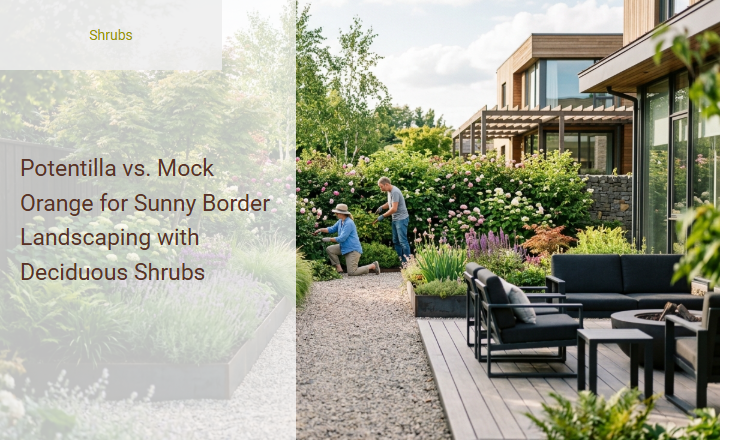
Designing a vibrant, cohesive sunny border often leaves homeowners and designers frustrated, as they struggle to find deciduous shrubs that deliver consistent aesthetic value without demanding constant upkeep. Before selecting specific plants, one must first establish the overall structural goals and microclimate conditions of the garden bed. Aligning these elements early grants your landscape enduring curb appeal and ecological resilience with minimal intervention.
However, long-term success requires a realistic understanding of species-specific cultural limitations, particularly regarding soil moisture and pruning responses. For instance, the compact, continuous-blooming yellow flowers of Potentilla fruticosa 'Goldfinger' serve a vastly different design purpose than the tall, intensely fragrant spring cascades of Philadelphus 'Virginal' (Mock Orange).
To guide your selection, this article compares Potentilla and Mock Orange across critical performance metrics-including bloom duration, growth habits, soil preferences, and maintenance needs-helping you choose the ideal specimen for your sunny border.
Designing Vibrant Sunny Borders with Deciduous Shrubs
Creating a captivating garden border requires a thoughtful blend of texture, color, and structural form. Deciduous shrubs serve as the essential backbone of these sunny landscapes, offering seasonal transitions, defining pathways, and providing a reliable framework that anchors softer herbaceous perennials. By strategically placing these woody plants, gardeners can establish permanent focal points that command attention from spring through the first frost.
When selecting the perfect candidates for a sun-drenched border, two exceptional but highly distinct deciduous shrubs often rise to the top of the list: Potentilla and Mock Orange. While both thrive under the sun's warm rays, they bring entirely different aesthetic values, growth habits, and sensory experiences to the garden. Exploring their unique characteristics will help you determine how to best integrate these popular contenders into your personal landscape design.
Meet the Contenders: Potentilla and Mock Orange Profiles
Potentilla (Bush Cinquefoil)
Belonging to the Rosaceae family, Potentilla fruticosa (commonly known as Bush Cinquefoil) is a hardy, fine-textured shrub native to the cool temperate regions of the Northern Hemisphere. This resilient plant is widely celebrated for its neat, mounded form and delicate, five-petaled flowers that resemble miniature wild roses. With its exceptional toughness and cheerful disposition, Potentilla is a staple for gardeners seeking continuous color without high-maintenance demands.
Mock Orange (Philadelphus)
Mock Orange, or Philadelphus, is a member of the Hydrangeaceae family and is native to North America, Europe, and Asia. This upright, arching shrub is famous for its elegant, pure white blossoms that exude an intoxicating, citrus-like fragrance reminiscent of orange groves. Offering a classic, romantic aesthetic, Mock Orange brings old-world charm and dramatic late-spring flair to any garden setting it inhabits.
Growth Habit, Size, and Spatial Requirements
Understanding the physical dimensions and growth rates of these shrubs is critical for successful spatial planning in a sunny border. Potentilla is a compact, slow-to-moderate grower that typically reaches a mature height and spread of 2 to 4 feet. Its dense, naturally rounded habit makes it an excellent choice for tight spaces, low hedges, or the front-to-middle layers of a garden bed. Because it retains a tidy shape without constant intervention, spacing Potentilla about 3 feet apart ensures a seamless, contiguous drift without overcrowding.
In contrast, Mock Orange is a fast-growing, vigorously upright shrub with an elegant, fountain-like arching habit. Depending on the specific cultivar, Mock Orange can easily reach a mature height of 6 to 10 feet and a spread of 5 to 8 feet. This substantial footprint requires careful placement, making it ideal as a background anchor, privacy screen, or dramatic specimen plant. To accommodate its sprawling mature form and allow adequate air circulation, space Mock Orange at least 6 to 8 feet apart from neighboring plants.
Floral Display: Bloom Cycles and Colors
The visual impact of these two shrubs is defined by their distinct flowering strategies. Potentilla is a true marathon bloomer. It initiates its floral display in late spring and continues to produce a steady succession of flowers all summer long, lasting until the first hard autumn frost. While golden yellow is the most traditional color, modern cultivars offer a beautiful palette of pastel pink, soft copper, vibrant orange, and clean cream-white, keeping the sunny border consistently colorful for months on end.
Mock Orange, conversely, is a sprinter rather than a long-distance runner. It delivers a breathtaking, highly dramatic floral display during late spring to early summer. During this peak period, the shrub is literally smothered in clusters of snowy white, single or double cup-shaped flowers. Though this spectacular show lasts only for a few weeks, the sheer abundance and pristine color of the blossoms create a highly memorable focal point in the landscape before the plant transitions back to its quiet, leafy green summer foliage.
Fragrance and Wildlife Appeal in the Garden
Beyond visual beauty, a well-designed garden border engages the senses and supports the local ecosystem. Mock Orange is legendary for its intense, sweet scent that wafts through the breeze on warm spring evenings. This rich fragrance is highly effective at drawing in a wide array of insect life. Potentilla, on the other hand, is completely unscented, making it a safe choice for gardeners sensitive to strong floral perfumes or those placing plants directly next to dining patios where food aromas take precedence.
Soil, Moisture, and Environmental Tolerances
Selecting the right plant for your specific soil profile ensures long-term vigor and reduces the need for constant supplemental care. Each shrub has evolved to thrive in distinct environmental niches.
- Potentilla (Bush Cinquefoil)
- This incredibly rugged shrub is highly adaptable to poor, rocky, or sandy soils. It possesses excellent drought tolerance once established and can easily withstand alkaline soil conditions. However, it requires sharp drainage, as wet, heavy clay soils will quickly lead to root rot.
- Mock Orange (Philadelphus)
- Mock Orange prefers rich, fertile, moist, and well-draining loamy soils. While it can tolerate a moderate range of soil textures, it is far less tolerant of prolonged drought. It performs best when supplied with consistent moisture, particularly during its active spring growth and bloom phases.
Sunlight Needs and Cold Hardiness Zones
Both of these deciduous contenders require ample sunlight to power their floral displays, but their regional adaptability varies slightly across climatic zones. To achieve the densest growth habit and the most prolific flower production, both plants should ideally receive a minimum of six hours of direct sunlight daily. Insufficient light can result in sparse foliage and a dramatic reduction in blooms.
According to established horticultural guidelines, Potentilla is exceptionally cold-hardy, thriving effortlessly in USDA Zones 2 through 7. This makes it an ideal choice for northern landscapes subject to harsh, drying winter winds. Mock Orange is best suited for USDA Zones 4 through 8, preferring slightly more moderate winter conditions but still exhibiting robust cold-hardiness throughout most temperate climates.
Maintenance, Pruning, and Long-Term Care
Keeping your sunny border looking pristine requires distinct pruning approaches tailored to the growth habits of each shrub. Regular maintenance ensures healthy branch structure and maximum bloom potential year after year.
- Pruning Potentilla: Because Potentilla blooms on new wood produced during the current growing season, it should be pruned in late winter or very early spring before new growth emerges. Cut back the entire shrub by about one-third of its height to maintain a dense, compact dome. Every few years, remove a few of the oldest, woodiest stems down to the ground to rejuvenate the plant.
- Pruning Mock Orange: Mock Orange blooms exclusively on old wood produced during the previous season. Therefore, it must be pruned immediately after it finishes flowering in mid-summer. Cutting it back in winter or spring will mistakenly remove the developing flower buds. Prune back flowering stems to a strong outward-facing bud, and remove up to one-third of the oldest, thickest canes at the base to encourage vigorous new arching growth.
Landscape Design Strategies for the Sunny Border
Integrating these shrubs effectively depends on layering and thoughtful plant partnerships. Due to its modest height, Potentilla excels in the foreground of a border, working beautifully as a low-hedging plant along walkways or massed in groups to create a consistent carpet of summer-long color. Mock Orange, with its dramatic height and arching branches, should be positioned toward the back or center of the border, providing a lush green backdrop for other plants once its spring bloom phase concludes.
Pairing these shrubs with the right companions enhances the overall design narrative. Consider surrounding them with plants that offer contrasting textures and complementary bloom times. Excellent companions include:
- Salvia: Deep purple spikes contrast beautifully with the warm yellow or pastel pink shades of Potentilla.
- Coneflower (Echinacea): Robust summer blooms that carry the color show alongside Potentilla's long cycle.
- Peonies: Classic spring partners that bloom alongside Mock Orange, creating a romantic, soft-focused aesthetic.
- Ornamental Grasses: Fine foliage textures that sway in the wind, softening the upright structure of Mock Orange in late summer.
Quick Reference Comparison: Potentilla vs. Mock Orange
To help you select the ideal shrub for your specific gardening goals, this comparative summary highlights the key differences between the two contenders:
| Feature | Potentilla (Bush Cinquefoil) | Mock Orange (Philadelphus) |
|---|---|---|
| Mature Height | 2 to 4 feet | 6 to 10 feet |
| Growth Rate | Slow to Moderate | Fast |
| Bloom Season | Late Spring to First Frost (Continuous) | Late Spring to Early Summer (Brief) |
| Fragrance | None | Intense, Citrus-Sweet |
| Soil Preference | Poor, Dry, Sandy, Rocky | Rich, Fertile, Moist, Loamy |
| USDA Zones | Zones 2 - 7 | Zones 4 - 8 |
| Best Design Use | Foreground, low borders, mass plantings | Background screening, specimen plants |
| Feature | Potentilla (Cinquefoil) | Mock Orange (Philadelphus) |
|---|---|---|
| Size & Habit | Compact, mounded (1–3 ft height/spread). Ideal for front or mid-border. | Large, upright, arching (4–10 ft height). Best for back of border or screening. |
| Bloom Season | Continuous display from late spring to first frost. | Brief, intense show of 2–3 weeks in late spring/early summer. |
| Flower & Color | Small, flat blossoms; available in yellow, white, pink, orange, and red. | Showy, bowl-shaped white flowers with prominent yellow stamens. |
| Fragrance | None. | Extremely fragrant; rich, sweet citrus scent. |
| Soil & Moisture | Highly drought-tolerant; thrives in poor, rocky, or sandy well-drained soils. | Prefers moist, fertile, organic-rich loam; moderate drought tolerance. |
| Sunny Border Role | Low-maintenance, long-term color filler and structural low hedge. | High-impact seasonal focal point, backdrop shrub, and sensory accent. |
Leave a comment