
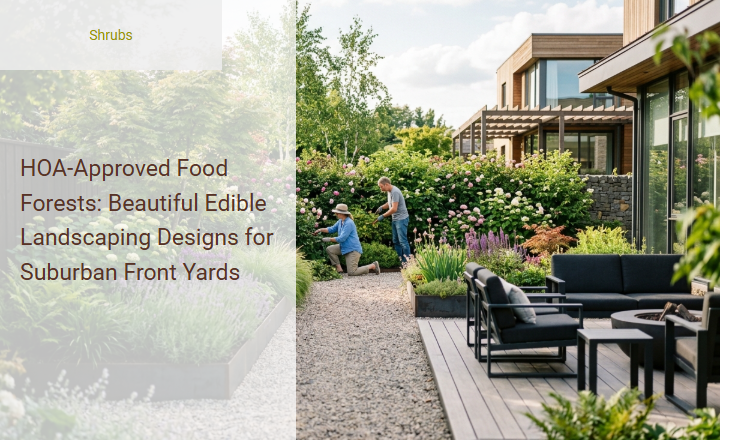
Suburban homeowners often face a frustrating dilemma: the desire to cultivate fresh, organic food frequently clashes with strict Homeowners Association (HOA) rules mandating pristine, manicured lawns. Traditional, row-based vegetable gardens easily trigger compliance fines, but prioritizing neighborhood aesthetics does not mean abandoning self-sufficiency. By merging permaculture with high-end landscaping, you can secure a bountiful harvest that actually elevates curb appeal.
Success, however, stipulates careful planning; designs must adhere to community height limits and neatness standards. Utilizing structured, multi-functional plants-such as sculptural dwarf fruit trees, manicured blueberry hedges, and evergreen rosemary borders-proves that edible spaces can look entirely intentional and sophisticated.
Below, we outline step-by-step design templates, HOA-approved plant palettes, and aesthetic techniques to seamlessly transition your suburban front yard into a stunning, productive ecosystem.
Read also: Serviceberry vs Chokecherry for Edible Landscapes
Redefining the Suburban Lawn: The HOA-Friendly Food Forest
For decades, the manicured green lawn has reigned supreme as the traditional symbol of suburban pride. However, this resource-heavy carpet of grass offers little ecological value, demanding endless hours of mowing, watering, and chemical treatments. It is time to challenge this paradigm. A front-yard food forest offers a revolutionary alternative, turning sterile turf into a productive, biodiverse sanctuary. The secret lies in design. By carefully planning your edible landscape, you can satisfy even the most rigid neighborhood guidelines while growing your own organic produce.
Challenging the Green Monopoly
Embracing a food forest does not mean letting your front yard run wild. Instead, it is about reimagining aesthetics. By blending agricultural productivity with high-end residential landscaping, homeowners can cultivate an abundant harvest right under the noses of strict boards. This modern approach proves that sustainable living and neighborhood elegance can coexist beautifully, paving the way for a greener, healthier suburbia.
Deciphering the Rulebook: Strategic Plant Selection for Stealth Edibles
Navigating the complex regulations of a Homeowners Association requires a legalistic approach to your garden design. Most covenants do not explicitly ban edible plants; instead, they mandate a specific percentage of ornamental ground cover and overall neatness. By dissecting these rules, you can identify excellent design loopholes. The key is to select edible varieties that masquerade perfectly as traditional landscape features, ensuring your food-producing plants blend in seamlessly with conventional ornamental shrubs.
Exploiting the Ornamental Loophole
To successfully integrate stealth edibles into your landscape, focus on physical traits that match popular suburban foliage. Consider these highly productive plants that easily pass for prized ornamentals:
- Red-leafed lettuces and kales, which provide the same rich purple and bronze tones as premium coleus varieties.
- Swiss chard with rainbow stems, offering brilliant yellows and deep reds that rival any tropical bedding plant.
- Rosemary pruned into formal topiary globes, mimicking traditional boxwood features.
- Pineapple guava, featuring stunning exotic flowers and silvery-green leaves that scream high-end ornamental shrubbery.
The Illusion of Order: Structuring with Hardscaping and Symmetry
Human eyes and HOA inspectors are easily pacified by geometric order. If a garden looks intentional, it is rarely questioned. This is where strategic hardscaping becomes your most powerful tool. By framing your edible plantings within crisp, clean lines, you create a visual narrative of meticulous care and professional design. Pathways made of flagstone, brick, or clean gravel guide the eye and signal that every plant has a designated, respected place in the landscape.
Designing Clean Frameworks
Symmetry is another excellent way to put onlookers at ease. Placing matching shrubs on either side of an entranceway or creating mirrored beds instantly elevates the yard's aesthetic. Using high-quality stone borders or thick wood edging prevents the soil and mulch from spilling onto sidewalks, keeping the entire system immaculately contained. When your edible forest is housed within such structured boundaries, the lush growth is perceived as opulent abundance rather than untamed chaos.
The Ornamental Overstory: Elegant Dwarf Fruit Trees
Every captivating landscape needs a strong focal point, and dwarf fruit trees fit this role flawlessly. Unlike giant, untamed orchard trees, dwarf and semi-dwarf cultivars remain compact and manageable. Trees like the dwarf pomegranate or the native serviceberry bring incredible multi-seasonal value to your front yard. In the spring, they burst into a spectacular showcase of delicate blossoms, easily rivaling the beauty of standard ornamental cherries or crabapples.

Architectural pruning is the key to maintaining this elegant look. By training these trees into classic shapes, such as a formal espalier against a sunny wall or a neat open-center vase, you emphasize their structural beauty. This deliberate styling reassures neighbors that the trees are prized specimens rather than neglected agricultural crops, allowing you to harvest heavy yields of sweet fruit from a plant that looks like a high-dollar designer maple.
Edible Boundaries: Designing Lush Berry Hedges
Standard green hedges like boxwood or privet are common sights in suburban neighborhoods, but they offer little ecological or nutritional value. Replacing these static green walls with productive berry bushes is an elegant way to redefine your property lines. Many fruit-bearing shrubs offer stunning seasonal shifts, transitions of color, and dense foliage that provide excellent privacy while producing gourmet harvests.
- Blueberry bushes, which offer delicate white bell flowers in spring, delicious summer berries, and brilliant fiery-red foliage in the autumn.
- Honeyberries, providing incredibly early spring blooms followed by unique, elongated blue fruits that delight the palate.
- Natal plums, featuring glossy, deep-green leaves, fragrant white star-shaped flowers, and bright red edible fruits that thrive in warmer climates.
These dynamic plants maintain a dense, compact form when properly sheared, satisfying any municipal or HOA height and neatness requirements. Instead of a boring wall of green, your boundary becomes an active, shifting tapestry of color and taste.
Grounded in Utility: Replacing Turf with Culinary Carpets
Maintaining a traditional grass lawn is often the most resource-intensive part of suburban homeownership. Fortunately, you can swap out thirsty turf for lush, low-growing perennial herbs that require a fraction of the water and zero mowing. These creeping ground covers form dense carpets that easily withstand light foot traffic while filling the air with incredible fragrances whenever they are stepped on.
Excellent options include creeping thyme, which explodes in a sea of purple blossoms in early summer, and low-growing varieties of oregano. For a touch of sweetness, alpine strawberries work wonderfully as an edging plant; they stay in neat clumps, do not send out unruly runners, and produce tiny, intensely sweet berries from spring until frost. These culinary carpets provide a neat, green cover that keeps the soil cool and weed-free, proving that lawn alternatives can be both highly functional and visually stunning.
Multi-Tiered Design: Layering for Maximum Visual Appeal
Permaculture often champions the concept of vertical layering to maximize solar energy and space. In a standard forest garden, this can sometimes look wild or chaotic. However, with a few design adjustments, you can implement a multi-tiered system that looks incredibly sophisticated and clean. The trick is to arrange your layers in a cascading fashion, stepping down in height as you move closer to the street or sidewalk.
- The Semi-Dwarf Canopy: Place your tallest dwarf fruit trees furthest back, near the house foundation or property corners, to establish a solid structural background.
- The Shrub Layer: Position medium-sized berry bushes and woody herbs in the mid-ground, ensuring they do not cast unwanted shade on smaller plantings.
- The Herbaceous and Ground Cover Layers: Complete the front of your beds with low-lying culinary herbs and creeping strawberries, creating a soft transition to the walkways.
This deliberate sloping design ensures that every plant receives optimal sunlight while maintaining clear sightlines across the yard. This structured layering looks intentional, showcasing a masterfully planned landscape rather than an accidental thicket.
Color Theory and Companionship: Blending Flowers and Foliage
One of the quickest ways to draw the ire of an HOA board is to plant long, straight rows of vegetables that resemble a commercial farm. To keep your food forest looking like a high-end ornamental display, you should leverage the power of companion planting and color theory. By intermingling traditional flowering perennials with your edible crops, you distract the eye and mask the typical vegetable-garden aesthetic with brilliant washes of color.
- Echinacea and companion herbs, which draw beneficial pollinators while framing the bold, textured leaves of nearby artichokes.
- Deep purple lavender, providing a stunning contrast when planted alongside the bright green fronds of carrots or fennel.
- Bright orange marigolds, which act as a natural pest deterrent while highlighting the rich colors of ruby-red chard.
This technique creates a complex tapestry of textures and colors. Passersby will admire the gorgeous, cottage-style flower beds, completely unaware that those stunning visual arrangements are actually highly productive guild systems yielding bountiful harvests.
Maintenance for Acceptance: Keeping Your Forest Pristine
The thin line between an admired botanical garden and an eyesore is defined by maintenance. Traditional lawns require constant mowing, but a food forest shifts that energy toward precise, mindful stewardship. Keeping your edible landscape meticulously manicured is the best defense against neighborhood complaints. This means staying ahead of seasonal transitions and showing active care for your plants.
"A garden that looks cared for is rarely questioned, regardless of what is growing inside it."
To ensure your forest looks pristine year-round, practice continuous debris clearance. Promptly remove fallen leaves, spent annuals, and overripe fruit before they attract pests or create messy ground litter. Prune your shrubs and dwarf trees regularly to keep their shapes defined and compact. Harvest your crops frequently; leaving heavy, rotting fruit on the vine looks untidy and signals neglect. By keeping your borders sharp and your plants neatly trimmed, you project an image of absolute pride of ownership.
Cultivating Community: How to Inspire Your Neighbors
Your beautiful, productive front yard will inevitably spark curiosity. Instead of hiding your harvest, use it as a bridge to build community. When neighbors stop to admire your blooming pomegranate tree or fragrant carpet of thyme, offer them a taste. Sharing fresh, organic berries or a bundle of fresh culinary herbs is the easiest way to turn skeptics into enthusiastic supporters. Generosity is a powerful tool for advocacy.
Over time, these pleasant driveway conversations can plant the seeds of change across your entire neighborhood. By demonstrating that a food forest can be just as elegant-if not more so-than a traditional turf lawn, you challenge the outdated suburban status quo. You can show others how to work within guidelines to build resilience, biodiversity, and abundance. We have the power to transform our communities, one beautiful, edible, and law-abiding yard at a time.
Summary
Transitioning traditional suburban lawns into productive, HOA-approved food forests is a growing trend in sustainable landscaping. This guide explores how homeowners can design beautiful, multi-layered edible landscapes that harmonize with neighborhood aesthetics while satisfying strict Homeowners Association guidelines. By utilizing permaculture principles, these designs incorporate dwarf fruit trees, berry shrubs, perennial herbs, and vibrant edible groundcovers to create a self-sustaining ecosystem.
To secure HOA approval, the article highlights the importance of using structured layouts, defined edging, and professional pathways to present the food forest as an intentional, ornamental garden rather than an untamed plot. Ultimately, this approach demonstrates that edible landscaping can be both highly productive and visually stunning, offering suburban residents a practical pathway to food security, local biodiversity, and enhanced curb appeal.
Leave a comment