
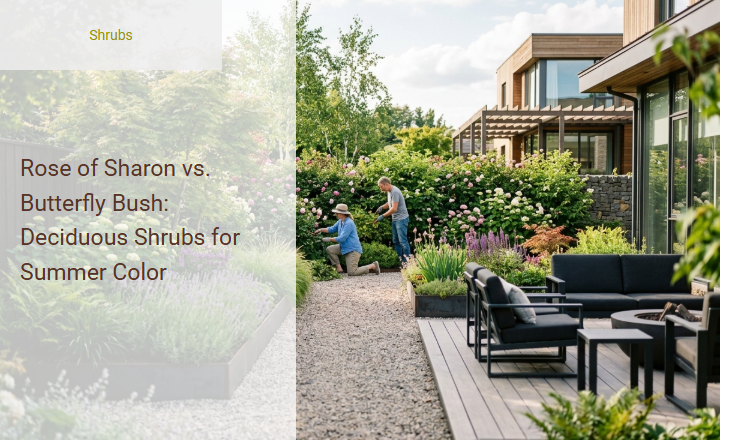
As spring blooms fade, home gardeners face the inevitable mid-summer landscape slump, struggling to maintain vibrant color through the hottest months of the year. Resolving this mid-season void often comes down to a difficult choice between two dominant, long-blooming contenders: Rose of Sharon (Hibiscus syriacus) and Butterfly Bush (Buddleja davidii).
Selecting the ideal specimen grants your landscape a low-maintenance, high-impact focal point that thrives when other plants falter. However, a key ecological stipulation must be made: while both offer exceptional seasonal color, they differ significantly in their structural growth habits, soil preferences, and regional invasive potential.
For example, the upright, vase-shaped habit of a Rose of Sharon cultivar like 'Blue Chiffon' serves a very different design purpose than the weeping, pollinator-dense spikes of a 'Black Knight' Butterfly Bush. In this guide, we will analyze their growth requirements, ecological profiles, and aesthetic values to help you select the perfect deciduous shrub for your yard.
Introduction to Summer's Star Shrubs
As the bright, saturated colors of spring and early summer begin to fade, gardeners often search for ways to keep their landscapes vibrant. Two premier deciduous shrubs rise to the challenge, offering spectacular late-summer color: the Rose of Sharon and the Butterfly Bush. While both of these hardy plants thrive in the heat of July and August, they bring completely different visual aesthetics and growth habits to your garden design. Choosing between them-or finding a way to feature both-can elevate your backyard into a seasonal masterpiece when other plants have finished their display.
Meet the Rose of Sharon (Hibiscus syriacus)
The Rose of Sharon is a classic, hardy deciduous shrub belonging to the mallow family. Known for its vase-like, upright growth habit, this plant can reach impressive heights, making it look almost like a small ornamental tree. The real draw, however, is its stunning, tropical-looking blooms. Each flower features a prominent central stamen, resembling tropical hibiscus flowers, which adds an exotic flair to temperate gardens.
Its key structural and botanical characteristics include:
- Upright structural growth that adds height without spreading excessively wide.
- Tropical-looking, cup-shaped blooms in shades of pink, purple, white, and blue.
- Sturdy woody branches that provide excellent winter structure even after the leaves have fallen.
Meet the Butterfly Bush (Buddleja davidii)
In contrast to the structured form of the Hibiscus, the Butterfly Bush is celebrated for its relaxed, casual growth habit. Characterized by arching branches that weep gracefully under the weight of heavy flower panicles, this deciduous shrub brings movement and soft texture to any garden. The blooms are dense, cone-shaped clusters that emit a sweet, honey-like fragrance, filling the warm summer air with a rich perfume.
Its defining structural and botanical features are:
- Weeping, arching branches that create a soft, informal silhouette in the garden.
- Honey-scented flower panicles that can grow up to twelve inches long.
- Rapid summer growth which produces an abundance of blooms on new wood.
Floral Showdown: Blooms, Colors, and Timing
When comparing the floral displays of these two garden giants, the differences lie in the shape, color palette, and timing of the blossoms. The Rose of Sharon presents large, flat, saucer-shaped blossoms that open individually along the stems. Meanwhile, the Butterfly Bush features long, conical spikes made up of hundreds of tiny individual flowers.
| Feature | Rose of Sharon | Butterfly Bush |
|---|---|---|
| Bloom Shape | Single or double cup-shaped flowers | Long, conical flower panicles |
| Color Palette | White, pink, red, purple, blue-violet | Purple, lavender, pink, white, yellow |
| Flowering Window | Mid-summer through early autumn | Early summer through first frost |
Growing Conditions: Sun, Soil, and Climate Zones
To ensure your shrubs thrive year after year, it is vital to understand their preferred environmental conditions. Both of these plants are exceptionally tough, but they have distinct requirements regarding soil, moisture, and temperature.
Sunlight and Soil Preferences
Both the Rose of Sharon and the Butterfly Bush require full sun to produce their best floral displays. This means they need at least six hours of direct sunlight daily. In terms of soil, the Rose of Sharon is highly adaptable, tolerating clay, loam, and sandy soils, provided they drain reasonably well. The Butterfly Bush is slightly more selective, demanding excellently drained, average soil. It is highly susceptible to root rot if left in wet, soggy soil during the winter months.
USDA Hardiness Zones
The Rose of Sharon is exceptionally cold-hardy, thriving in USDA Zones 5 through 9. It can withstand freezing winter temperatures without dying back to the ground. The Butterfly Bush is typically hardy in USDA Zones 5 through 9 as well, though in colder northern regions, it behaves like a herbaceous perennial, dying back to the ground in winter and rapidly resprouting from the roots in spring.
Pollinator Appeal vs. Ecological Concerns
One of the primary reasons gardeners choose these late-summer bloomers is to support local wildlife. However, the ecological impact of these two species varies significantly.
The Rose of Sharon provides a valuable source of nectar and pollen for bumblebees, honeybees, and hummingbirds during the late summer when other food sources are scarce. It is generally well-behaved in the landscape, although some older varieties can self-seed. Gardeners looking for low-maintenance options often seek out sterile triploid cultivars that do not produce viable seeds.
The Butterfly Bush is famous for its almost magnetic attraction for butterflies, bees, and moths. The sweet, honey-scented panicles act as a crucial nectar station. Despite this, there are major ecological concerns. Buddleja davidii is considered an invasive species in several states, as its wind-blown seeds spread rapidly into wild areas, displacing native plants that local caterpillars rely on for food. Fortunately, breeders have developed sterile, non-invasive cultivars that allow gardeners to enjoy the pollinator benefits without the ecological risks.
Pruning and Maintenance Requirements
Both shrubs bloom on new wood, which means that proper pruning is the key to maximizing their floral show and keeping their growth in check.
Here is a step-by-step guide to maintaining these shrubs:
- Prune the Rose of Sharon in late winter or early spring before new growth begins, cutting back branches to shape the upright canopy.
- Remove dead, diseased, or crossing branches from the interior of the Rose of Sharon to improve air circulation and prevent fungal diseases.
- Prune the Butterfly Bush hard in early spring, cutting the entire plant back to about 12 to 24 inches from the ground to stimulate vigorous new flowering wood.
- Deadhead faded flower panicles on the Butterfly Bush throughout the summer to encourage continuous blooming until frost.
Landscape Design: Best Placement in Your Yard
Integrating these shrubs into your landscape design requires understanding their unique habits and structural forms.
Rose of Sharon for Structure and Privacy
Due to its upright, columnar, or vase-shaped habit, the Rose of Sharon is perfect for creating living privacy screens or informal hedges. It works beautifully planted in a row along property lines or as a structural anchor at the back of a deep mixed border, providing a vertical element that draws the eye upward.
Butterfly Bush for Cottage Borders and Wildlife Gardens
The loose, weeping form of the Butterfly Bush makes it an ideal fit for cottage garden borders and casual pollinator beds. Its arching branches blend seamlessly with ornamental grasses, coneflowers, and black-eyed Susans, softening hard landscape lines and adding constant motion as butterflies flutter around the blooms.
Head-to-Head: Pros and Cons
To help you weigh your options, here is a direct comparison of the advantages and disadvantages of each shrub:
- Rose of Sharon Pros: Exceptional cold hardiness, strong architectural upright structure, low maintenance, and highly deer-resistant.
- Rose of Sharon Cons: Can be slow to leaf out in spring, and older varieties may produce unwanted self-seeded seedlings.
- Butterfly Bush Pros: Long blooming period, intense fragrance, unmatched pollinator attraction, and rapid growth rate.
- Butterfly Bush Cons: Susceptible to root rot in wet soil, lacks winter structure in cold climates, and carries invasive potential with fertile cultivars.
Choosing the Right Shrub for Your Garden
Selecting the perfect shrub depends on your specific aesthetic goals, maintenance tolerance, and local climate. If you need a structural plant that can form a tall, stately hedge and withstand harsh winter temperatures, the Rose of Sharon is the superior choice. Its clean, tropical look adds structural elegance to formal and semi-formal yards without demanding heavy annual maintenance.
On the other hand, if you want a relaxed, informal plant that brings movement, fragrance, and an endless parade of butterflies to your patio or cottage border, the Butterfly Bush is hard to beat. Just be sure to select sterile, non-invasive cultivars to protect your local ecosystem. By matching these unique characteristics to your landscape's needs, you can ensure a breathtaking, color-filled garden all through the late-summer season, keeping your outdoor spaces vibrant and alive when the rest of the neighborhood begins to fade.
| Summer Color Feature | Rose of Sharon (Hibiscus syriacus) | Butterfly Bush (Buddleja davidii) |
|---|---|---|
| Flower Form | Large, flat, paper-like tropical blooms (single or double) | Dense, cone-shaped weeping flower spikes (panicles) |
| Color Range | White, pink, red, purple, and blue; often featuring a contrasting red "throat" eye | Deep purple, lavender, pink, white, yellow, and magenta |
| Bloom Timing | Mid-summer through autumn; slow to leaf out in spring | Early summer to first frost; highly continuous blooming |
| Maintenance for Color | Self-cleaning; minimal deadheading required to maintain aesthetic | Requires regular deadheading of spent brown spikes to fuel new blooms |
| Growth Habit & Display | Upright, vase-shaped woody shrub/tree; blooms held stiffly on branches | Arching, fountain-like herbaceous shrub; blooms cascade outward |
| Wildlife Attraction | Highly attractive to hummingbirds and bees | Aggressively attracts butterflies, bees, and beneficial insects |
Leave a comment