
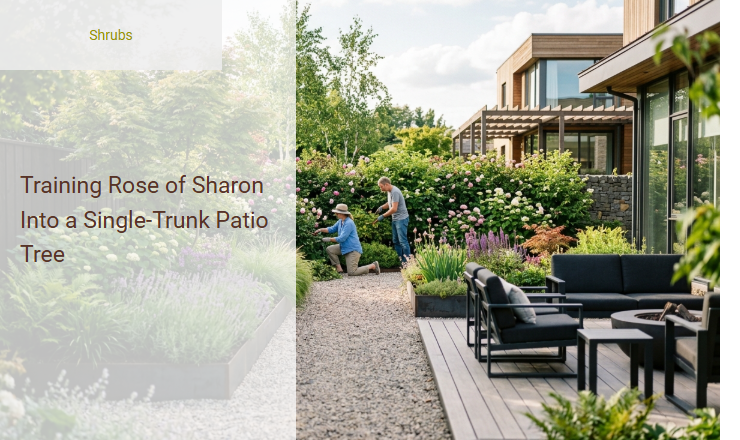
Many homeowners struggle to incorporate the vibrant Rose of Sharon (Hibiscus syriacus) into compact garden designs because its natural, multi-stemmed growth habit quickly becomes unruly and overwhelms surrounding underplantings. While traditional shrub borders can easily absorb this sprawling structure, modern patio spaces demand a more refined, space-conscious aesthetic. Elevating this plant into a single-trunk standard solves this spatial dilemma, granting your patio an elegant, architectural focal point that showcases eye-level blooms while freeing up valuable ground real estate beneath the canopy.
However, achieving this polished look requires a clear understanding of the plant's growth mechanics. This transformation is a multi-year commitment, particularly when training vigorous, upright cultivars like 'Aphrodite' or 'Blue Chiffon' which naturally tend to produce basal suckers. In the following sections, we will outline the step-by-step process of selecting a central leader, establishing a sturdy staking system, and executing the precise seasonal pruning required to maintain a healthy, flowering canopy.
Read also: Rose of Sharon vs Butterfly Bush for Summer Color
Selecting the Ideal Rose of Sharon Shrub
Selecting the perfect specimen is the foundational step in transforming a multi-stemmed Hibiscus syriacus into an elegant tree form. When browsing at your local nursery, look past the bushier, multi-branched options and actively search for a young plant that features a dominant, exceptionally straight central stem. This primary shoot should be robust, free from deep scarring, and possess a natural vertical inclination that makes it genetically predisposed to training. Choosing a specimen with strong apical dominance ensures that the plant will direct its primary energy upward, making the process of cultivating a sturdy single trunk far more successful.
Essential Tools for Tree Training
Before beginning the physical transformation of your shrub, gather the appropriate tools to ensure the health of your plant. Creating clean, swift cuts is vital because ragged wounds invite disease pathogens and pests. Always sanitize your cutting blades with rubbing alcohol before starting and between cuts to prevent cross-contamination.
- Bypass Pruners: Perfect for making clean, precise cuts on smaller branches and twigs.
- Lopping Shears: Necessary for cleanly removing thicker woody stems at the base of the plant without tearing the bark.
- Sturdy Bamboo or Metal Stake: Provides physical support to guide the central leader vertically.
- Flexible Tree Ties: Soft, stretchable vinyl or rubber ties that secure the stem without chafing or cutting into the expanding bark.
- Isopropyl Alcohol: Used to sanitize all cutting blades before and during the pruning process.
Identifying and Isolating the Central Leader
To successfully transition your shrub into a tree, you must identify its natural backbone. Take time to inspect the entire structure of the plant from soil level up to the crown before making any cuts.
- Clear away any fallen leaves, mulch, or weeds from the soil surrounding the base of the shrub to expose the root flare and all emerging stems.
- Examine the base to identify the thickest, straightest, and most vigorous upright stem that rises continuously through the center of the plant.
- Gently shake the surrounding side branches to isolate this chosen central leader visually, verifying that it has no major damage or severe bends.
Executing the Primary Pruning Cuts
With the central leader clearly identified, you can now begin the primary pruning process to form the trunk. Carefully cut away all competing ground-level stems as close to the root flare as possible without damaging the collar of the chosen trunk. Next, identify the lower lateral branches branching off your central leader and prune them back flush with the main stem. Working from the ground upward, remove these lower branches to expose the bottom one-third to one-half of your developing trunk. Always make clean, slightly angled cuts just outside the branch collar to ensure rapid healing.
Staking and Straightening the Trunk
A young Rose of Sharon trunk requires external support to maintain its upright orientation while it puts on caliper width. Staking guides the stem into a perfectly vertical habit, preventing wind bend and promoting straight growth.
- Insert a sturdy support stake into the ground approximately two to three inches away from the base of the trunk, driving it deep enough to resist shifting.
- Position the stake on the side of the prevailing wind to prevent the young tree from rubbing continuously against the support.
- Secure the trunk to the stake using soft, flexible plant ties at twelve-inch intervals along the length of the stem.
- Leave enough slack in the ties to allow the trunk to sway slightly, which naturally stimulates the wood to grow thicker and stronger.
Eradicating Trunk Buds and Ground Suckers
A trained Rose of Sharon will naturally attempt to revert to its shrubby habit by sending out new growth along the bare trunk and from the root system. Regularly rub off emerging green buds that appear on the lower half of the trunk before they harden into woody branches. Additionally, monitor the base of the plant closely and dig out root suckers immediately at their point of origin rather than just cutting them at the soil line. Consistently removing this unwanted growth diverts the plant's vital energy upward to nourish the developing canopy.
Pinching and Developing the Canopy
Once your central leader reaches your desired trunk height-typically three to four feet-it is time to encourage a lush, rounded crown. Locate the main terminal bud at the very tip of the central leader and pinch or snip it off during the active growing season. This simple action disrupts apical dominance, forcing the plant to redirect its energy into the lateral buds directly below the cut. These lateral buds will quickly sprout into secondary branches, forming the initial framework of a dense, bushy canopy that will bear abundant summer blooms.
Watering and Nutrient Guidelines for Patio Trees
To sustain rapid growth and build a strong cellular structure, your newly trained tree-form shrub requires targeted moisture and nutrients. Because it is directing energy into structural wood development, keeping a consistent watering and feeding schedule is essential.
- Water the tree deeply once or twice a week during the spring and summer, ensuring the root zone remains consistently moist but not waterlogged.
- Apply a thick layer of organic mulch around the root zone, keeping it a few inches away from the trunk, to retain soil moisture and regulate temperature.
- Apply a balanced, slow-release fertilizer in early spring as new growth emerges to provide the essential macronutrients needed for canopy expansion.
- Reduce watering frequency in late autumn as the plant enters dormancy, allowing the wood to harden off properly for the cold winter months.
Annual Maintenance and Winter Pruning
Maintaining the elegant tree silhouette requires a dedicated pruning routine performed annually during the late winter or early spring when the plant is dormant. Pruning during this window stimulates vigorous spring growth and ensures a prolific display of summer blossoms.
- Remove any dead, diseased, or crossing branches within the canopy to improve air circulation and sunlight penetration.
- Prune back the previous season's growth by one-third to encourage new wood development, which is where the summer flowers will emerge.
- Cut back any vigorous shoots that disrupt the balanced, symmetrical dome shape of the canopy.
- Re-inspect the trunk and root base to eliminate any persistent dormant buds or suckers that have emerged over the winter.
Troubleshooting Common Structural Issues
Even with careful training, young tree-form shrubs can encounter physical challenges that threaten their structural balance. Prompt corrective actions can prevent permanent damage.
- Leaning Trunks
- If the main trunk begins to tilt, gently adjust the tension of your flexible ties or add a second counter-balancing stake to pull the stem back into vertical alignment.
- Wind Damage
- High winds can snap young branches; protect your tree by placing it in a sheltered microclimate and pruning the canopy to reduce wind resistance.
- Weak Crotches
- Branches that join the main stem at narrow angles are prone to splitting. Prune away one of the competing branches early on to favor wider, stronger angles.
Summary
The Rose of Sharon (Hibiscus syriacus) is naturally a multi-stemmed deciduous shrub, but it can be beautifully trained into an elegant, single-trunk patio tree, often called a standard. This rewarding gardening project begins by selecting a young, healthy plant with a strong, straight central leader. To establish the trunk, gardeners must systematically prune away competing lower branches and promptly remove ground suckers. Supporting the main stem with a sturdy stake is crucial during the early stages to ensure straight, upright growth. Once the plant reaches its desired height, pinching the top buds encourages lateral branching, which creates a lush, rounded canopy. With simple ongoing maintenance-primarily removing new lower growth and lightly shaping the canopy each spring-this resilient plant transforms into a stunning, space-saving focal point perfect for patios, walkways, and small gardens.
Leave a comment