
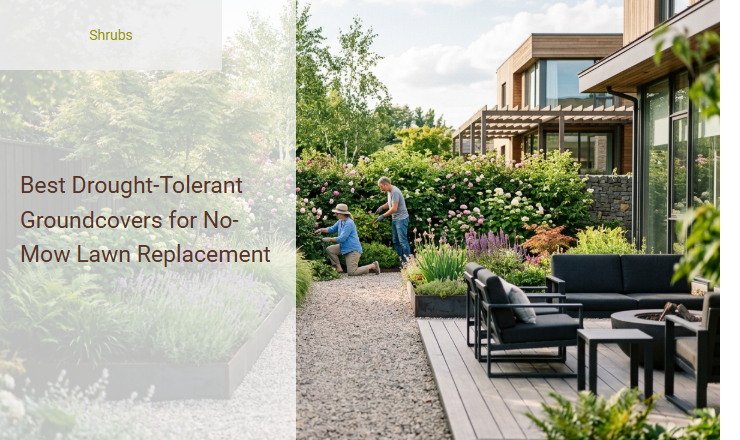
Maintaining a lush, green lawn often feels like an uphill battle against soaring water bills, scorching summer heat, and the relentless chore of weekend mowing. Traditional turfgrass is increasingly difficult to justify in arid climates, serving as both an ecological and financial drain on modern homeowners.
Transitioning to drought-tolerant groundcovers grants you a vibrant, low-maintenance landscape that slashes water usage by up to 80% without sacrificing curb appeal. However, a successful transition requires managing expectations: these alternatives are not entirely "zero-effort" and require strategic selection based on your specific soil type and foot-traffic needs. Exceptional varieties like aromatic Creeping Thyme, ultra-hardy Kurapia, and nitrogen-fixing Microclover prove that you can achieve a lush, living carpet without the mower.
Below, we will analyze the top drought-tolerant groundcovers, evaluating their growth habits, sun requirements, and durability to help you find the ultimate no-mow solution for your property.
Read also: Barberry vs Abelia for Drought Tolerance
The Shift to Eco-Friendly Lawns
The traditional American turf lawn, while long prized for its uniform green appearance, demands an unsustainable amount of water, chemical fertilizers, and weekly maintenance. Homeowners are increasingly turning to drought-tolerant groundcovers as a modern, ecological alternative. By replacing resource-intensive grass with resilient plant species, you can significantly reduce your environmental footprint while reclaiming your weekends from the endless cycle of mowing and watering.
Core Benefits of No-Mow Alternatives
- Substantial water savings that drastically lower monthly utility bills.
- Elimination of mowing, which cuts down on carbon emissions from gas-powered equipment.
- Enhancement of local biodiversity by providing critical food and habitat for pollinators like bees and butterflies.
- Natural weed suppression as dense root systems crowd out invasive plants.
Creeping Thyme (Thymus serpyllum)
Creeping thyme serves as an exceptionally fragrant and visually stunning alternative to traditional turf. This hardy perennial forms a dense, low-growing mat that releases a pleasant herbal aroma when stepped on. Highly tolerant of light to moderate foot traffic, it erupts in vibrant shades of pink, purple, or white during the summer, creating a colorful carpet that requires no mowing and very little water.
Kurapia (Lippia nodiflora)
Kurapia represents a massive leap forward in utility groundcover technology. Developed specifically for drought-prone regions, this sterile cultivar establishes rapidly to form a thick, emerald-green barrier that naturally chokes out weeds. It maintains its lush green color throughout the year on a fraction of the water required by traditional grasses, making it an ideal choice for slope stabilization and expansive low-maintenance landscapes.
Dymondia (Dymondia margaretae)
Commonly known as Silver Carpet, Dymondia is an ultra-low-profile groundcover that hugs the soil tightly. Its narrow green leaves feature striking silver undersides, creating a variegated, shimmering effect across the ground. Because of its exceptionally flat growth habit and intense drought tolerance, it is the perfect selection for planting between stepping stones, concrete pavers, or within tight, awkward garden borders.
Microclover (Trifolium repens 'Pipolina')
This miniature clover variety offers a unique, self-sustaining solution for modern lawns. Unlike standard clover, microclover features tiny leaves and a low-growth habit that blends seamlessly with existing turfgrass or thrives as a standalone lawn. It acts as a natural fertilizer by fixing nitrogen from the air into the soil, keeping the landscape green and healthy without synthetic chemical inputs.
Stonecrop Sedum (Sedum album)
For extremely arid regions and thin, rocky soils, succulent groundcovers like Stonecrop Sedum are unmatched in resilience. This evergreen succulent stores moisture in its fleshy leaves, allowing it to survive prolonged dry spells with virtually zero supplemental watering. Once established, it forms a textured, jelly-bean-like carpet that changes color with the seasons and produces delicate summer blooms.
Preparing Your Soil for Success
- Remove all existing grass and weeds using organic solarization, sheet mulching, or a sod cutter.
- Aerate the compacted soil to improve oxygen flow and facilitate deep root penetration.
- Amend the native soil with compost or organic matter to ensure proper drainage and nutrient availability.
Establishment and Irrigation Strategy
While drought-tolerant groundcovers require minimal water maturely, they need consistent moisture during their initial establishment phase. Implementing a temporary irrigation schedule that provides shallow, frequent watering for the first few weeks is crucial. As root systems grow deeper, gradually decrease the watering frequency while increasing the duration, training the plants to seek moisture deep within the soil profile.
Cultivating a Resilient Landscape
Transitioning away from a demanding grass lawn opens the door to a more sustainable, biodiverse, and visually captivating yard. Embracing these hardy alternatives reduces your resource consumption while establishing a living landscape that thrives in harmony with the local climate. Over time, your investment in a green alternative yields a resilient sanctuary that demands less of your time and gives back to the earth.
Summary
Replacing a traditional turf lawn with drought-tolerant groundcovers is an eco-friendly, low-maintenance alternative that conserves water and eliminates the need for constant mowing. Several hardy plants stand out as top choices for a vibrant, resilient yard. Creeping Thyme offers a fragrant, bee-friendly purple carpet that handles light foot traffic, while Dymondia (Silver Carpet) provides a dense, weed-suppressing mat with striking silvery foliage. For extremely dry climates, low-growing Sedum (Stonecrop) varieties offer exceptional drought resistance.
Additionally, innovative options like Kurapia establish deep root systems to survive extreme heat, and Microclover can be used to create a lush, naturally nitrogen-rich lawn that requires minimal irrigation. Transitioning to these sustainable groundcovers allows homeowners to significantly reduce outdoor water use, support local biodiversity, and enjoy a beautiful landscape with minimal upkeep.
Leave a comment