
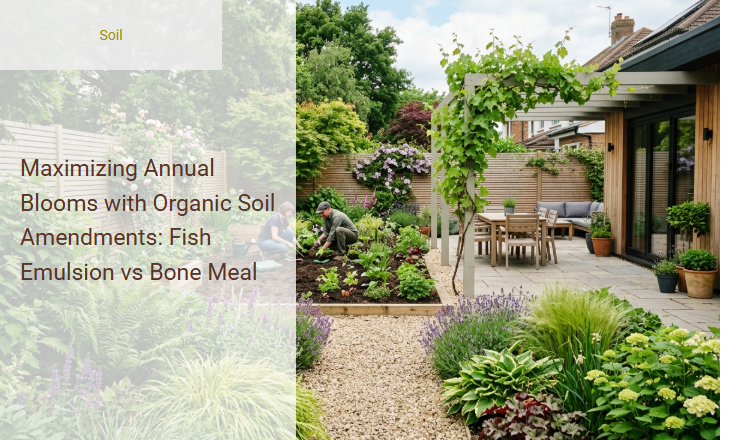
Many passionate gardeners share the frustrating experience of watching vibrant annuals fizzle out by mid-summer, leaving flowerbeds sparse and exhausted despite regular watering and care. Before reaching for quick-fix synthetic fertilizers, we must recognize that sustainable, season-long bloom production relies on fundamental soil vitality rather than temporary chemical spikes. Transitioning to targeted organic amendments grants your garden a self-sustaining nutrient cycle, unlocking unparalleled petal density and natural disease resistance. However, successful organic cultivation requires a strategic approach; simply adding organic matter is not enough, as applying the wrong nutrient at the wrong growth stage can actually inhibit bud development.
For example, while nitrogen-rich fish emulsion fuels rapid foliage growth in hungry annuals like petunias, phosphorus-dense bone meal is what actually triggers robust root systems and abundant flowering. This comparative analysis examines the distinct chemical profiles of fish emulsion and bone meal, providing a clear roadmap to optimize your seasonal application schedule for maximum blossom yield.
Introduction to Organic Soil Amendments for Annual Blooms
Few gardening endeavors match the sheer visual joy of vibrant, season-long annual blooms cascading over garden beds, window boxes, and containers. To sustain this relentless, eye-catching burst of color, plants require a robust, continuous source of high-quality nourishment. Standard synthetic fertilizers often offer quick, short-lived chemical fixes that can degrade soil biology over time. In contrast, organic soil amendments work in harmony with the soil food web to build long-term fertility and resilient plant structures.
Achieving a breathtaking floral display requires understanding the distinct roles of key plant nutrients. This brings us to a compelling head-to-head comparison of two powerhouse organic fertilizers: Fish Emulsion and Bone Meal. While they represent contrasting approaches to nutrient delivery, they function as highly complementary tools when managed strategically by home gardeners.
Nutrient Needs of Flowering Annuals
Unlike perennials that budget their energy across multiple seasons, annual plants must complete their entire life cycle-from germination to seed production-in a single year. This rapid biological timeline places immense physiological demands on the plant. To sustain this frantic pace, annuals require a constant, balanced supply of nutrition to maintain continuous blooming and vigorous cellular growth.
To support this rapid development, annuals rely heavily on primary macronutrients. Nitrogen drives the formation of chlorophyll and lush foliage, which acts as the solar engine for the plant. Phosphorus, the cornerstone of reproduction, stimulates robust root branching and initiates the development of prolific flower buds. Potassium regulates water movement and enzyme activation, ensuring the plant can withstand environmental stressors. Without a balanced supply of these elements, the plant's meristematic tissues cannot divide efficiently, resulting in stunted growth and sparse, short-lived flowers.
Deep Dive into Fish Emulsion
Fish emulsion is a highly concentrated liquid organic fertilizer derived from the byproducts of the fish processing industry. Through a process of enzymatic digestion, whole fish and fish scraps are broken down into a soluble fluid. This processing preserves essential vitamins, amino acids, and micronutrients, resulting in an easily absorbable nutrient tea that plants can access almost immediately upon application.
Why Fish Emulsion Excels in Early Growth
Due to its liquid nature, fish emulsion acts rapidly, delivering a potent dose of readily available nitrogen directly to the root zone or leaf surface. This makes it an exceptional choice for early-stage annuals that require a swift boost to establish their structural framework before transitioning to flower production.
- Macronutrient Ratio: Typically features a N-P-K ratio around 5-1-1, heavily favoring nitrogen.
- Trace Minerals: Rich in micronutrients including calcium, magnesium, sulfur, and iron.
- Bio-stimulants: Packed with amino acids that feed beneficial soil microbes and enhance root absorption.
Exploring the Benefits of Bone Meal
Bone meal is a granular organic amendment manufactured from defatted, crushed animal bones, primarily sourced as a byproduct of the agricultural livestock industry. It is renowned for its exceptional phosphorus content and high concentration of calcium. Unlike liquid amendments, bone meal is highly insoluble in water, making it a slow-release fertilizer that feeds the soil gradually over several months as soil microbes and natural acidity break down its molecular structure.
This slow-release mechanism is vital for establishing long-term garden health. As bone meal slowly degrades, it provides a steady, reliable stream of phosphorus that facilitates deep root colonization and supports the extensive cellular energy transfers required to form heavy, dense flower buds.
- Microorganisms in the soil colonize the bone meal particles, starting the biological decomposition process.
- Weak organic acids exuded by plant roots and soil fungi slowly dissolve the calcium phosphate bonds.
- Solubilized phosphorus ions enter the soil solution, where they are absorbed by root hairs to fuel ATP synthesis and cellular division.
- The plant utilizes this steady energy supply to build extensive root systems and trigger prolific bud development.
The Science of Growth: Nitrogen vs. Phosphorus
To maximize the performance of flowering annuals, gardeners must balance the vegetative push of nitrogen with the reproductive pull of phosphorus. While nitrogen constructs the physical machinery of the plant, phosphorus provides the developmental signals and chemical energy needed to yield spectacular blooms.
| Nutrient Element | Primary Source | Physiological Target | Visual Result in Annuals |
|---|---|---|---|
| Nitrogen (N) | Fish Emulsion | Chlorophyll synthesis and vegetative cell elongation | Lush green leaves and rapid stem growth |
| Phosphorus (P) | Bone Meal | Root branching, nucleic acid synthesis, and flower initiation | Strong root anchors and abundant, sturdy blossoms |
How to Apply Fish Emulsion for Maximum Leafy Growth
Because fish emulsion is concentrated and fast-acting, proper application is key to preventing plant stress. For soil drenching, mix the concentrate with water according to package directions, typically around one to two tablespoons per gallon of water. Gently pour the solution around the base of the annuals every two weeks during their initial vegetative stage. This direct liquid delivery feeds both the plant roots and the active microbial life surrounding them.
Foliar feeding is another highly effective method. By spraying a finely diluted fish emulsion solution directly onto the leaves, plants can absorb nitrogen through their stomata almost instantaneously, bypassing the soil pathway. This technique is ideal for reviving yellowing, nitrogen-deficient young seedlings.
Pro-Tip for Safe Application: Always dilute fish emulsion in cool water and apply it during the early morning or late afternoon. Applying concentrated mixtures or spraying during the heat of the midday sun can cause severe foliage burn and stress the tender leaves of young annuals.
Best Practices for Bone Meal Application
Because phosphorus is highly immobile in soil, top-dressing bone meal onto the soil surface is largely ineffective. It must be physically incorporated into the root zone where plant roots can directly interact with it. When transplanting your annuals, add one to two tablespoons of bone meal directly to the bottom of the planting hole, mixing it thoroughly with the existing soil before placing the plant. This places the nutrient exactly where the emerging roots can utilize it during their critical establishment phase.
Due to its long-term activation cycle, applying bone meal early in the season ensures that as the plant reaches maturity and enters its blooming phase, a steady supply of bioavailable phosphorus is ready to support intense bud development.
--------------------------------------------
[Active Root Zone: 2 to 6 inches deep]
--> Bone Meal thoroughly mixed with soil particles
--------------------------------------------
[Subsoil Base]
Creating a Synergistic Feeding Schedule
Rather than choosing between these two organic powerhouses, the most successful gardeners use them in tandem. By matching your nutrient inputs to the natural growth cycle of your annuals, you can optimize both vegetative structural strength and subsequent flower production throughout the growing season.
- Early Spring (Planting & Establishment)
- Incorporate bone meal into the soil during transplanting to establish robust roots.
- Apply a light soil drench of fish emulsion to encourage rapid leaf development.
- Late Spring to Early Summer (Active Growth Phase)
- Apply fish emulsion every two weeks as a foliar spray to maximize the green photosynthetic engine.
- Mid-Summer to Autumn (Peak Blooming Phase)
- Phase out frequent fish emulsion applications to prevent excess soft green growth that attracts pests.
- Rely on the slow-release bone meal already active in the root zone to sustain continuous flower production.
Soil pH and Environmental Considerations
The efficiency of bone meal is closely linked to soil chemistry. Phosphorus is highly sensitive to pH levels; in soils with a pH above 7.0, phosphorus binds tightly with calcium, becoming highly insoluble and virtually inaccessible to plants. Conversely, in highly acidic soils below 5.5, it binds with iron and aluminum. To maximize the benefits of bone meal, maintain a slightly acidic to neutral soil pH between 6.0 and 6.8, which is the optimal range for phosphorus solubility.
Additionally, because both fish emulsion and bone meal are derived from animal sources, they carry strong, distinct scents that can attract unwanted visitors to your garden. Domestic dogs, cats, and wild scavengers like raccoons or rodents may dig up freshly amended beds in search of the food source they smell.
Cultivating the Perfect Bloom: A Summary
Achieving breathtaking displays of season-long annual blooms is a matter of understanding plant biology and timing. By harnessing the fast-acting, nitrogen-rich benefits of liquid fish emulsion alongside the slow-release, phosphorus-dense power of bone meal, you provide your garden with a complete nutrition system. The vegetative sprint fueled by fish emulsion builds the frame, while the steady underground support of bone meal ignites a spectacular floral finish.
Embracing this dual approach ensures your soil remains alive, fertile, and structurally sound. A strategic combination of fish emulsion for leafy vitality and bone meal for root and bud strength delivers the ultimate recipe for brilliant, head-turning annual displays.
| Feature | Fish Emulsion | Bone Meal |
|---|---|---|
| Primary Nutrients (NPK) | High Nitrogen (typically 5-1-1) | High Phosphorus & Calcium (typically 3-15-0) |
| Nutrient Release Rate | Rapid (immediate uptake) | Slow-release (decomposes over months) |
| Flowering Impact | Builds lush foliage to photosynthesize energy for blooms | Directly stimulates root development and prolific bud initiation |
| Application Method | Liquid (soil drench or foliar spray) | Dry powder/granular (worked into the root zone soil) |
| Optimal Timing | Every 2-3 weeks during active vegetative growth | Applied once at planting or early in the season |

Leave a comment