
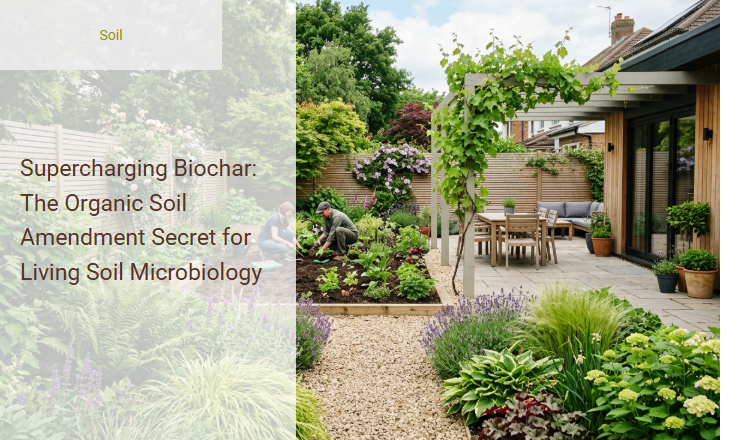
Many growers invest heavily in premium organic amendments, yet struggle to maintain a thriving, consistent microbial population in their living soil. While biochar is frequently hailed as the ultimate solution, introducing raw, uncharged carbon can actually backfire, temporarily stripping vital nutrients and moisture from your rhizosphere. To succeed, one must understand a key ecological stipulation: biochar is a blank slate that must first be "charged" or inoculated. By pre-treating it with active biological agents like worm castings, aerated compost teas, and mycorrhizal fungi, you grant your cultivation medium a permanent, self-sustaining microbial reef that dramatically accelerates nutrient cycling. In this guide, we will demystify the science of carbon inoculation, provide step-by-step charging recipes, and outline how to integrate supercharged biochar into your soil management strategy for unparalleled plant health.
Read also: Fish Emulsion vs Bone Meal for Flowering Annuals
Introduction: The Raw Power of Biochar
In the quest for vibrant, resilient gardens, organic growers are rediscovering an ancient soil amendment that holds the key to unparalleled fertility: biochar. This highly stable, carbon-rich material is created through pyrolysis-the burning of organic biomass in the absence of oxygen. Its historical roots stretch back thousands of years to the Amazon Basin, where indigenous cultures created Terra Preta (dark earth), transforming nutrient-poor tropical soils into highly productive agricultural zones that remain fertile to this day. However, raw biochar is not a fertilizer on its own. To unlock its true potential, we must learn the art of supercharging this black gold, turning it into a thriving biological sanctuary for living soil microbiology.
The Microscopic Reef: Understanding Biochar's Structure
A Haven for Soil Life
To truly understand biochar, one must look past its charred, black appearance and examine its structure under a microscope. Seen at this scale, biochar resembles an incredibly intricate carbon sponge or a microscopic coral reef. It is riddled with millions of tiny pores, chambers, and pathways that survived the heat of pyrolysis. This complex architecture creates a massive internal surface area; a single gram of high-quality biochar can possess a surface area equivalent to several tennis courts.
This microscopic reef does not degrade over time. Instead, it remains in the soil as a permanent physical habitat. Soil microbes require shelter from predators, moisture fluctuations, and extreme temperatures. The micro-pores of biochar provide the ultimate sanctuary, allowing delicate microbial networks to establish stable, long-term communities directly within the root zone.
The Raw Biochar Trap: Why You Can't Use It Fresh
While the physical structure of biochar is highly beneficial, applying raw, untreated biochar directly to your garden can be a catastrophic mistake. Because of its massive surface area and high adsorption capacity, fresh biochar acts as a powerful nutrient vacuum. It will immediately begin to pull moisture, nitrogen, phosphorus, and trace minerals out of your existing soil, locking them away from your plants and stunting their growth.
Applying raw biochar to living soil is like putting an empty dry sponge into a puddle; it will suck up every drop of available nourishment, leaving your plants starving in the short term.
This temporary nutrient lockup can last for months, leaving frustrated gardeners wondering why their miracle amendment has ruined their harvest. To avoid this trap, we must pre-fill these empty carbon pores before they ever touch your garden beds.
What is Supercharging? The Art of Inoculation
Supercharging, also referred to as charging or inoculating, is the process of pre-loading raw biochar's empty pores with water, organic nutrients, and beneficial microbiology. By fully saturating the carbon matrix before introducing it to the garden, you transform a nutrient vacuum into a slow-release powerhouse that actively feeds your plants.
The core objectives of the inoculation process include:
- Saturating the dry carbon pores with moisture to prevent dehydration of surrounding soil.
- Binding essential plant nutrients to the carbon exchange sites.
- Introducing diverse colonies of beneficial fungi, bacteria, and protozoa.
Method 1: Co-Composting and Solid Inoculation
The Gold Standard of Charging
The most natural and effective way to supercharge biochar is through co-composting. By introducing raw biochar at the beginning of your compost cycle, you allow it to absorb the nutrient-rich run-off and become colonized by the active biology of the decomposing organic matter.
To inoculate biochar using active compost, worm castings, or manure, follow these steps:
- Mix raw biochar with your compost ingredients at a ratio of 1 part biochar to 9 parts organic matter (approximately 10% biochar by volume).
- Ensure the mixture contains high-quality biological inputs, such as fresh worm castings or aged animal manure, to jumpstart the colonization.
- Keep the mixture moist and allow it to cure for a minimum of two to four weeks.
- Turn the pile regularly to distribute oxygen, allowing beneficial aerobic microbes to deeply penetrate the carbon pores.
Method 2: Liquid Charging with Compost Teas and Kelp
Fast-Tracking the Inoculation Process
If you do not have active compost piles ready, you can fast-track the supercharging process using liquid nutrients. This method quickly saturates the dry carbon pores by submerging the biochar in a highly concentrated microbial bath.
You can create a potent liquid charging recipe using the following ingredients:
- Actively aerated compost tea (AACT) to provide a massive dose of living biology.
- Fish hydrolysate to offer a rich source of organic nitrogen and trace minerals.
- Liquid kelp to feed beneficial fungi and supply essential growth hormones.
- Humic acids to enhance the cation exchange capacity of the biochar.
To execute this method, submerge your raw biochar in this liquid mixture and let it steep for five to seven days until the bubbling stops and the carbon is fully saturated.
The Microbial Synergy: How Fungi and Bacteria Move In
Once the charging process begins, a fascinating biological colonization occurs within the porous carbon chambers of the biochar. Beneficial soil bacteria are the first to arrive, rapidly multiplying and clinging to the carbon walls. They secrete biofilms that help glue nutrients inside the pores, turning the biochar into a microbial pantry.
Soon after, mycorrhizal fungi extend their delicate thread-like hyphae deep into the smallest micro-pores where plant roots cannot reach. These fungal networks find a permanent home in the biochar, using it as a base camp from which they forage for water and nutrients to trade with the host plant. This symbiotic relationship ensures that your soil biology remains active, stable, and resilient against environmental stressors.
Application Rates: How to Add Charged Biochar to Your Soil
Because charged biochar is a permanent addition to your soil, it is important to apply it correctly. A little goes a long way, and over-applying can alter your soil structure unnecessarily.
Use these guidelines for integrating charged biochar into your garden:
- Raised Beds and In-Ground Gardens: Apply a layer of charged biochar approximately 1/2 inch deep across the surface, then incorporate it into the top 4 to 6 inches of soil.
- Potting Mixes: Blend charged biochar at a rate of 5% to 10% of the total volume of your potting soil recipe to improve water retention and nutrient cycling in containers.
- Perennial Plantings: Add a handful of charged biochar directly to the transplant hole, ensuring direct contact with the root zone of new shrubs or trees.
Permanent Fertility: The Long-Term Benefits of Biochar
The true magic of supercharged biochar lies in its permanence. Unlike compost, leaf mold, or cover crops, which decompose and must be replenished year after year, biochar does not break down in the soil.
Because of its crystalline carbon structure, biochar remains virtually indestructible, resisting microbial decay and locking carbon away in the earth for hundreds, or even thousands, of years.
This means the water-retention capabilities, nutrient-holding capacity, and microbial habitats you build today will benefit your soil for generations to come, creating a self-sustaining cycle of fertility.
Conclusion: Unlocking the Secrets of Living Soil
Supercharging biochar is the definitive bridge between chemistry and biology in the garden. By taking the time to inoculate this ancient carbon sponge before introducing it to your plants, you prevent nutrient lockup and establish a thriving, permanent habitat for the soil food web. Embrace this simple yet transformative practice, and watch your garden transition into a self-sustaining ecosystem of unmatched productivity and health.
Summary
The article "Supercharging Biochar: The Organic Soil Amendment Secret for Living Soil Microbiology" explores how "charging" raw biochar transforms it into a powerhouse for soil health. While raw biochar offers immense porosity and surface area, applying it directly to soil can temporarily deplete vital nutrients and moisture. To unlock its full potential, gardeners must first inoculate or "supercharge" the biochar with nutrient-rich organic matter, compost, and beneficial microbes.
Once activated, this porous carbon structure acts as a permanent underground sanctuary-similar to a coral reef-for beneficial bacteria and mycorrhizal fungi. This thriving microbial habitat dramatically improves soil structure, enhances water retention, and facilitates continuous nutrient cycling. Ultimately, supercharged biochar serves as a crucial, long-term investment for cultivating a vibrant, self-sustaining living soil food web that ensures robust plant growth.
Leave a comment